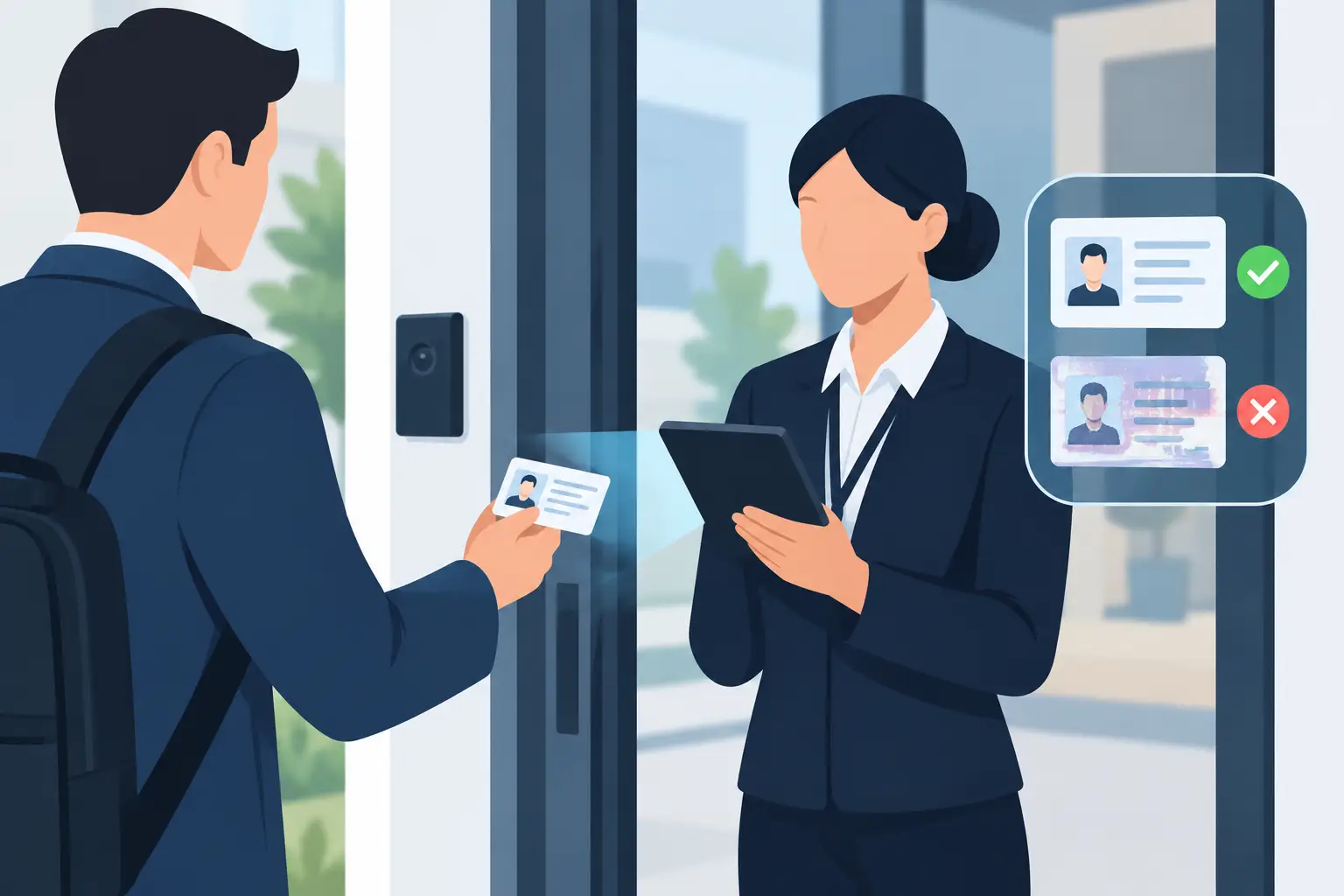
Age Verification Trends That Affect Venue Security

A busy Friday door is where age verification trends become operational reality. A guest presents a convincing-looking license, the line is building, the internet drops, and staff have seconds to make a decision that can affect the venue's liquor license, safety record, and reputation. The right process is no longer just about checking a birth date. It is about identifying suspicious documents, keeping entry moving, and applying consistent rules every time.
Age Verification Trends Moving Beyond Date of Birth
The biggest shift is the move from visual inspection to document intelligence. Door staff still need judgment, but the limits of a flashlight check or a quick glance are clear. Modern fake IDs can copy barcodes, layouts, and surface details well enough to pass a rushed human review.
That has increased demand for scanners that read the encoded information on a driver's license or passport and compare it against the document's expected format. More advanced systems examine multiple security indicators, including barcode data, document structure, and signs of tampering. This matters because a valid-looking birthday is not proof that the document itself is legitimate.
For operators, the practical question is not whether technology can catch every fraudulent ID. No system should be sold as a guarantee. The question is whether it gives staff a faster, more defensible way to identify risk before a minor enters, a fraudulent sale occurs, or an argument starts at the door.
Fake IDs are becoming more accessible
Counterfeit IDs are not limited to crude laminates purchased from a local source. Online sellers market IDs with scannable barcodes, matching front and back data, and state-specific designs. Some use real personal data paired with a different photo. Others alter a legitimate ID belonging to an older sibling or friend.
That change makes a basic barcode read useful but insufficient on its own. If a scanner only confirms that a barcode returns an age over 21, it may miss an ID whose barcode was programmed to look valid. Venues should look for technology that evaluates the document beyond the date of birth and clearly flags suspicious results for staff review.
Offline Verification Is Becoming a Core Requirement
Cloud-connected tools have a role in multi-location operations, reporting, and shared patron records. But a venue should not lose its ability to verify IDs because Wi-Fi is overloaded, a router fails, or cellular service is weak inside the building.
Offline-first age verification is a growing operational requirement, especially for nightlife, events, dispensaries, and other high-volume environments. Core ID scanning and age verification should continue at the door without an active internet connection. This protects throughput during outages and prevents staff from falling back to inconsistent manual checks when the venue is under the most pressure.
Cloud synchronization is most valuable when it is optional and purposeful. A group with several locations may want to share banned-patron alerts, VIP recognition, or approved operational data across devices. A single bar may only need a dependable scanner that works every night without a recurring software requirement. The right setup depends on the business, not a one-size-fits-all subscription model.
Privacy Expectations Are Rising Alongside Enforcement Risk
Operators face two legitimate pressures: verify patrons effectively and avoid collecting more personal information than the operation needs. These goals are compatible when the system is configured with data minimization in mind.
Verification-only workflows are gaining ground because many venues need confirmation of age and document status, not a permanent record of every guest's full license details. Configurable retention periods let an operator decide whether certain data is retained for a defined business purpose or deleted quickly. Encryption and access controls are equally important when information is stored or synchronized.
The trade-off is straightforward. Keeping more data can help investigate incidents, identify repeat problem patrons, or support venue-wide alerts. It also increases the responsibility to protect that data, restrict access, and set a clear retention policy. Operators should decide what they need before deployment rather than collecting data simply because a device can capture it.
Privacy also affects guest experience. Staff should be able to explain the process in plain language: the ID is being scanned to verify age and screen for suspicious documents. Clear, consistent procedures reduce confusion and make the interaction feel like a normal part of responsible entry control.
Patron Intelligence Is Expanding Beyond Compliance
Age verification systems are increasingly part of a broader access-control workflow. For a nightclub or bar, the door is not only a compliance checkpoint. It is also where staff can recognize a known VIP, identify a patron who has been banned after a prior incident, or flag a duplicate entry attempt.
Used responsibly, this information helps teams make better decisions before a problem enters the building. A banned-patron alert can give security the notice needed to handle a situation calmly and according to policy. VIP recognition can improve service without relying on staff memory during a crowded shift.
This capability requires discipline. Banned-patron lists should have clear inclusion standards, limited access, and a process for correcting errors. Staff need training on what an alert means and what it does not mean. A system should support informed decisions, not replace professional conduct or venue policy.
For multi-location operators, shared patron intelligence can be especially valuable. A serious incident at one site may be relevant to another location, but only when the organization has consistent policies and appropriate controls. Smaller venues may choose not to use networked features at all. That is a valid operational choice when standalone verification meets the need.
Speed at Entry Still Determines Adoption
The best security process fails if staff avoid it when the line gets long. That is why portable, purpose-built hardware is gaining preference over improvised solutions such as personal phones or manual web searches. Entry teams need a device that can be picked up, scanned quickly, and used in low-light environments without interrupting the pace of the door.
Speed does not mean skipping review. It means presenting clear results so staff know when to wave a valid guest through, when to take a closer look, and when to escalate to a manager or security lead. The workflow should reduce guesswork, not add another screen for employees to interpret.
Training remains essential. Teams should know how to position an ID, respond to a suspicious result, handle a guest dispute, and document an incident under venue policy. A scanner is strongest when it supports a repeatable process that staff can follow on a crowded night.
What Operators Should Evaluate Now
When reviewing age verification technology, start with the risks that cost your business the most: underage entry, fake IDs, chargebacks, theft, licensing exposure, repeat safety incidents, or slow door lines. The answer will shape which features matter most.
A practical evaluation should cover four areas:
- Document coverage: Confirm the system can scan the driver's licenses and passports your guests commonly present and can identify suspicious documents beyond a simple age calculation.
- Operating conditions: Test it in low light, at peak entry volume, and without internet access. If it cannot work during a connectivity outage, it is not dependable enough for the door.
- Data controls: Decide whether you need verification-only mode, what information should be retained, who can access it, and how long it should remain available.
- Cost structure: Separate the cost of hardware from optional cloud services. Operators should be able to understand what they are buying and avoid paying recurring fees for features they do not use.
Kred approaches this need with portable ID-scanning hardware designed for instant age verification, suspicious ID detection, and offline operation, with cloud synchronization available for businesses that need shared device intelligence.
The Door Is Becoming a Security Control Point
The most useful age verification trends are not flashy features. They are the ones that help a venue make faster, more consistent decisions under real operating conditions. Document analysis helps address better fakes. Offline capability protects the process during outages. Privacy controls keep data collection aligned with the job at hand. Patron alerts give security teams context before a risk reaches the floor.
Set your entry standards before the next peak shift, equip staff with tools that work when connectivity does not, and make every scan part of a clear, defensible security process.