Essential Age-Gate Compliance Equipment for Venues
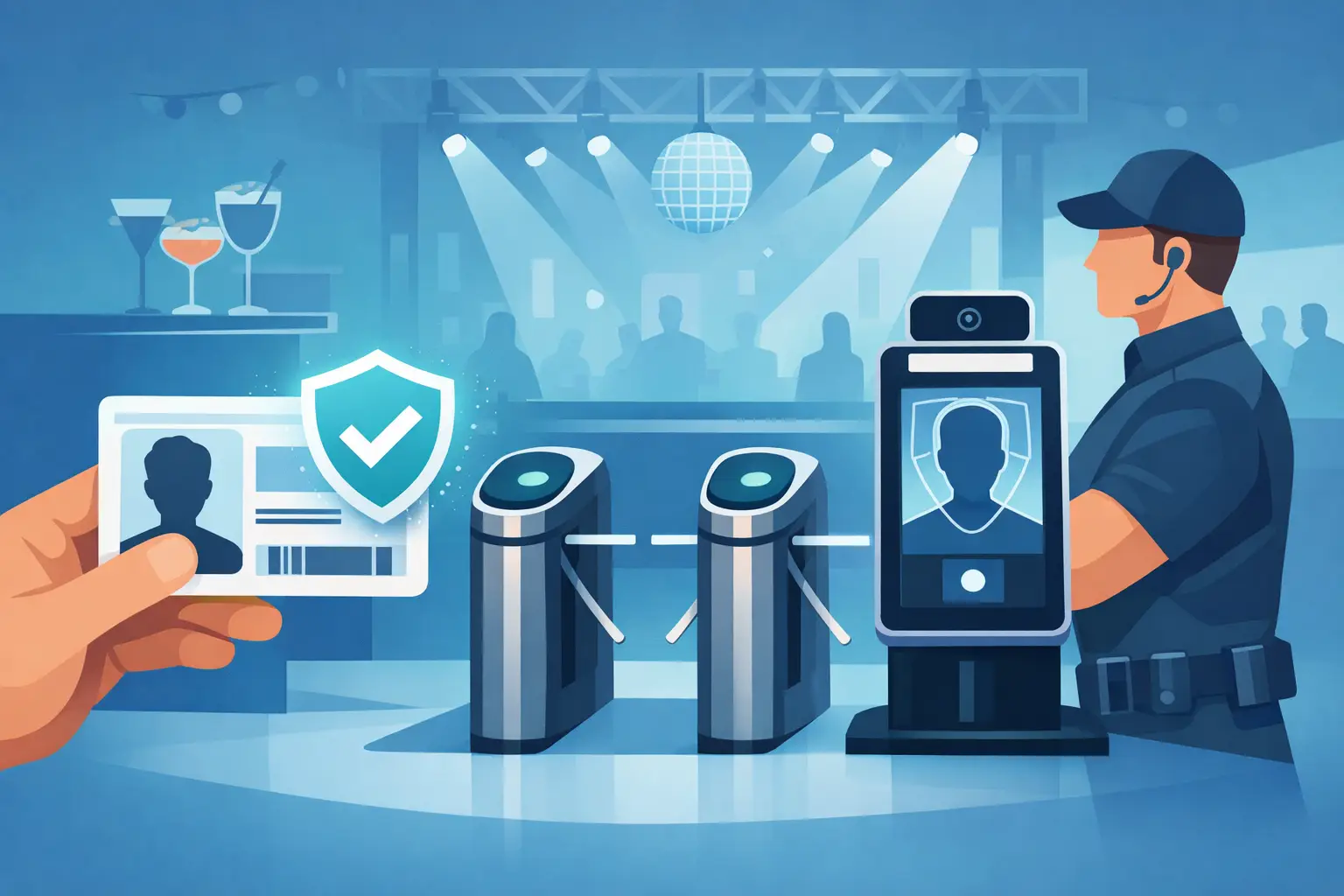
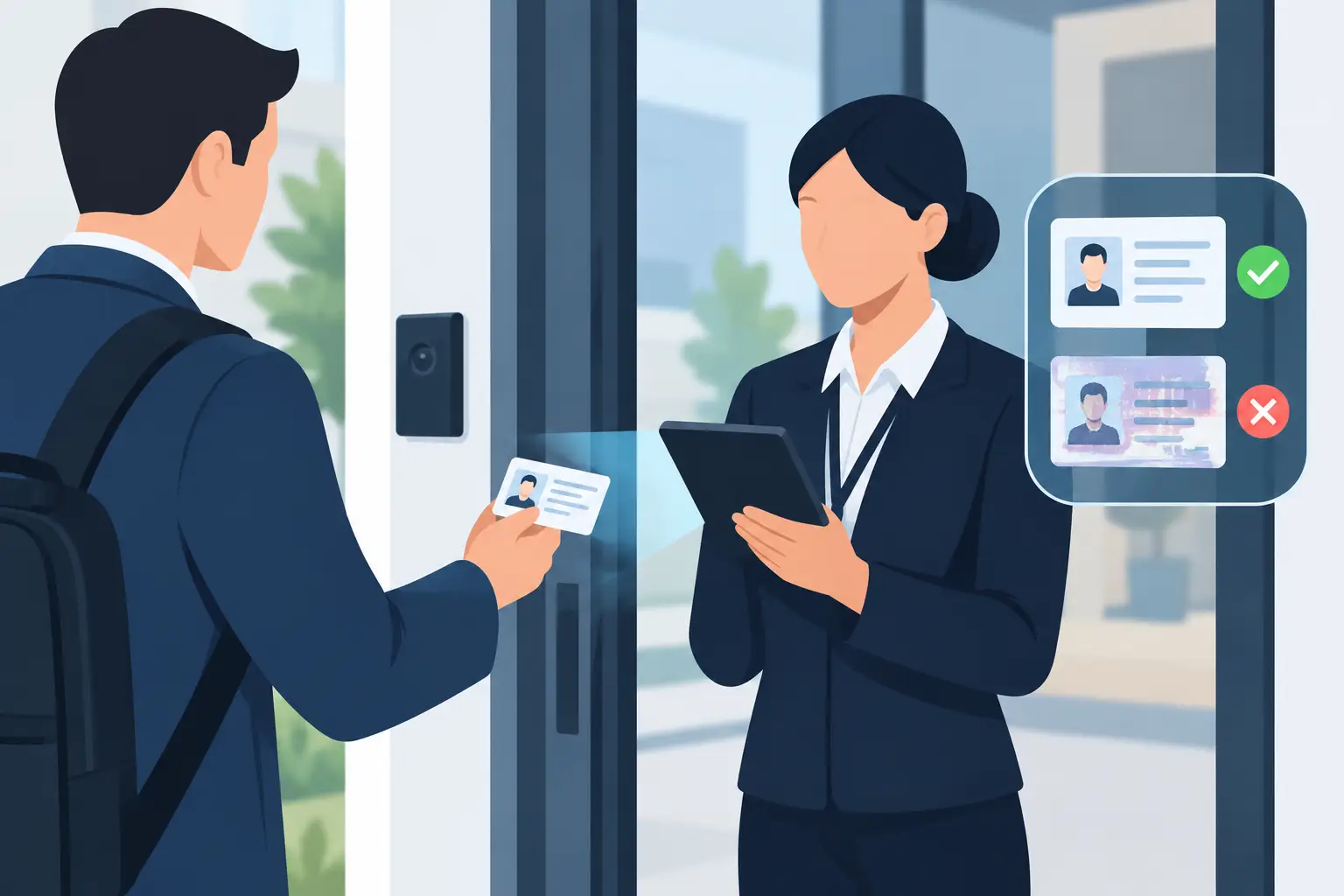
A busy door leaves little room for judgment calls. When a line is building, staff need to know whether an ID is valid, whether the guest meets the age requirement, and whether that person has created a problem before. Essential age-gate compliance equipment turns that high-pressure decision into a consistent, documented process without slowing down entry.
For bars, clubs, dispensaries, gun shops, and other identity-critical businesses, the right equipment is more than a convenience. It is part of protecting a license, reducing fraud exposure, supporting responsible service, and giving staff a better view of who is entering the premises.
What Essential Age-Gate Compliance Equipment Must Do
An age gate is only effective when it works at the point of entry, at the speed of the operation. A manual visual check may catch obvious issues, but it depends on staff experience, lighting, fatigue, and the guest's willingness to wait while an ID is inspected. That creates inconsistency precisely where consistency matters.
Purpose-built ID scanning equipment should capture data from supported driver's licenses and passports, calculate age instantly, and present a clear pass or fail result. It should also inspect embedded document data and security characteristics that are difficult to assess with the naked eye. A scanner that merely reads a barcode can be useful for speed, but barcode reading alone is not the same as suspicious ID detection.
For most venues, the essential capabilities are straightforward: instant age verification, fraud screening, a readable operator decision, and dependable performance during a busy shift. The right device should make the correct workflow easier than an improvised one.
Fast verification is a compliance control
Speed is often treated as separate from compliance. At the door, they are connected. If screening takes too long, teams start skipping steps, waving guests through, or relying on a quick glance. Fast scanning helps staff apply the same entry standard to every guest, even during a rush.
Look for a workflow that can scan an ID in seconds and clearly identify an underage guest before a transaction, entry, or handoff occurs. The screen should be easy to interpret in dim entry areas, and the hardware should be practical for the way your team works, whether that means a portable handheld unit, a station at the host stand, or both.
Fraud detection needs more than a date of birth
Fake IDs are not all obvious counterfeits. Some use altered information, copied barcode data, expired documents, or mismatched elements that can appear legitimate during a quick visual inspection. Equipment that analyzes a broad set of ID security indicators adds a critical layer of protection.
This does not mean every flag automatically proves fraud. Door staff should be trained to treat an alert as a reason to pause, inspect, and follow venue policy. The equipment provides a faster, more consistent signal; management still needs a clear escalation process for declined entry, confiscation rules where legally permitted, and incident documentation.
Prioritize Offline Reliability at the Door
Internet-dependent screening creates an avoidable failure point. Wi-Fi can weaken near an entrance, cellular service can be unreliable in dense nightlife districts, and an outage can occur when a venue is at capacity. If verification stops when connectivity drops, staff are pushed back to manual checks when risk is highest.
Offline-first age-gate equipment keeps core ID verification operating on the device without requiring a live connection for each scan. That matters for pop-up events, patios, festival entry points, temporary security positions, and venues with inconsistent network coverage. It also gives operators control over whether cloud connectivity is needed for their particular setup.
Cloud synchronization still has a place. Multi-location groups and larger operations may need to share banned-patron records, VIP recognition, or screening data across devices. In that case, cloud services should extend the operational value of the hardware rather than become a requirement for basic age verification. A direct-purchase device with no mandatory subscription gives single-location operators a practical starting point while preserving room to scale.
Match the Device Format to the Entry Operation
The best equipment format depends on traffic patterns, staffing, and the physical layout of the venue. A compact portable scanner suits operators who need to move between a front door, a patio entrance, a private event, or a point of sale counter. It is also a strong fit for businesses with modest traffic that want fast verification without dedicating space to a fixed workstation.
A higher-capacity portable scanner may be the better choice for nightclubs, large bars, and security teams working long, high-volume shifts. Staff should be able to maintain a steady scan cadence without awkward handling, repeated setup, or an overloaded screen. Battery performance, durability, scanner response, and the ability to operate under low-light conditions all affect real-world adoption.
Fixed equipment can work well at a controlled lobby or reception desk, but it is less flexible when lines move or access points change. Many operators benefit from portable equipment because it places compliance controls where guests actually enter, not where a device happens to be installed.
Build Patron Risk Controls Into the Workflow
Age verification answers one question: is this person old enough? Venue security often needs to answer another: should this person be admitted tonight?
Banned-patron alerts give staff a consistent way to recognize guests associated with prior incidents, trespass notices, chargebacks, violence, harassment, or other documented venue risks. VIP recognition can also improve service by helping teams identify known customers without relying on memory. These tools should support a defined policy, not replace it.
For multi-device and multi-location operations, synchronization is especially valuable. A guest banned after an incident at one entrance should not be invisible at a second entrance or another location. At the same time, operators should define who can add, edit, and remove records, how staff verify a match, and how long records remain active. Poorly managed lists create their own operational and privacy problems.
Privacy Controls Are Part of Compliance Equipment
Collecting more data than a venue needs can increase exposure without improving screening. A strong age-gate system should allow verification-only workflows when the business needs to confirm age without retaining unnecessary patron details. Configurable retention periods also let operators align stored information with their internal policy and applicable legal obligations.
Security matters after the scan as much as it does at the door. Ask how data is protected on the device and in any cloud environment, who can access it, and whether sensitive information is encrypted. Controls such as AES-256 encryption, role-based access, and deliberate retention settings help reduce unnecessary risk.
There is a practical trade-off here. Retaining scan records can help with incident review, compliance defense, and repeat-patron management. Minimal retention reduces the amount of data the business holds. The right approach depends on your industry, jurisdiction, operating model, and legal guidance. What matters is having a system that gives the operator a choice instead of forcing a single data policy.
Questions to Ask Before You Buy
Before selecting essential age-gate compliance equipment, test the purchase against the conditions your staff face on a Friday or Saturday night. Can a new door employee learn the workflow quickly? Does the device scan the IDs your patrons commonly present? Can it flag suspicious documents rather than only read the barcode? Will core verification continue without internet access?
Also consider ownership cost. A low upfront price can become expensive when basic functionality is locked behind recurring software fees. Conversely, a cloud plan can be worthwhile when shared lists, device synchronization, and centralized oversight create meaningful operational value. The key is to pay for capabilities you will use, not for access to the scanner's basic purpose.
Kred pairs portable ID-scanning hardware with instant age verification, suspicious ID detection, offline operation, and optional cloud synchronization for operators that need shared patron intelligence. That model lets venues use core screening functions without making a subscription a condition of entry control.
The strongest door operation is not the one with the most complicated technology. It is the one where staff can scan, decide, and act consistently under pressure. Choose equipment that keeps the line moving while giving your team a defensible reason to stop the guest who should not get through.