Best Portable Document Readers for Secure Entry
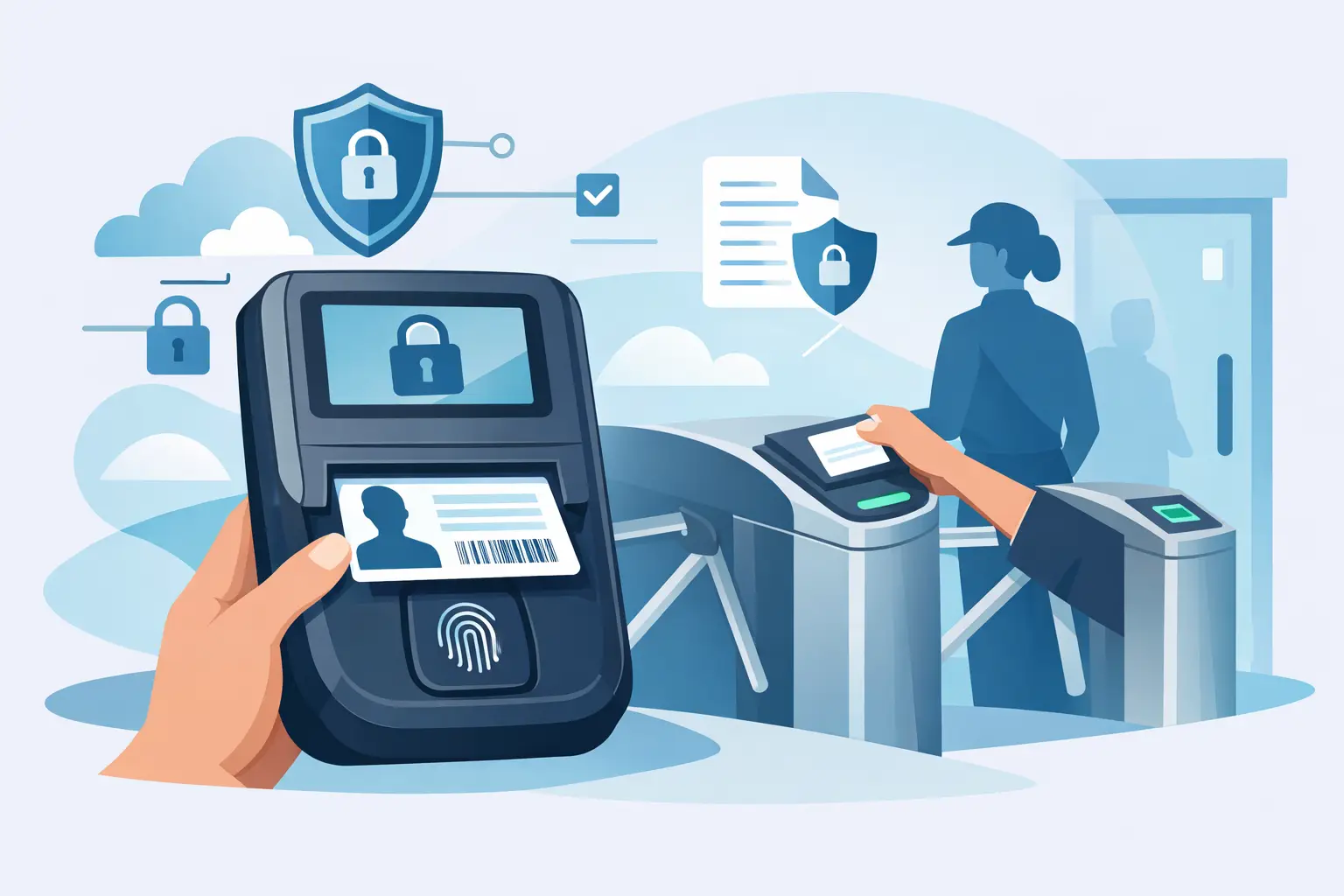
A packed entry line is where weak document screening becomes expensive. A door team that relies on visual inspection alone can miss altered birth dates, borrowed IDs, and counterfeit documents while slowing down legitimate customers. The best portable document readers help operators make fast, defensible access decisions without turning entry into a bottleneck.
For bars, nightclubs, dispensaries, gun shops, dealerships, healthcare facilities, and other ID-critical businesses, the right device is not simply a card reader. It is a frontline security tool. It should verify age, assess document authenticity, work when connectivity drops, and fit the pace of a real operation.
What Makes a Portable Document Reader Worth Buying?
Portable readers vary widely. Some are built for basic barcode capture. Others are designed for high-volume screening, document authentication, and patron management. The difference matters when an underage sale, fraudulent transaction, or dangerous repeat visitor can create legal, financial, and reputational exposure.
Start with the job the device must do at the point of entry. A low-volume operation may need a compact reader for age verification and simple ID data capture. A busy venue may need rapid scanning, alerts for banned patrons, and the ability to recognize VIPs without asking staff to memorize faces or names. Multi-location businesses may also need devices that share approved and restricted patron records across sites.
A reader should reduce judgment calls, not create more of them. Staff need a clear result they can act on in seconds: age verified, document suspicious, or patron requires attention.
The Capabilities to Compare in the Best Portable Document Readers
Instant age verification
For age-restricted businesses, age calculation must be immediate and accurate. The reader should extract the date of birth from a driver's license or passport and return a clear pass or fail result based on your configured minimum age.
This is more reliable than manually calculating a birth date during a rush. It also gives new door staff a consistent workflow from their first shift. For alcohol service, cannabis sales, firearms transactions, and other regulated interactions, consistency at the counter or door is a practical compliance control.
Fake ID and document-security analysis
Reading a barcode is not the same as authenticating an ID. Counterfeiters can create or copy barcodes that return believable data. A stronger portable reader evaluates the physical and digital security features of the document, looking for signs that the ID may be altered, counterfeit, expired, or otherwise suspicious.
Look for equipment that analyzes multiple document security indicators rather than relying on barcode data alone. This matters most in nightlife and other high-risk environments, where staff may see large volumes of out-of-state licenses, damaged cards, and sophisticated fakes.
No device eliminates the need for sound staff judgment. A suspicious result should trigger a defined escalation process, such as requesting a second form of identification or refusing entry. But a reader gives staff a reliable reason to pause instead of making an uncertain call under pressure.
Offline operation
Internet-dependent screening creates a predictable failure point. Wi-Fi drops. Cellular signals weaken in crowded buildings. A vendor system may have an outage at the worst possible time. If core verification stops when the connection does, the device is not built for door operations.
Prioritize an offline-first reader that continues to scan IDs, calculate age, and perform core verification without internet access. Cloud connectivity can add useful tools, but it should enhance operations rather than stand between your staff and a valid screening decision.
This distinction is especially relevant for pop-up events, temporary locations, rural businesses, and venues with difficult building layouts. Connectivity should not determine whether you can check an ID.
Speed and physical format
Portable does not have to mean slow or fragile. Consider how the unit will be carried, charged, handed between staff, and used in low light. A compact device is often the right choice for a bartender, security guard, mobile sales team, or small venue. A more capable handheld unit may suit a busy entrance where staff need a larger interface and more intensive screening functions.
Test the workflow in practical terms. Can a guard scan a license while holding a radio? Can staff see the result in dim lighting? Is the device durable enough for a crowded Friday night? A reader that saves two seconds per scan can materially improve line flow over a full shift.
Patron management and alerts
The best screening systems do more than verify documents. They help teams manage recurring operational risk. Banned-patron alerts can notify staff when a restricted individual presents an ID. VIP recognition can help operators deliver better service to known guests without weakening entry controls.
These tools are only useful if the records are accurate and the alert is visible at the moment of scan. Operators should also be able to define retention rules and remove records when appropriate. Patron management should support a fair, consistent policy, not become an unmanaged database of old door notes.
Privacy and data controls
ID scanning creates a responsibility to handle personal information carefully. Before purchasing, determine what the reader stores, where it stores it, how long records remain available, and who can access them.
For many use cases, verification-only mode is the right default. It allows staff to confirm age or document status without retaining unnecessary personal data. When retention is required for a business purpose, operators should be able to set a practical retention period and control whether data stays on the device, synchronizes to a cloud service, or both.
Encryption also matters. Systems that use protections such as AES-256 encryption offer a stronger foundation for protecting stored information. Privacy controls are not just a legal checkbox. They reduce the amount of sensitive data your operation has to protect in the first place.
Match the Reader to Your Operating Model
A standalone portable reader is often the best fit for independent operators that need strong document checks without another mandatory monthly software bill. Direct-purchase hardware can provide predictable costs, particularly for businesses that only need one or two devices and do not require shared patron records.
Multi-location organizations have different needs. If a banned patron is identified at one location, security leaders may need that information available at another location quickly. Optional cloud synchronization can support that model by sharing selected records across authorized devices while maintaining local scanning capability when internet service is unavailable.
Kred offers this approach through portable Compact and Pro scanners, with optional Kred Cloud synchronization for operators that need coordinated patron intelligence. Core scanning remains available without a required subscription, which lets businesses pay for connected functionality when it serves a real operational need.
Questions to Ask Before You Commit
Ask vendors whether their reader authenticates documents or merely reads barcode data. Confirm which IDs and passports it supports, how it performs in offline mode, and what happens when a scan flags a suspicious document. Ask whether age thresholds can be configured for your business and jurisdiction.
You should also clarify the total cost of ownership. Hardware price is only one part of the decision. Understand any required subscriptions, per-scan charges, cloud fees, replacement costs, warranty terms, and support availability. A low upfront price can become costly if critical functions are locked behind recurring fees.
Finally, involve the people who will use the device. Door staff and managers can identify workflow issues that may not appear in a product specification. The best reader is one your team can operate correctly every shift, even when the line is long and conditions are difficult.
The right portable document reader earns its place at the door by making the secure decision the easy decision: verify quickly, identify risk early, protect customer privacy, and keep your operation moving.