How to Verify License Holograms at the Door
A hologram that looks convincing under a bar light can still be counterfeit. For door teams, learning how to verify license holograms is useful, but it should never be the only decision point. Modern fake IDs can reproduce a basic seal, state outline, or shifting pattern well enough to pass a rushed visual check. The goal is to spot inconsistencies quickly, preserve the flow of entry, and escalate questionable IDs before they become a compliance problem.
A license hologram is one security feature in a larger document system. Its design, placement, and motion effect vary by issuing state, card generation, and renewal year. Staff who rely on a single remembered image or a single trick often miss the details that separate a legitimate credential from a high-quality fake.
What a license hologram is designed to show
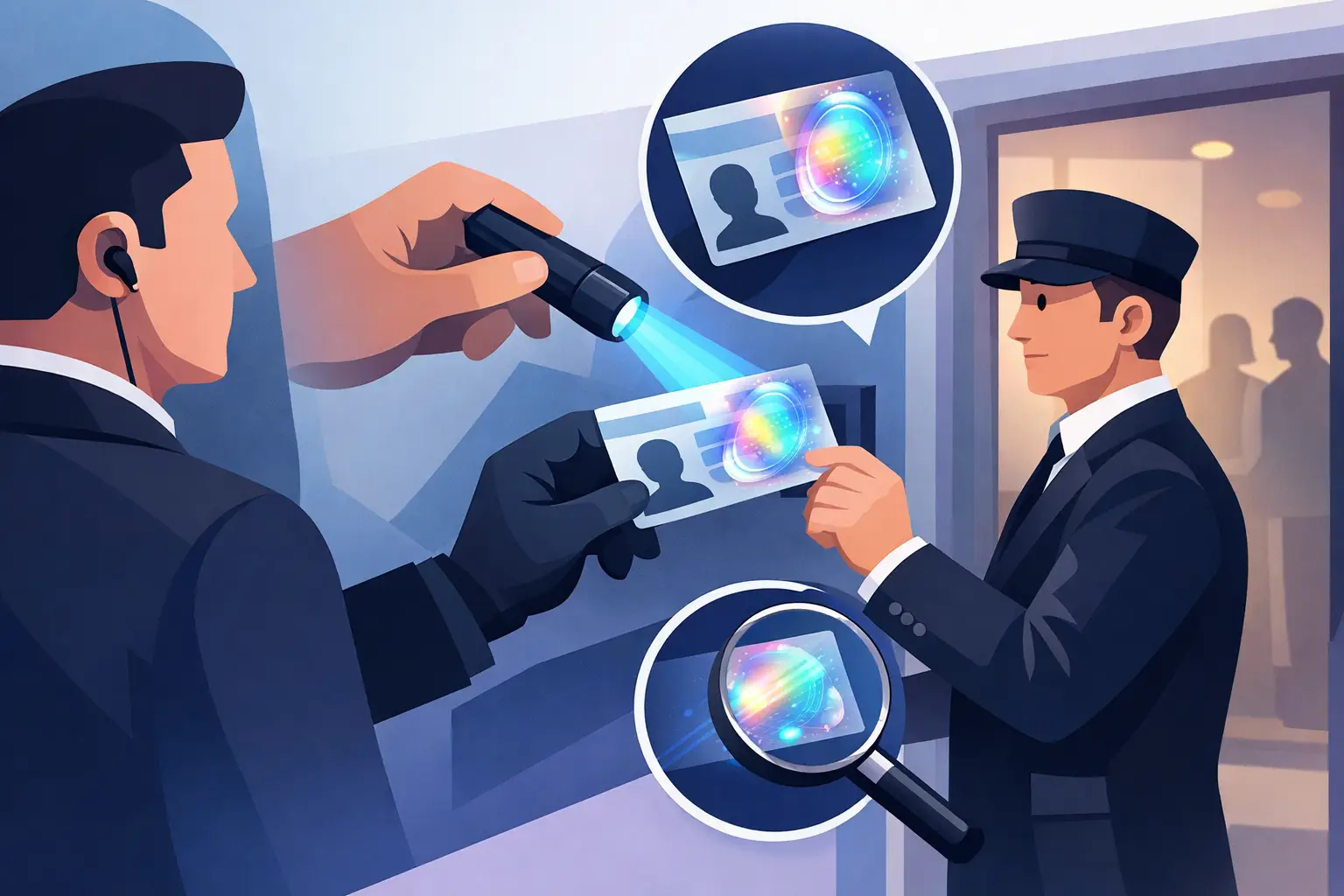
A hologram is an optical security feature embedded in, printed on, or laminated over the license card. When the card is tilted under direct light, it may reveal a state seal, name, symbol, portrait, date, or repeating pattern. Real holograms generally appear integrated into the card layer rather than sitting on top like a sticker.
The exact effect depends on the jurisdiction. One state may use a ghosted portrait and seal; another may use a repeating overlay that shifts across the card. Some newer credentials combine holographic elements with raised text, laser engraving, ultraviolet images, microprinting, barcode data, and tactile features. That is why a door person should avoid treating any one visual feature as universal.
A counterfeit may have a shiny overlay that changes slightly in the light. The difference is often in the quality and behavior of that effect. Poor reproductions can look flat, overly reflective, pixelated, or disconnected from the printed design beneath them. Better counterfeits may get closer, which is where systematic inspection and ID scanning matter.
How to verify license holograms in a fast door check
Start with the card in your hand, not from across the counter. Tilt it slowly under a consistent light source. A phone flashlight or fixed white entry light is usually more useful than colored club lighting. You are looking for a clean change in the holographic image, along with alignment between the overlay and the information printed on the card.
Do not just ask, “Do I see something shiny?” Ask whether the effect makes sense for the document. Does the seal or image sharpen and move as the angle changes? Does it line up with the portrait, state design, or background pattern? Does the laminate look continuous from edge to edge? A legitimate card should look intentionally manufactured, not assembled in layers.
Use this short inspection sequence when an ID deserves a closer look:
- Tilt the card under direct light and watch for a crisp, consistent holographic effect.
- Compare the hologram’s placement with the card’s printed elements and portrait area.
- Check edges and corners for lifting laminate, bubbles, unusual thickness, or separate layers.
- Examine the photo, birth date, fonts, and spacing for signs of alteration or poor reproduction.
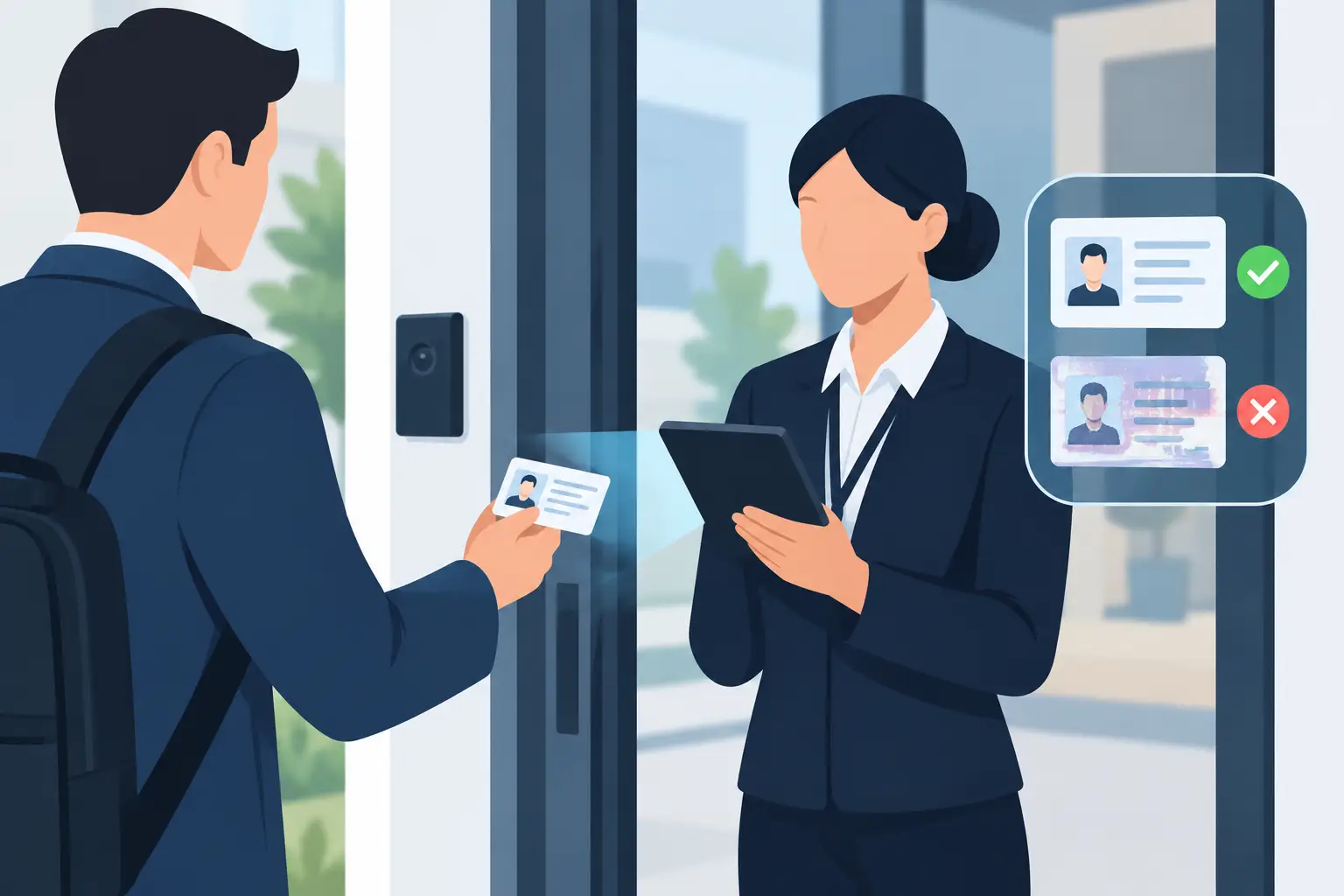
- Confirm that the barcode scan and the visible information agree with each other.
This process should take seconds for a routine credential. If the card becomes questionable, move the patron out of the main line and follow the venue’s escalation procedure. A prolonged debate at the door creates pressure on staff and rewards people who want a rushed decision.
Check motion, clarity, and placement
A real hologram generally has depth. As you tilt the ID, the image may appear to move, shift color, or emerge at different angles. It should not behave like a static printed graphic covered by glossy laminate. Look for clean edges and fine details. A blurry state seal, broken lines, or a pattern that only appears in one narrow angle can indicate a reproduction.
Placement matters just as much. Holograms are designed into the card layout. If an overlay appears offset from the portrait or cuts awkwardly across text, the card may have been altered. Be especially cautious when the hologram appears unusually bright in one area but absent where the state design should continue.
Inspect the physical card, not only the image
Counterfeiters often focus on the front-facing visual cues because they know that is where staff look first. The card itself may tell a different story. Run a finger lightly across the surface and edges. A real ID should have a uniform finish appropriate to its issuer. Raised sections, peeling corners, cloudy laminate, and inconsistent thickness deserve attention.
Avoid bending, scraping, or damaging the credential. The objective is verification, not destruction. A venue should also train staff not to retain an ID unless its policy and local law clearly permit it. When in doubt, decline entry and document the incident according to your established process.
Why holograms alone are not enough
A hologram is a useful visual filter, but it cannot reliably prove that the card is authentic or belongs to the person presenting it. High-quality counterfeit IDs may include convincing optical overlays. Altered genuine licenses can retain their original hologram while carrying a changed photo or date of birth. Borrowed IDs can be completely genuine documents in the wrong hands.
That is the operational limitation of visual-only checks. A trained employee can catch obvious fakes, but fatigue, low light, packed lines, and varying state designs create room for error. Bars, clubs, dispensaries, gun shops, and other verified-ID businesses need a process that supports staff rather than asking them to memorize every license version in circulation.
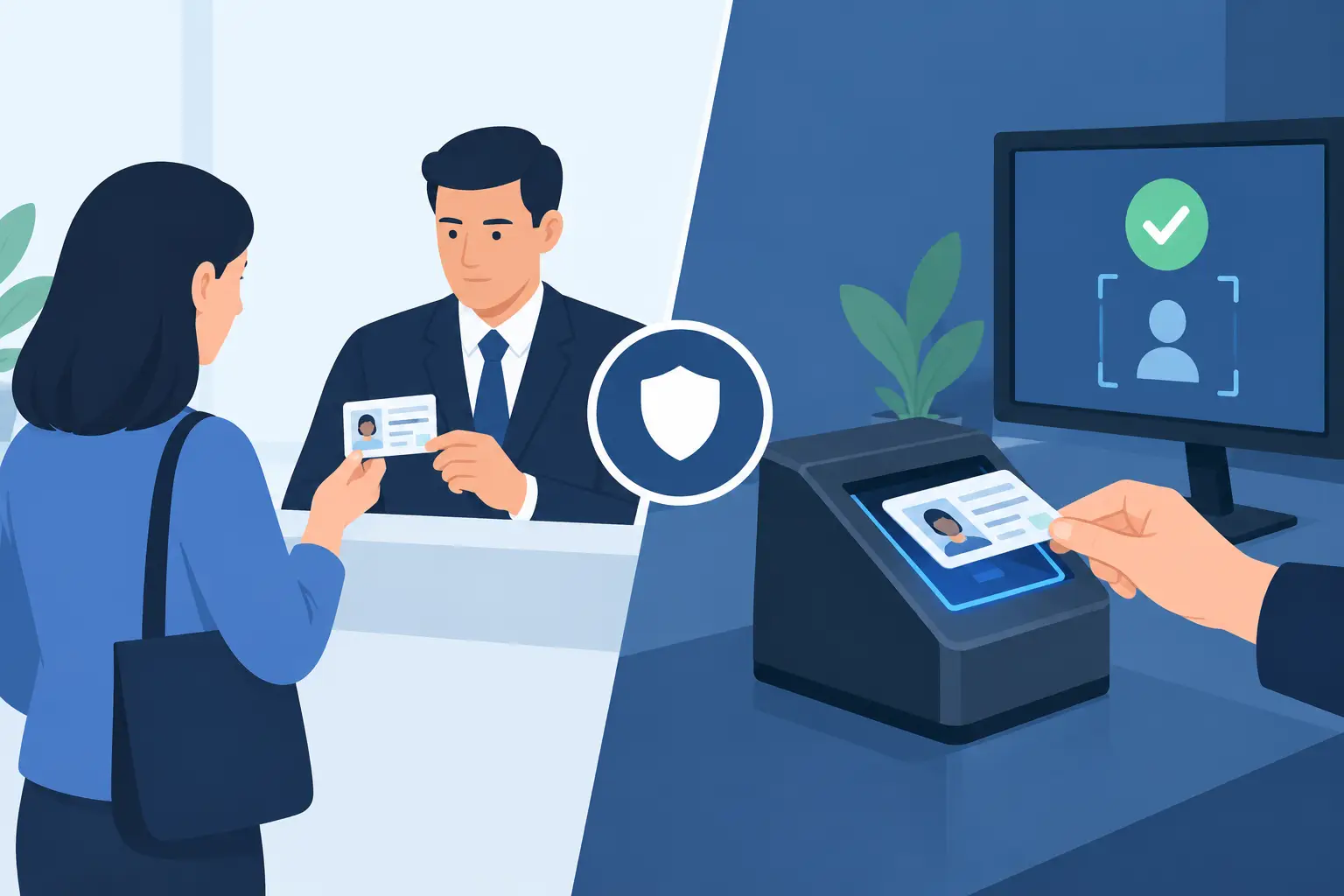
An ID scanner adds a second layer by reading machine-readable data and evaluating document security indicators. It can identify mismatches between barcode data and printed fields, flag suspicious formats, and help staff make a faster, more consistent decision. Kred scanners, for example, analyze more than 60 security indicators while providing instant age verification, including during an internet outage.
Scanning does not remove the need for human judgment. A staff member still needs to compare the photo with the presenter, notice signs of tampering, and follow venue policy when an alert appears. The strongest setup combines trained visual inspection, scan-based verification, and a clear escalation path.
Build a repeatable verification workflow
The best door procedures reduce discretionary guesswork. Every staff member should know when to perform a quick visual review, when to scan, and when to call a supervisor. This keeps standards consistent across shifts and prevents a busy night from lowering the threshold for entry.
For most venues, the workflow begins with a face-to-photo comparison and a brief physical review. Scan the ID, confirm the age result, and check for warnings or data inconsistencies. If the hologram, card construction, visible data, scan result, or patron behavior raises concern, do not try to solve the issue through argument. Pause the transaction, move it away from the line, and have a manager or designated lead make the final call.
Multi-location operators should also standardize how exceptions are recorded. A clear internal note about a suspicious document, denied entry, or attempted use of another person’s ID can help identify repeat behavior. Privacy controls matter here. Collect only the data needed for verification and patron-risk management, set practical retention periods, and restrict access to authorized staff.
Common mistakes that let questionable IDs through
The most common error is checking only the date of birth. A date can be printed correctly on a fake card, and a valid age does not make the credential genuine. Another mistake is relying on colored lighting, which can hide holographic detail and make cheap laminate look legitimate.
Staff also lose time by treating every unfamiliar out-of-state license as fraudulent. License designs change, and legitimate visitors carry documents your team may not see often. The right response is not guesswork. Use a scanner capable of recognizing a broad range of credentials, then inspect any flagged or inconsistent document more closely.
Finally, do not let a long line force a weak decision. The cost of admitting one underage or fraudulent patron can exceed the few seconds saved by skipping verification. Fast entry matters, but controlled entry protects the license, the staff, and the business.
A hologram should give your team a reason to trust or question a document, not a reason to stop checking. When staff know what to look for and have reliable scanning support behind them, the door moves faster with fewer avoidable risks.