Cannabis Compliance Software That Works at the Door
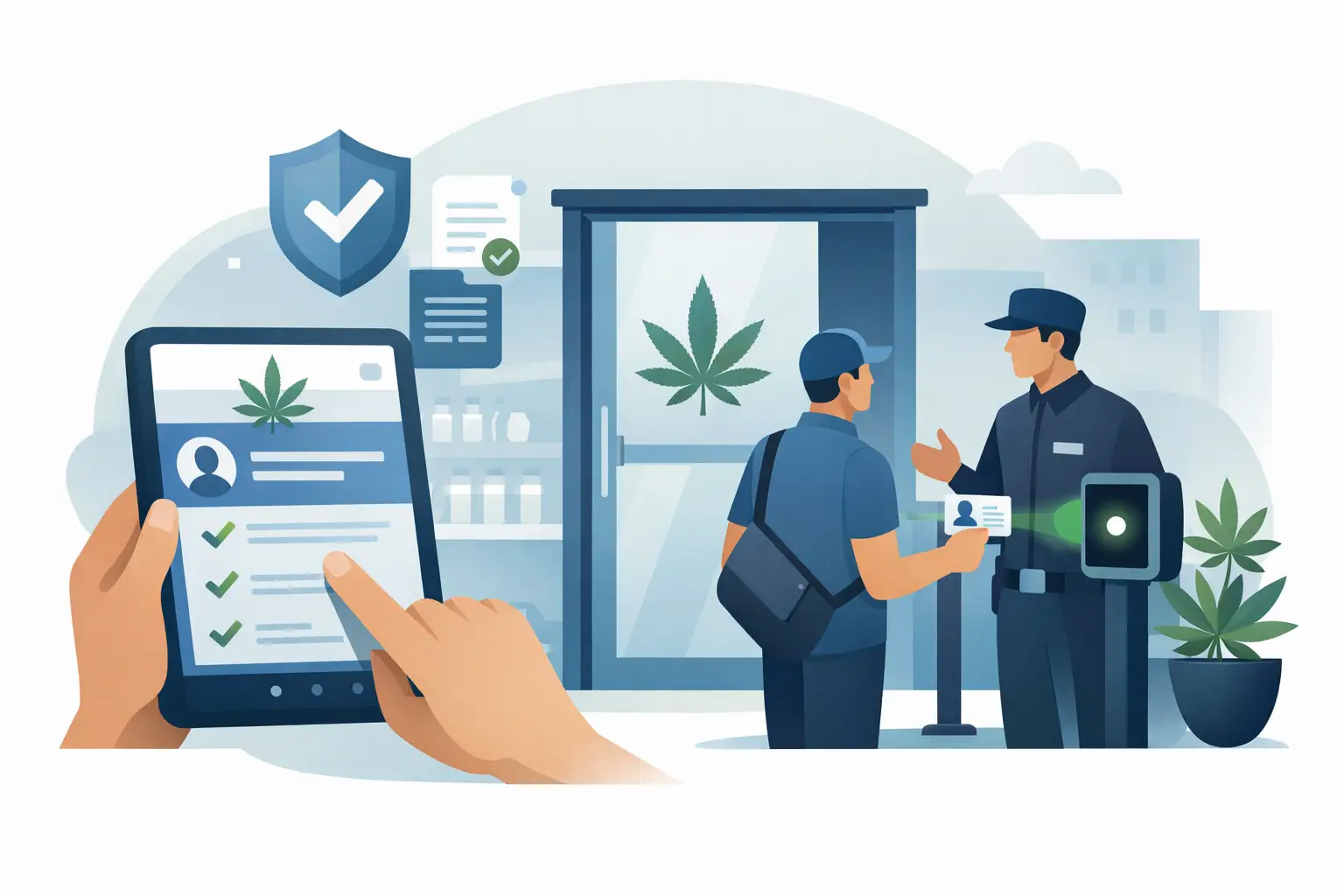
A dispensary can have accurate inventory records and a compliant point-of-sale workflow, then still create serious risk at the front door. Cannabis compliance software should help staff establish who is entering, whether an ID is valid, and whether the business can prove it followed its access policy when questions arise.
That job has to happen in seconds. A line at the entrance, an impatient customer, a convincing fake ID, and an internet outage are not edge cases for cannabis operators. They are normal operating conditions. The right technology supports fast, consistent decisions without turning the door into a bottleneck or collecting more customer information than the business needs.
What Cannabis Compliance Software Must Handle at Entry
Cannabis compliance covers more than a single transaction. State and local rules vary, but dispensaries commonly need to prevent underage access, restrict entry to authorized customers or patients, maintain required records, and protect customer information. In many markets, a failure at the entrance can put the entire operation at risk.
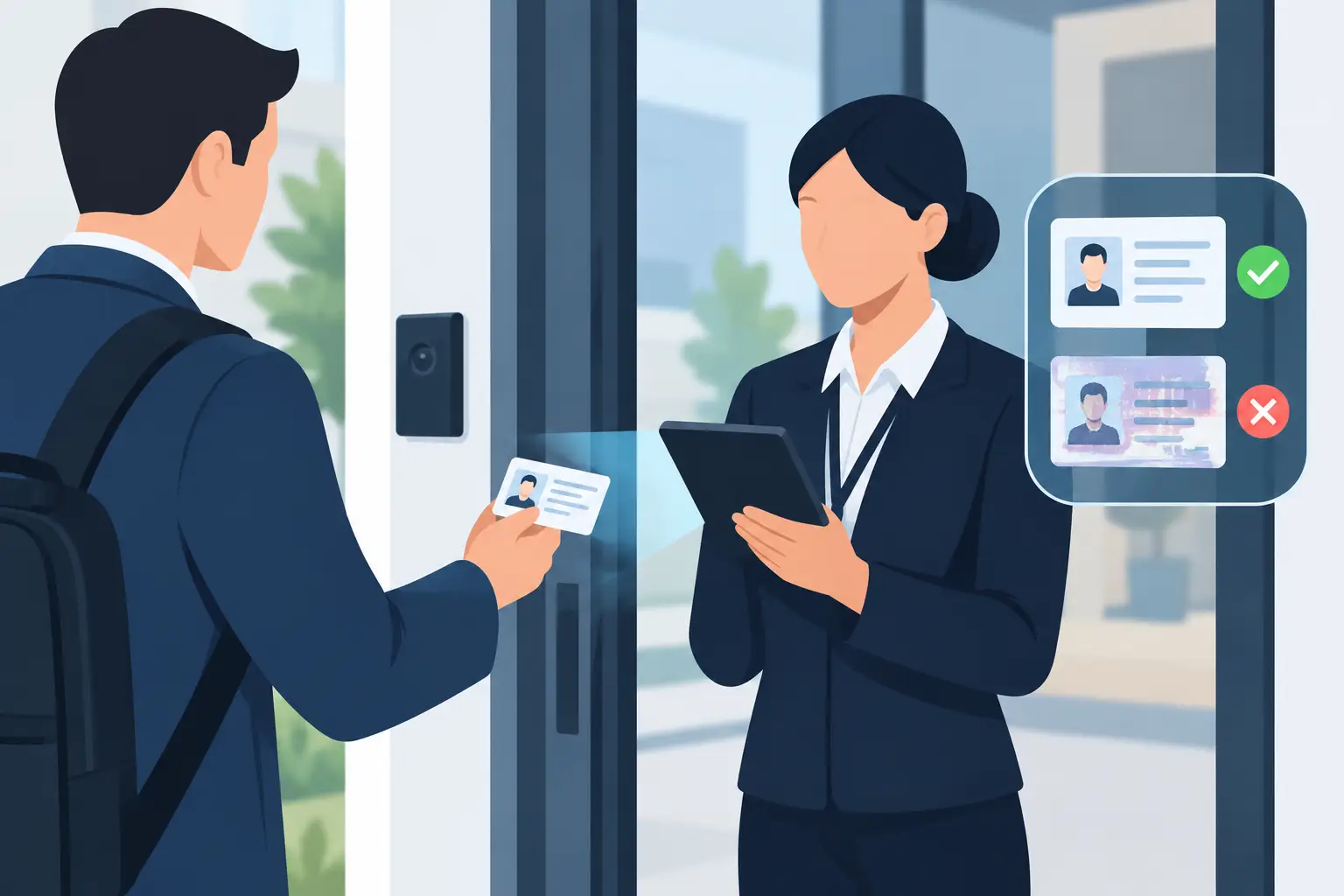
For front-of-house teams, the immediate priority is age and identity verification. Visual ID checks depend heavily on individual judgment, especially during a rush. Staff may recognize an expired license, but a high-quality counterfeit, altered birth date, or borrowed legitimate ID can be harder to catch. Scanning hardware that analyzes document data and security features gives the team a more consistent screening process.
A strong entry workflow should also identify suspicious IDs before a customer reaches the sales floor. That protects licensing, staff, inventory, and the customers already inside. It also gives managers a clear policy to enforce: scan the ID, review the result, and escalate exceptions instead of asking door staff to make high-pressure guesses.
Compliance requirements differ by state, municipality, license type, and whether the facility serves adult-use or medical customers. Operators should confirm their specific legal obligations with qualified counsel and regulators. Software can support a policy, but it cannot replace one.
Cannabis Compliance Software Is Not One System
The phrase cannabis compliance software can describe several different tools. That distinction matters when evaluating a purchase. A dispensary may need seed-to-sale reporting, point-of-sale controls, employee permissions, camera systems, identity verification, or all of the above. No single category automatically handles every requirement.
Seed-to-sale and inventory systems
Seed-to-sale platforms track cannabis through required state reporting workflows. They help operators reconcile inventory, record transfers, and maintain transaction data. These systems are central to product accountability, but they do not necessarily tell a door attendant whether the person presenting an ID is of age or whether the document appears fraudulent.
Point-of-sale compliance controls
A compliant POS can apply purchase limits, manage taxes, and retain transaction records. It is vital at checkout. Yet the checkout counter is often too late to make the first age-verification decision, particularly when customers enter a waiting area, browse products, or interact with staff before purchase.
Entry verification and patron management
ID-scanning technology addresses the access-control layer. It can instantly read a driver's license or passport, calculate age, and flag suspicious documents. Depending on the configuration, it can also support VIP recognition and banned-patron alerts. For a multi-location operator, cloud synchronization can help ensure that an exclusion added at one site is visible at another.
These systems should complement each other. Inventory software controls the product record. POS manages the sale. Door verification controls access. A dispensary that treats them as interchangeable may leave a gap exactly where underage entry and identity fraud begin.
What to Require From a Dispensary ID Verification System
Speed is essential, but it is not the only buying criterion. The best system is one the team will use correctly through every shift. Look for capabilities that match real door operations:
- Instant age verification from common government IDs, including driver's licenses and passports.
- Suspicious ID detection based on multiple document security indicators, not only barcode data.
- Offline operation, so screening continues during internet interruptions.
- Clear visual and audible results that staff can act on without extensive training.
- Configurable data retention and verification-only workflows for privacy-conscious operations.
- Encryption and role-based controls for any information the business chooses to retain.
- Optional cloud synchronization for organizations that need shared patron intelligence across devices or locations.
The trade-off is usually between simple standalone operation and centralized visibility. A single dispensary may prefer a direct-purchase device with local scanning and no mandatory subscription. A larger group may decide that synchronized banned-patron alerts, centralized settings, and multi-device reporting justify a cloud service. Neither approach is inherently better. The right choice follows the operator's footprint, risk profile, and privacy policy.
Privacy Is Part of Compliance
Cannabis customers have valid expectations about personal information. A business should not assume that collecting every available data field improves compliance. Excessive retention creates more information to protect, more exposure if a breach occurs, and more complexity when responding to customer or regulatory questions.
A practical policy starts with purpose. If the goal is to confirm a customer meets the legal age requirement, verification-only mode may be appropriate. If the facility needs to maintain a banned-patron list after repeated theft, violence, fraud, or other documented incidents, retain only the information needed to enforce that safety policy. Set retention periods deliberately and limit access to authorized managers.
Operators should also understand where data resides. An offline-first scanner can continue verifying IDs without relying on a live connection. That helps maintain control during outages and reduces the operational temptation to bypass screening when connectivity fails. Where cloud features are used, encryption such as AES-256 and clear retention controls should be part of the evaluation.
Privacy is not a reason to avoid ID verification. It is a reason to choose a system that verifies identity with discipline rather than treating customer data as an asset to collect by default.
Build the Process Around the Scanner
Technology works best when the operating procedure is simple. Place the scanner where every customer must pass before entering a restricted area. Train staff to scan every applicable ID, rather than using the device only when an ID "looks suspicious." Consistency protects the business and reduces claims of uneven treatment.
Staff should know what each result means. A valid age result may permit entry under the facility's rules. A suspicious or unreadable result should trigger a defined secondary review, such as checking a second form of identification, asking a manager to inspect the document, or denying entry when the policy requires it. Door staff should never be pressured to override a result simply because a line is building.
Managers should review exceptions regularly. If the same failure type appears repeatedly, the issue may be training, lighting, device placement, or a local counterfeit trend. If banned-patron alerts are used, establish who can add a person, what documentation is required, how long an alert remains active, and how disputes are handled. These controls prevent a useful safety tool from becoming an informal and inconsistent list.
Measure the Operational Result
A compliance tool should produce a visible operational benefit. Watch average entry time, the number of rejected or suspicious IDs, exception rates, staff override patterns, and any incidents involving restricted access. These measures reveal whether the process is working without turning the front door into a paperwork exercise.
For many dispensaries, the most valuable result is uneventful: qualified customers enter quickly, staff feel supported, fake IDs are stopped, and managers have confidence that the door process did not depend on one employee's judgment. A purpose-built scanner such as Kred can support that model with instant age verification, suspicious ID detection, offline operation, and optional cloud tools when multi-site visibility is needed.
The front door is where a dispensary's compliance posture becomes real. Choose technology that keeps that decision fast, defensible, privacy-conscious, and dependable when the shift gets busy.