Counterfeit License Detection at the Door
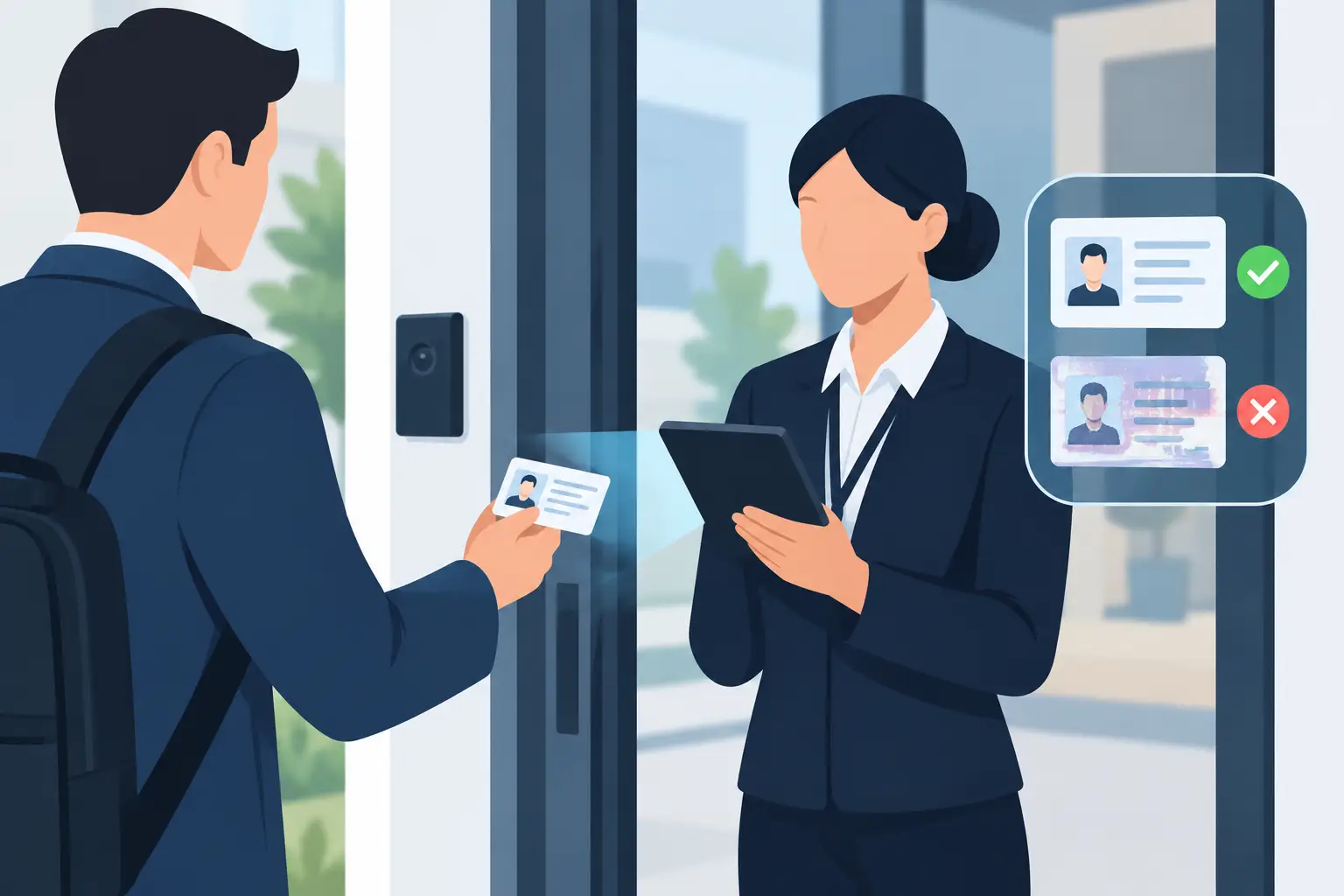
A crowded entry line leaves very little room for guesswork. One convincing fake ID can expose a bar, club, dispensary, or other regulated business to underage sales, enforcement action, chargebacks, theft, and avoidable reputational damage. Counterfeit license detection gives door staff a faster, more consistent way to identify suspicious credentials before the patron gets inside.
The goal is not to turn every security employee into a document examiner. It is to establish a repeatable screening process that confirms age, flags inconsistencies, and gives staff a clear next action when an ID does not pass inspection. The right process protects the business without slowing legitimate guests to a standstill.
Why visual ID checks are no longer enough
Experienced door staff can catch obvious fakes. A photo that does not match the holder, a birth date that does not make sense, or a laminated card with poor print quality should raise immediate concerns. But modern counterfeit licenses are built to survive a quick glance in a dimly lit line.
Some are altered real IDs. Others are fully fabricated cards designed to copy the layout, fonts, barcodes, and holographic elements of a valid driver's license. Digital templates and online counterfeit suppliers have lowered the barrier for minors and fraudsters. A staff member checking IDs manually must make a high-stakes judgment in seconds, often while managing a busy entrance and an impatient crowd.
That is a weak point in any compliance program. Manual inspection depends on individual experience, lighting, fatigue, and the pressure of the moment. It also produces inconsistent results from one shift to the next. A strong counterfeit license detection program supports staff judgment with a standardized verification process.
What effective counterfeit license detection checks
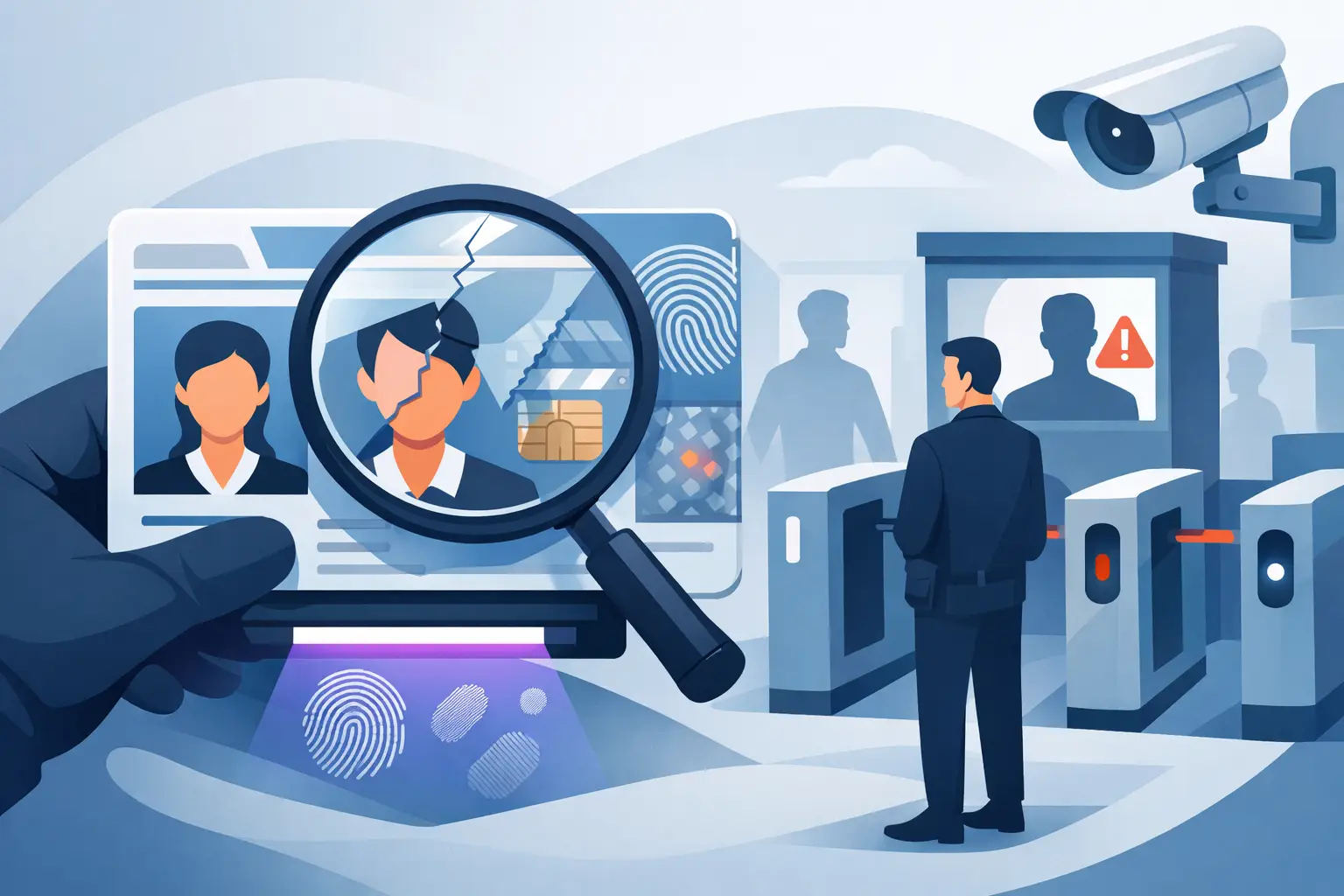
A purpose-built ID scanner does more than read a birth date from a barcode. It compares data and analyzes document security characteristics that are difficult to evaluate reliably by eye. That distinction matters because a barcode can be copied onto a fake card, while the physical document may still contain signs of manipulation or fabrication.
Effective screening should bring together several layers of verification:
- Age calculation based on the date of birth encoded on the credential.
- Barcode and machine-readable data checks to identify malformed, missing, or inconsistent information.
- Document-format analysis that compares ID details against known issuing-jurisdiction patterns.
- Security-feature analysis, including visible and machine-detectable elements associated with authentic credentials.
- Photo and physical-card review by trained staff when the scan produces an alert or the person does not match the ID.
Kred scanners analyze more than 60 security indicators while delivering instant age verification. That gives operators more than a simple green or red age result. It creates a meaningful signal when an ID warrants further attention.
No device should be treated as a substitute for staff awareness. A scanner can identify suspicious data or security features, but staff should still compare the portrait, age, card condition, and behavior of the person presenting it. The strongest results come from pairing technology with a documented door policy.
Build a screening process staff can use under pressure
A counterfeit detection program only works if it fits the realities of entry operations. If scanning is too slow, complicated, or dependent on a stable connection, staff will bypass it during a rush. The process needs to be quick enough for Friday night, clear enough for new hires, and reliable enough for an audit or incident review.
Scan every applicable ID, not only suspicious ones
Selective scanning creates inconsistency. It can also create a security gap, because the most polished counterfeit IDs are specifically made to avoid looking suspicious. For businesses with an age threshold or ID requirement, a scan-first policy provides a consistent standard for every guest.
This does not mean treating every customer as a problem. It means treating verification as a normal condition of entry or sale. Guests generally move through the process faster when staff are confident, direct, and consistent.
Define what happens after an alert
An alert is not a reason for staff to improvise. Management should establish the response in advance. For example, staff may pause the transaction, ask the guest to step aside, request a second form of identification where permitted, or escalate to a manager or security lead.
Your policy should distinguish between an expired ID, a barcode-read failure, a suspected altered ID, and a clear counterfeit indicator. These situations carry different levels of risk. An expired ID may be unacceptable for service but does not necessarily indicate fraud. A mismatch between card data and security checks deserves a more careful review.
Avoid confrontational language. Door staff do not need to accuse someone of committing a crime. A practical response is: “We cannot accept this ID for entry today.” That protects employees, reduces escalation, and keeps the line moving.
Keep verification available when connectivity fails
Internet-dependent screening creates an operational vulnerability. If a venue loses Wi-Fi during service, staff still need to verify age and screen IDs. That is why offline-first operation matters for nightlife venues, events, dispensaries, and any location where a connectivity outage cannot pause the front door.
Offline capability supports core verification at the point of entry without forcing employees back to manual checks. Cloud synchronization can still add value for multi-location operators that want shared banned-patron alerts, VIP recognition, or coordinated reporting across devices. But local scanning should not stop because the connection does.
Train staff to recognize the limits of a scan
A scan result is operational intelligence, not a license to ignore the person holding the card. Staff should know when to look closer and when to involve a supervisor.
Train employees to compare the live person with the photo, including facial structure, height, and age appearance. They should look for damaged laminate, uneven edges, altered dates, inconsistent typefaces, and card surfaces that appear tampered with. They should also understand that a real ID may be presented by someone other than its owner.
Training should be brief and repeatable. A five-minute refresher before a high-volume shift is often more effective than a long annual session that staff do not remember. Use real scenarios from your operation: a busy concert night, a group arriving together, a customer challenging an ID refusal, or an employee encountering an unfamiliar out-of-state license.
Managers should also review exception handling. When the device flags an ID but a staff member believes it is valid, who makes the final call? When a valid ID belongs to a banned patron, how should the team respond? Clear answers reduce uneven decisions and protect frontline employees from being pressured into exceptions.
Privacy controls are part of the security design
ID verification does not require retaining more personal information than the business needs. For many venues, the immediate objective is simple: verify age and identify suspicious credentials. Keeping full patron records by default can create unnecessary privacy exposure and complicate data-handling obligations.
A privacy-conscious system should allow verification-only workflows, configurable retention periods, and data minimization. Operators should be able to choose when records are retained, which roles can access them, and how data is protected. Encryption matters here, but so does operational discipline. A secure platform is only part of the equation if employees can export, access, or retain information without clear controls.
The right configuration depends on the business. A single-location bar may want a standalone device with no ongoing subscription requirement and minimal retention. A multi-site operator may choose cloud synchronization to share banned-patron information and maintain consistent standards across locations. Both models can support strong screening when the settings match the actual risk and compliance needs.
Measure the operational impact
Counterfeit license detection should improve more than compliance language in a policy manual. It should make entry decisions faster, reduce disputes, and give managers a clearer view of where risk is appearing.
Track practical measures: how many IDs are scanned, how often alerts occur, how many entries are refused, and whether certain shifts or events produce more suspicious credentials. These numbers help management schedule the right staffing, reinforce training, and identify when a local counterfeit trend may be affecting the business.
Do not judge the program solely by the number of fakes caught. A low alert rate can mean your controls are discouraging attempts before they reach the door. The better question is whether staff are consistently verifying IDs, applying policy fairly, and retaining the evidence needed to show that the business takes age and identity compliance seriously.
A reliable scanner, a clear response policy, and staff who know how to act on an alert turn the front door into a controlled checkpoint rather than a point of exposure. That is where compliance, loss prevention, and a better guest experience start.