Fake ID Detection That Holds Up at the Door
A busy door creates the exact conditions counterfeiters want: low light, a line forming behind them, staff trying to be courteous, and a credential that looks convincing at first glance. Effective fake ID detection is not about asking staff to become document-forensics experts. It is about giving them a fast, repeatable process that identifies risk before an underage guest, fraudulent buyer, or banned patron gets through.
For bars, nightclubs, dispensaries, gun shops, and dealerships, a missed ID issue can become more than an awkward interaction. It can expose the business to compliance violations, chargebacks, lost inventory, safety incidents, licensing consequences, and reputational damage. The right screening approach protects the operation without turning entry into a bottleneck.
Why Fake IDs Are Harder to Catch by Eye
The old approach was simple: look at the photo, compare the face, check the birth date, and move on. That still matters, but it is no longer enough. Counterfeit IDs can copy familiar layouts, barcodes, fonts, hologram-like effects, and even current card designs well enough to pass a quick visual check.
Some fraudulent credentials are fully fabricated. Others are altered real IDs, often with a changed birth date or photo. A third category is the borrowed ID, where the document may be genuine but does not belong to the person presenting it. Each requires a different response, which is why a single visual cue should not decide the outcome.
Experienced door staff can recognize common tells: mismatched typefaces, uneven laminate, inconsistent colors, incorrect state designs, or a photo that does not match the holder. But a well-made fake is designed to survive a rushed inspection. Human judgment remains necessary, yet it performs best when supported by ID-scanning technology that can evaluate information staff cannot reliably inspect in seconds.
What Reliable Fake ID Detection Checks
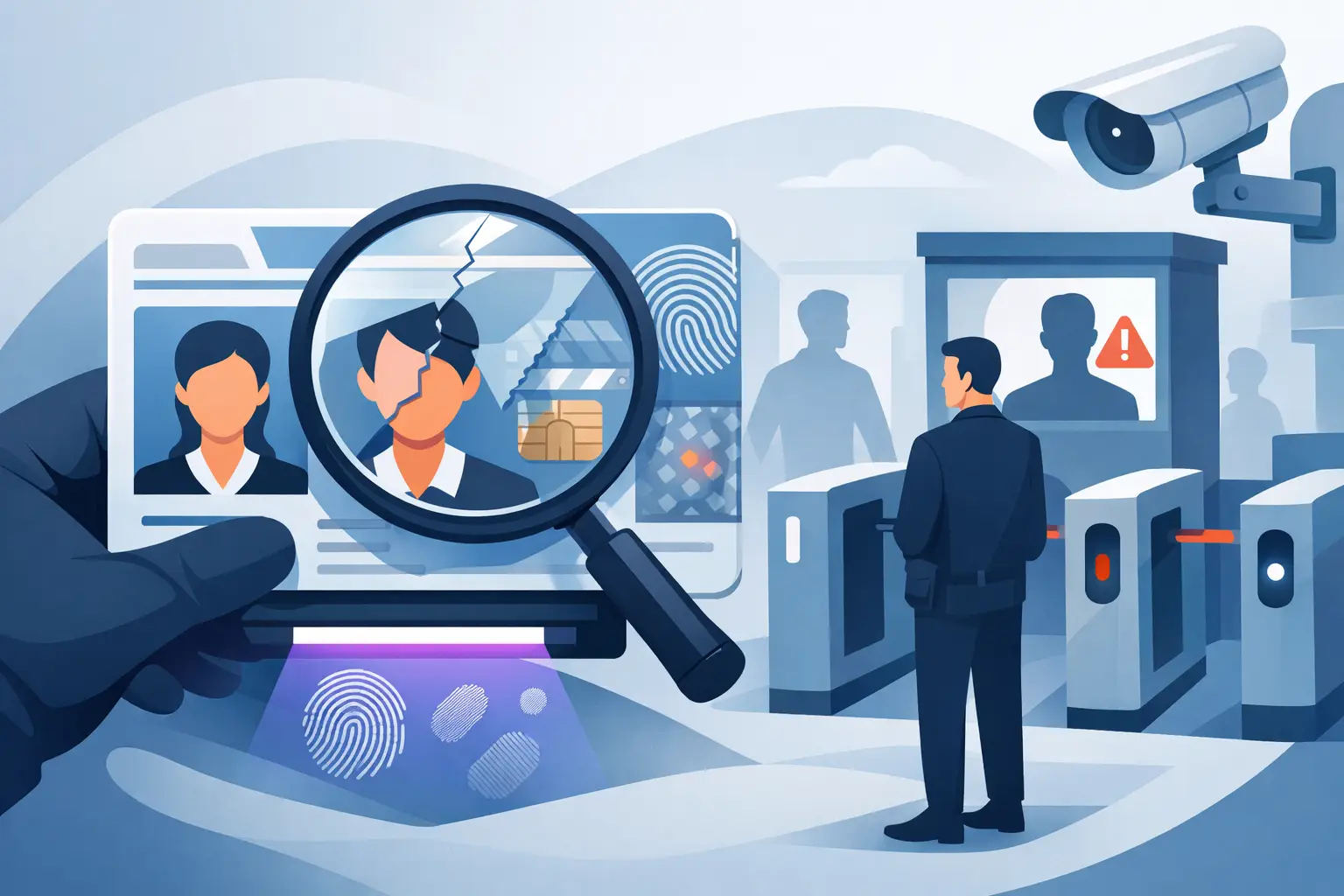
A purpose-built ID scanner reads the credential data and analyzes the document against expected rules. Depending on the ID and scanner capabilities, that can include barcode structure, encoded data consistency, expiration status, date-of-birth validation, issuing-jurisdiction format, document patterns, and security-feature analysis.
Kred scanners analyze more than 60 security indicators to flag suspicious IDs while delivering instant age verification from driver's licenses and passports. That matters because a barcode that scans is not automatically proof that an ID is legitimate. Fraudsters can create a barcode that contains plausible information. The useful question is whether the data, format, and security indicators all align with what a valid credential should contain.
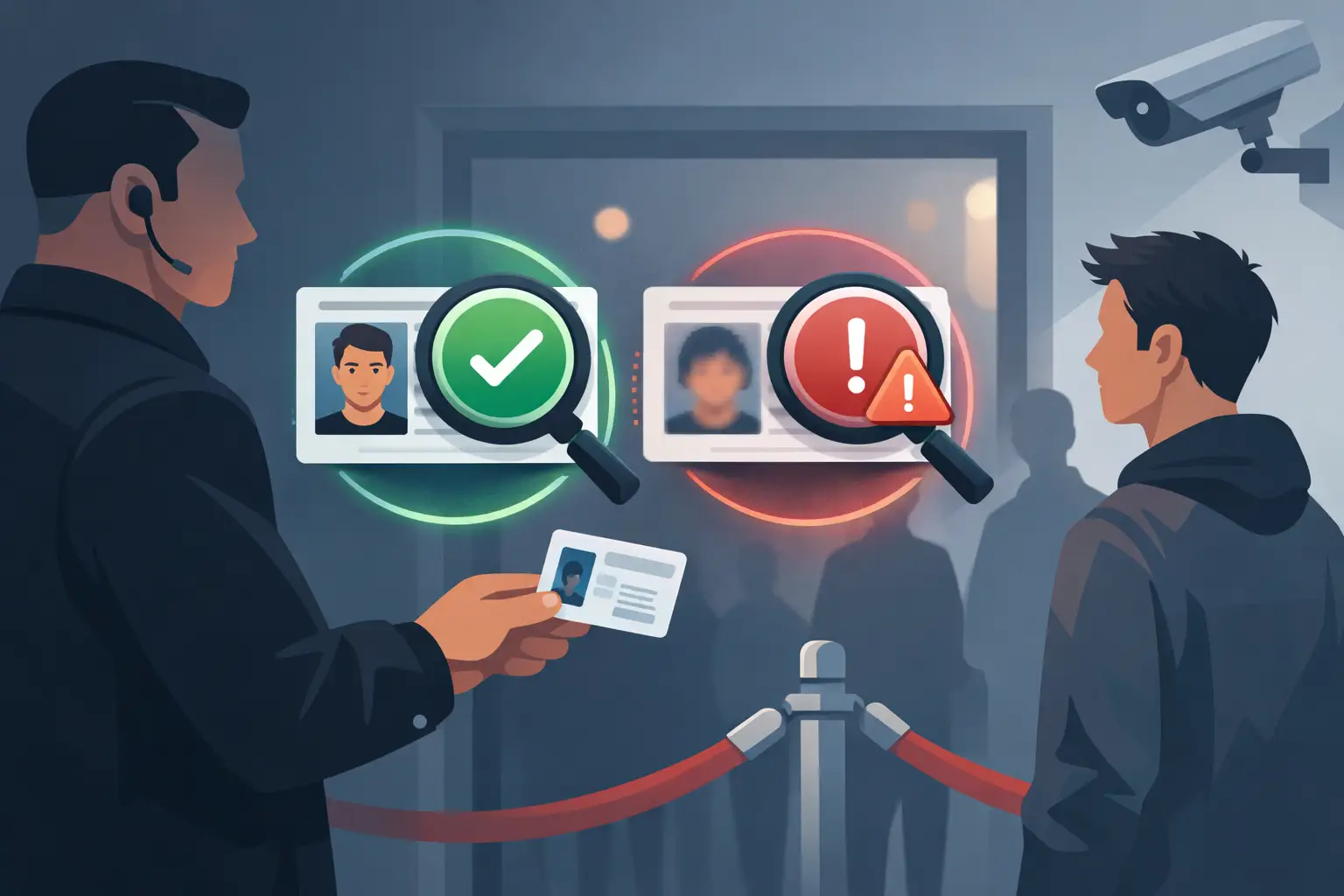
A strong system also gives staff a clear result they can act on quickly. If an ID is valid and the person meets the age requirement, entry can continue. If the scanner flags inconsistencies, staff can pause the transaction, request a second form of identification, involve a manager, or deny entry based on the venue's policy.
Detection is a decision aid, not a substitute for judgment
No scanner should be positioned as a license to ignore obvious warning signs. A genuine ID can still be presented by the wrong person, and legitimate documents may occasionally scan poorly because of wear, glare, damage, or an unusual issuance format.
The best workflow combines scanner results with a brief face-to-photo comparison and staff awareness. When a scan produces an alert, employees should follow a consistent escalation process rather than debating the ID at the door. Consistency protects staff, reduces arguments, and makes enforcement easier to defend.
Build a Door Process That Does Not Slow Service
The strongest fake-ID program is one staff can use when the line is longest. If verification feels complicated, people will skip steps. If it adds too much friction, managers will face pressure to abandon it during peak periods.
Start by defining one standard: scan every ID in the situations where verification is required. Selective scanning creates gaps and can make staff appear inconsistent. A universal process is faster to train, easier to enforce, and less likely to invite claims of unfair treatment.
Staff should scan first, review the result, compare the person to the photo, and then make the admission or sale decision. For an alert, the employee should not announce that the person has a fake ID unless the business has a clear policy and the facts support it. A more controlled response is to state that the ID cannot be accepted and request another acceptable credential or manager review.
Train staff on what happens after a refusal. They need to know when to call a supervisor, when to document the interaction, how to avoid escalating a confrontation, and whether local rules permit retaining a suspected fraudulent document. Policies should be reviewed with legal counsel and adjusted for the jurisdiction. Door staff should never improvise a seizure policy during a tense interaction.
Offline Verification Is an Operational Requirement
Internet-dependent screening creates a hidden weak point. Wi-Fi can drop, cellular service can fail in crowded areas, and a connectivity problem can occur exactly when a venue is at capacity. If verification stops whenever the connection does, staff are pushed back to visual inspection at the worst possible time.
Offline-first scanning keeps core age and ID verification available without internet access. That continuity is particularly valuable for nightlife venues, temporary events, remote locations, and businesses that cannot afford a line to stop because a network is unstable.
Cloud synchronization still has a role for multi-device and multi-location operations. It can distribute patron intelligence, including VIP recognition and banned-patron alerts, across approved devices. But cloud access should extend the operation, not become a mandatory dependency for basic screening. For many operators, the practical balance is local verification at the door with optional synchronization when connectivity is available.
Privacy Controls Need to Match the Risk
ID scanning can improve compliance while also creating responsibility for the information collected. Operators should collect only what they need for the stated purpose and set retention periods that reflect their business, legal, and risk requirements.
For a straightforward age check, verification-only mode may be the right fit. It confirms whether the credential meets the required age threshold without retaining unnecessary customer information. When records are needed for incident review, patron management, or internal compliance practices, access should be limited to authorized personnel and data should be protected with strong encryption, such as AES-256.
The trade-off is simple: more retained data can support investigations and repeat-patron controls, but it also increases the information the business must govern. A clear retention policy, role-based access, and regular review are more useful than collecting everything by default.
Different Venues Face Different ID Risks
A nightclub may be focused on stopping underage entry and identifying guests who have been previously banned for violence, theft, or harassment. Speed and queue management are central because one slow checkpoint can affect the entire guest experience.
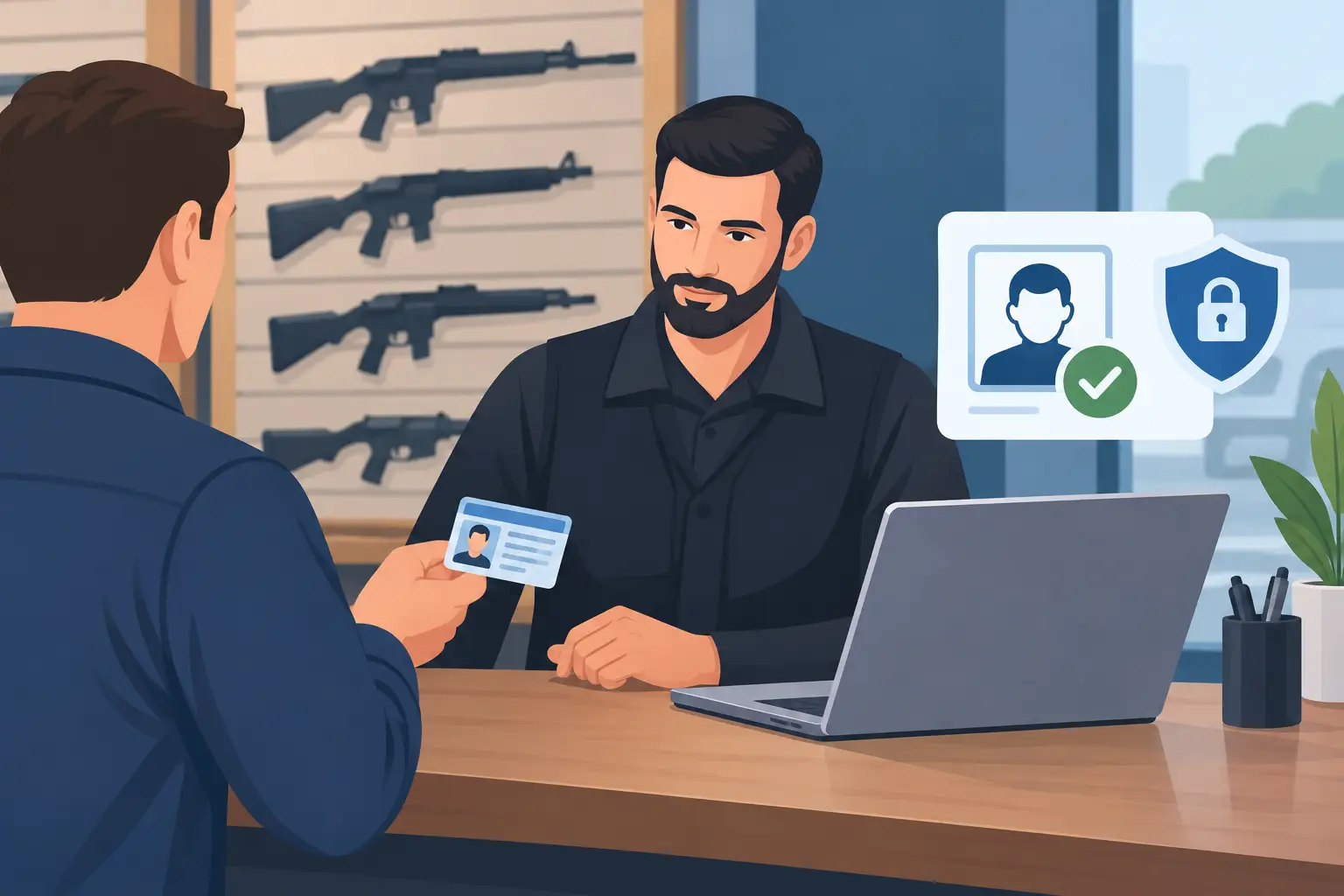
A dispensary may need consistent age verification at every transaction, with little room for subjective judgment. A gun shop has a different risk profile, where identity review supports a high-accountability sales process and staff need a reliable way to spot suspicious credentials before proceeding. Car dealerships may use ID verification to reduce test-drive fraud and establish more dependable customer records.
The tool can be similar, but the policy should fit the environment. A one-size-fits-all script rarely works as well as a defined workflow built around the operation's real risks.
Measure What Your Door Is Catching
Operators should periodically review the outcomes of their screening process. Look for alert trends by time, location, device, or event type. Are staff seeing repeated attempts with a particular document type? Are certain shifts producing more manual overrides? Is one entrance processing IDs differently than another?
These patterns can reveal training gaps, organized fraud attempts, or a need to adjust staffing. They also help management prove that ID verification is being treated as an operating control rather than a box checked after an incident.
The goal is not to create friction for legitimate customers. It is to make the wrong person, the underage guest, and the fraudulent credential face a controlled barrier before they become your problem. Set the process, equip the staff, and make every scan count.