Choosing a Nightclub ID Scanner for the Door
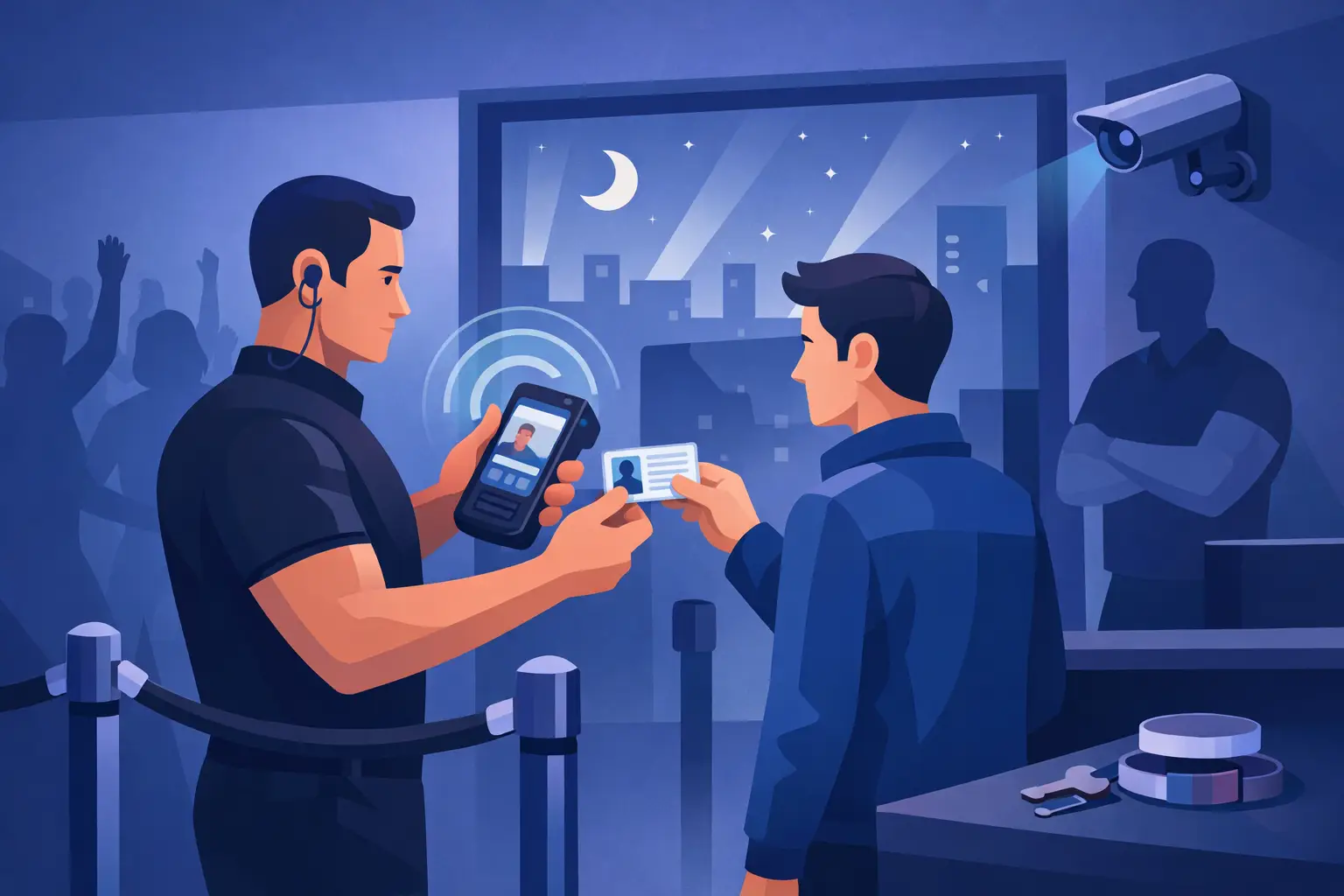
A packed line at 11:30 p.m. is not the place to make a judgment call on a questionable driver’s license. Door staff need to move legitimate guests through quickly while stopping underage entry, altered IDs, and patrons who create repeat problems. A nightclub ID scanner gives the door a consistent process: scan the credential, verify age, review alerts, and make a documented decision before the guest enters.
For nightclub operators, the right scanner is not simply an age calculator. It is access-control infrastructure. It affects alcohol-service compliance, security response, staff confidence, guest throughput, and the venue’s ability to protect its license and reputation.
What a nightclub ID scanner should do
At a minimum, a scanner should read a government-issued ID and return an immediate age result. That removes manual date-of-birth math and reduces the chance that a rushed or inexperienced employee waves through an underage guest. But age verification alone is not enough when high-quality counterfeit IDs are common.
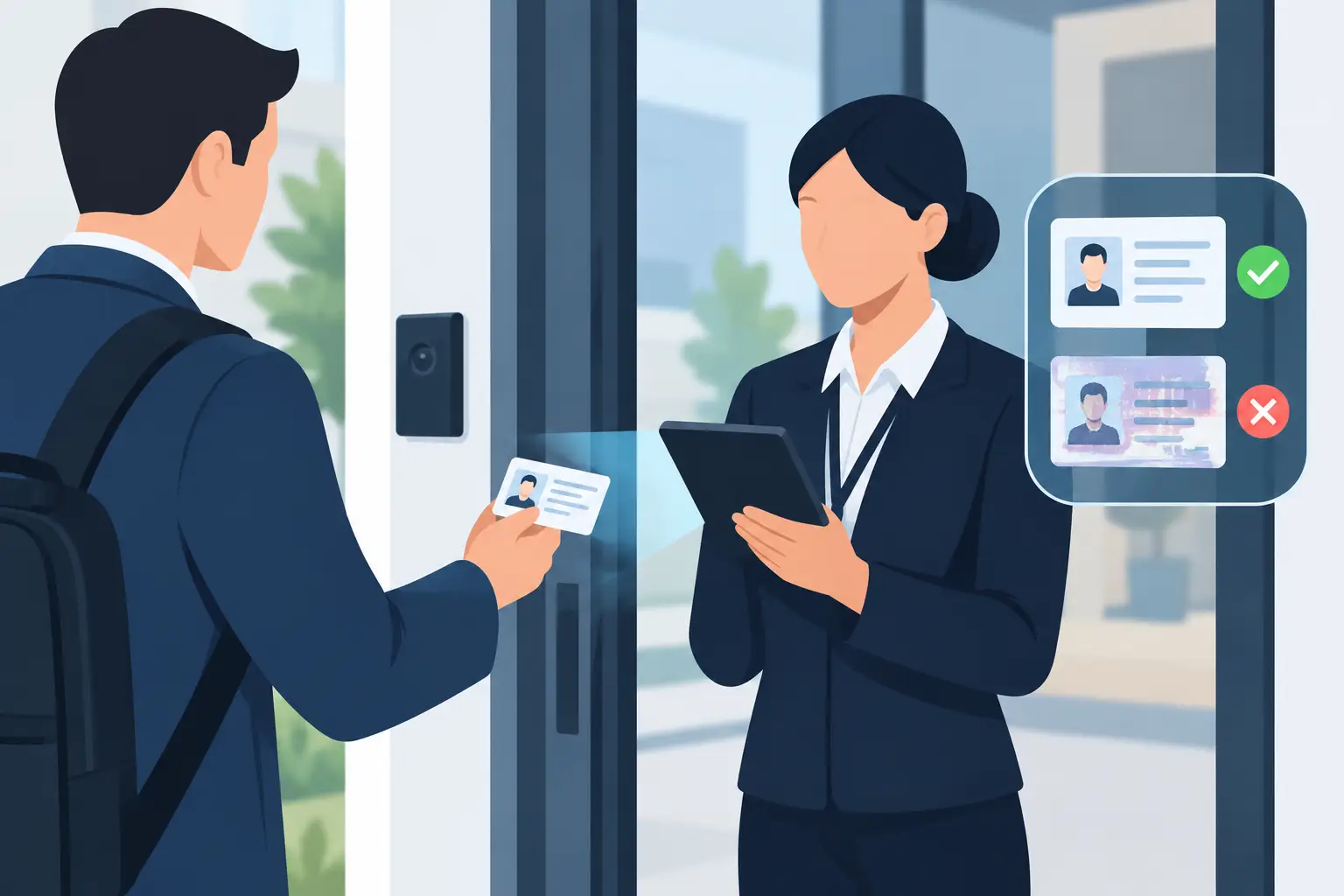
A capable nightclub ID scanner should also assess the document itself. The best systems analyze multiple ID security indicators, compare embedded data to expected formats, and flag information that does not match. This gives staff a reason to pause when a credential may be altered, borrowed, expired, or fraudulent. It does not replace trained judgment, but it gives the team a faster and more defensible starting point.
Speed matters just as much as detection. A scanner that creates a bottleneck will be ignored during a rush. Look for a portable device built for repeated scans at the entrance, with a clear on-screen result that a door team can understand in seconds. The workflow should be simple enough for a new staff member to follow while still giving a manager the controls needed for exceptions and escalations.
Why manual ID checks create exposure
Experienced bouncers can spot obvious fake IDs. The operational risk sits in the gray area: a convincing counterfeit, a genuine ID used by someone else, a packed entrance, dim lighting, a distracted guard, or a shift change with uneven training. Manual inspection varies from person to person, even when the written policy is sound.
That inconsistency can become expensive. Underage service can threaten a liquor license, trigger fines, increase insurance and legal exposure, and damage a venue’s standing with regulators and the community. One incident can also undermine the work staff put into responsible alcohol service.
A scanner creates a repeatable checkpoint. Every guest can be processed under the same standard, and staff can focus their attention where it belongs: on suspicious documents, disruptive behavior, and the safety of the line. The result is not just faster entry. It is a clearer operating record of how access decisions were made.
Fake-ID detection needs more than barcode reading
Many low-cost tools can read the barcode on the back of an ID. That is useful for extracting a date of birth, but barcode data by itself should not be treated as proof that an ID is legitimate. Fraudsters can copy, alter, or encode data onto counterfeit credentials.
A better system combines barcode reading with document-security analysis. Kred scanners, for example, analyze more than 60 security indicators to identify suspicious or fake IDs while providing instant age verification from driver’s licenses and passports. This approach is designed for the practical question at the door: does this credential deserve a closer look before the guest is admitted?
No scanner can eliminate every judgment call. A guest may present an unfamiliar ID format, a damaged document, or a real ID that belongs to another person. Door staff should still compare the photo to the person standing in front of them and follow the venue’s escalation policy. Technology makes those decisions more informed and consistent; it should not encourage blind approval.
Offline operation is a door requirement
Internet connectivity is useful for multi-device coordination, reporting, and centralized patron records. It should not be a requirement for verifying an ID at the entrance. Wi-Fi can be weak near a crowded door, a network can fail, and cellular service can become unreliable when a venue is full.
An offline-first scanner keeps core verification working when connectivity is unavailable. That means staff can continue confirming age and screening credentials instead of reverting to manual checks during the exact moment the operation is under pressure. For a nightclub, this is a business-continuity feature, not a technical extra.
Cloud synchronization is still valuable for operators with multiple entry points, security teams, or locations. It can synchronize approved VIPs and banned-patron alerts across devices so staff are working from the same information. The practical distinction is important: cloud services should expand operational visibility, while the scanner should remain useful on its own.
Patron management should support fair, controlled entry
A nightclub ID scanner can also help manage the people who return to the venue. VIP recognition lets staff identify expected guests without relying on memory or handwritten lists. Banned-patron alerts can warn the door when someone connected to a prior incident attempts to enter.
These functions need controls. A banned list should have a defined reason for inclusion, an owner responsible for review, and a process for correcting mistakes. Staff should not use it as an informal blacklist or a substitute for professional conduct. Clear policies protect guests and protect the venue when a difficult entry decision must be defended.
For multi-location groups, synchronized patron intelligence can prevent a known issue at one property from becoming an avoidable incident at another. For an independent club, a local list may be enough. The right setup depends on the size of the operation and whether the venue needs shared awareness across devices or sites.
Privacy controls are part of buying the right scanner
Scanning an ID involves personal information, so operators should decide what they need to retain before they deploy a system. More data is not automatically better. If the goal is simply to confirm legal age, verification-only mode may be the appropriate workflow. It allows the door to verify eligibility without keeping unnecessary patron details.
When a venue does need records for incident management, banned-patron controls, or operational reporting, retention periods should be configurable. Access should be limited to authorized managers, and stored data should be protected with strong encryption, such as AES-256. These are practical safeguards that reduce unnecessary exposure while preserving useful security tools.
Train staff on privacy as part of the door procedure. They should know when to scan, what the result means, who can access patron records, and when not to discuss a guest’s information. A clear process builds trust internally and helps avoid careless handling during busy service.
Questions to ask before you buy
Start with the conditions at your actual entrance. How many guests arrive during your busiest 30 minutes? Is the door indoors, outdoors, or split across several checkpoints? Will security need to verify passports as well as driver’s licenses? Do you need VIP and banned-patron alerts, or is age verification the immediate priority?
Then ask how the system operates when the internet goes down, what security checks it performs beyond barcode reading, and whether core scanning requires a recurring subscription. A direct-purchase hardware model can be a better fit for venues that want predictable costs and the ability to add cloud synchronization only when their operation needs it.
Finally, look at deployment. The strongest system is one your team will actually use every night. Choose hardware that is portable, fast, and clear at the point of entry, then document the response for a valid ID, an underage result, a suspicious-ID alert, and a banned-patron match.
The door sets the standard for the entire night. Give staff a tool that works at line speed, holds up during an outage, and turns a risky glance at an ID into a controlled security decision.