Choosing a Passport Scanner for Nightclubs
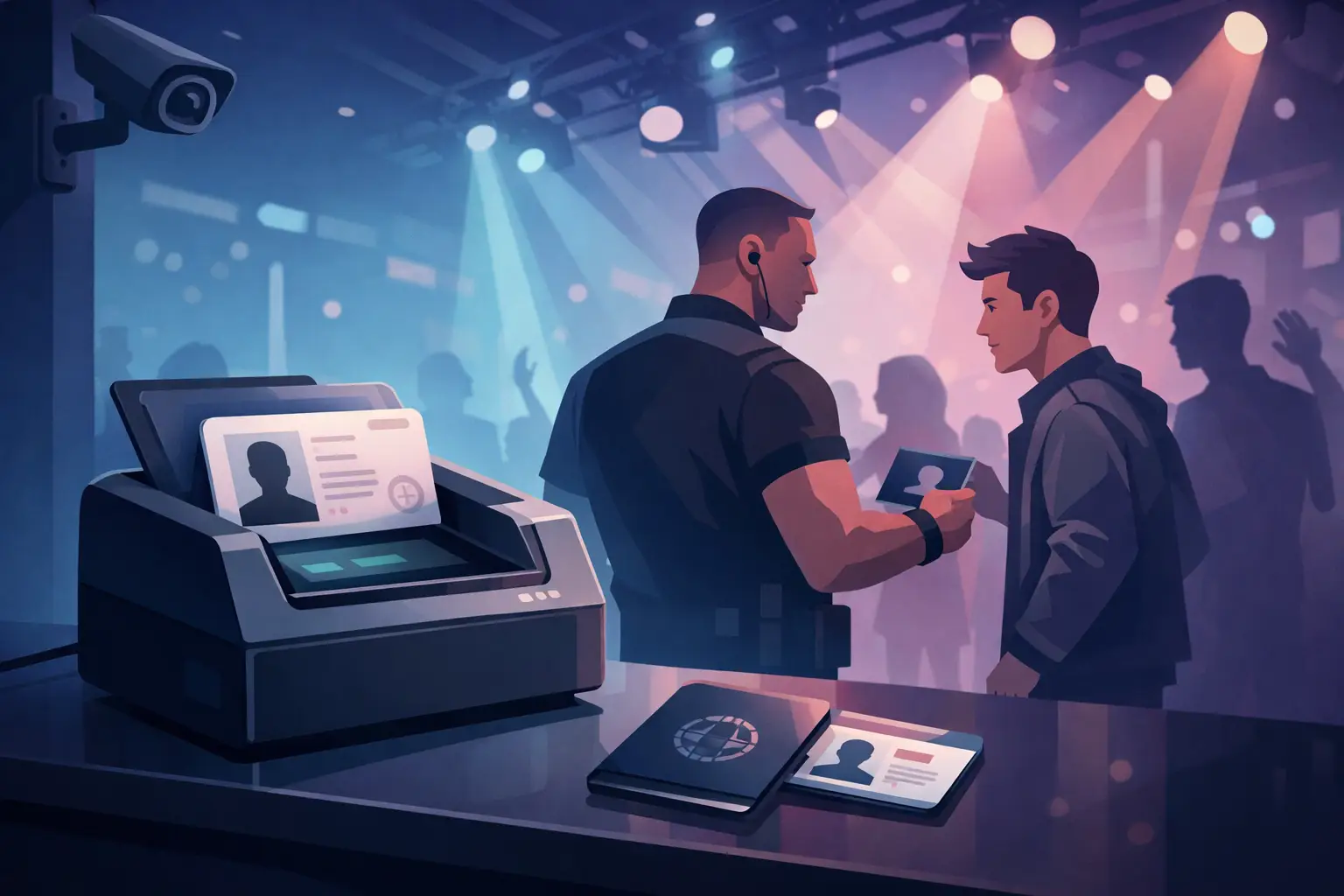
A busy Saturday line does not slow down because a guest hands over a passport instead of a driver's license. A passport scanner for nightclubs gives door staff a faster, more consistent way to verify age, inspect document data, and make a defensible entry decision before the guest reaches the floor.
For operators, passport support is not a niche feature. International visitors, tourists, military personnel, and guests without local licenses all create situations where a license-only workflow leaves staff guessing. The right scanner keeps the entry process moving while giving managers stronger control over underage access, fake IDs, and repeat-problem patrons.
Why Passport Scanning Matters at the Door
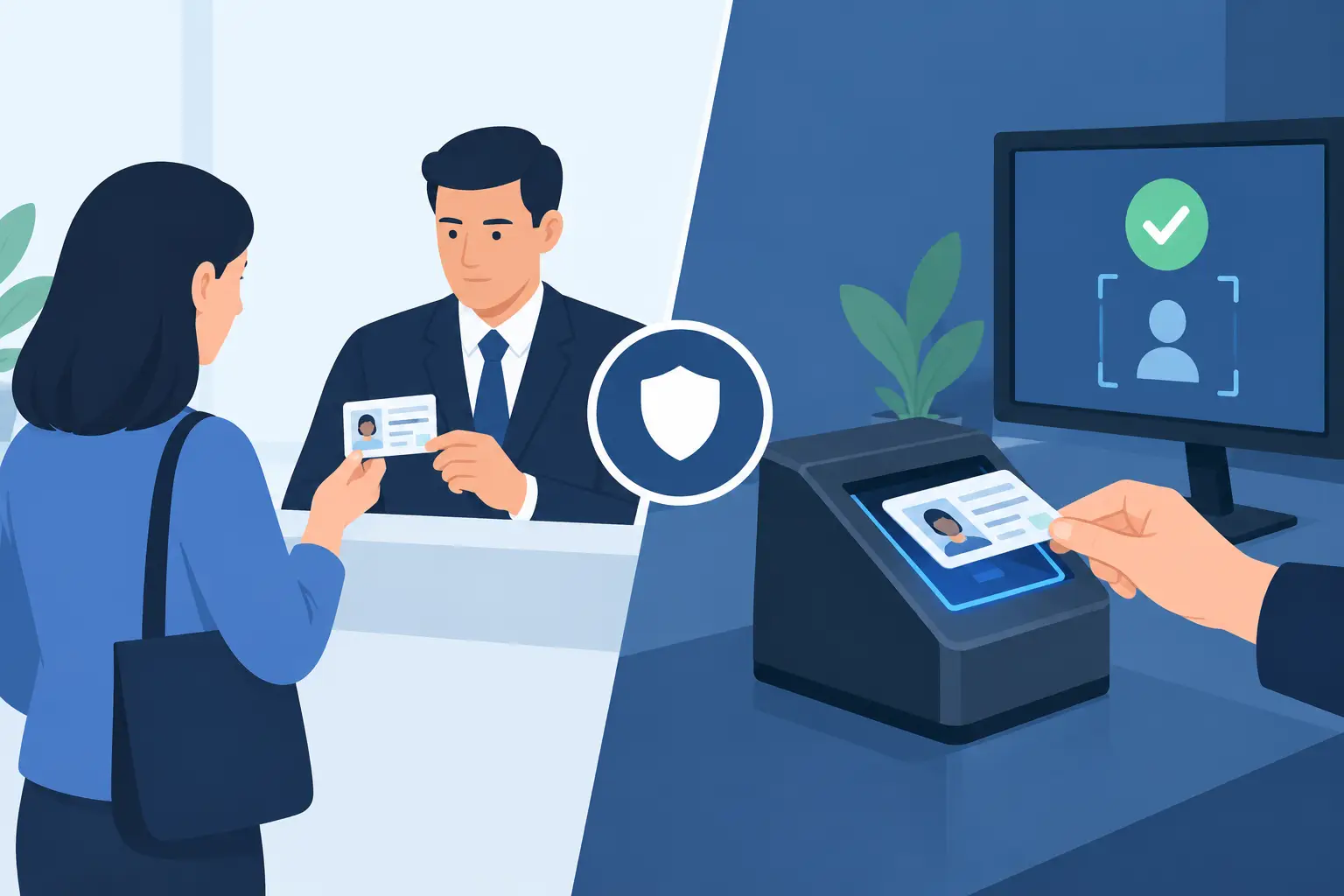
A passport is a legitimate form of identification, but it presents different challenges from a state-issued driver's license. Door staff may be less familiar with passport layouts, foreign documents vary by country, and a manual date-of-birth check can be slow in low light and high-pressure conditions. A guest may also present a passport card, passport book, or foreign passport that staff have not handled before.
Manual inspection puts too much weight on individual judgment. Even experienced security teams can miss an expired document, misread a date format, or accept a document that appears genuine at a glance. That risk is not limited to a citation. Underage entry can expose a venue to licensing trouble, alcohol-service liability, chargebacks, incidents inside the venue, and damage to its reputation.
A purpose-built scanner reads the machine-readable zone on supported passports and extracts the document data in seconds. Staff receive an instant age result rather than calculating birthdays under pressure. That consistency matters when several staff members rotate through the door or when the line builds quickly.
What a Passport Scanner for Nightclubs Should Do
The strongest options are designed for nightlife operations, not merely for office check-in. A nightclub needs speed, portability, readable results, and dependable performance in imperfect conditions.
First, look for instant age verification. The system should clearly indicate whether a patron meets the venue's configured age requirement. Staff should not need to interpret raw birth-date data or perform mental math while managing a crowd.
Second, confirm that the scanner supports the document types your venue actually sees. That generally means North American driver's licenses, passport books, passport cards, and international passports. Ask specifically how the device handles machine-readable passport data and whether its document library is maintained for the IDs common in your market.
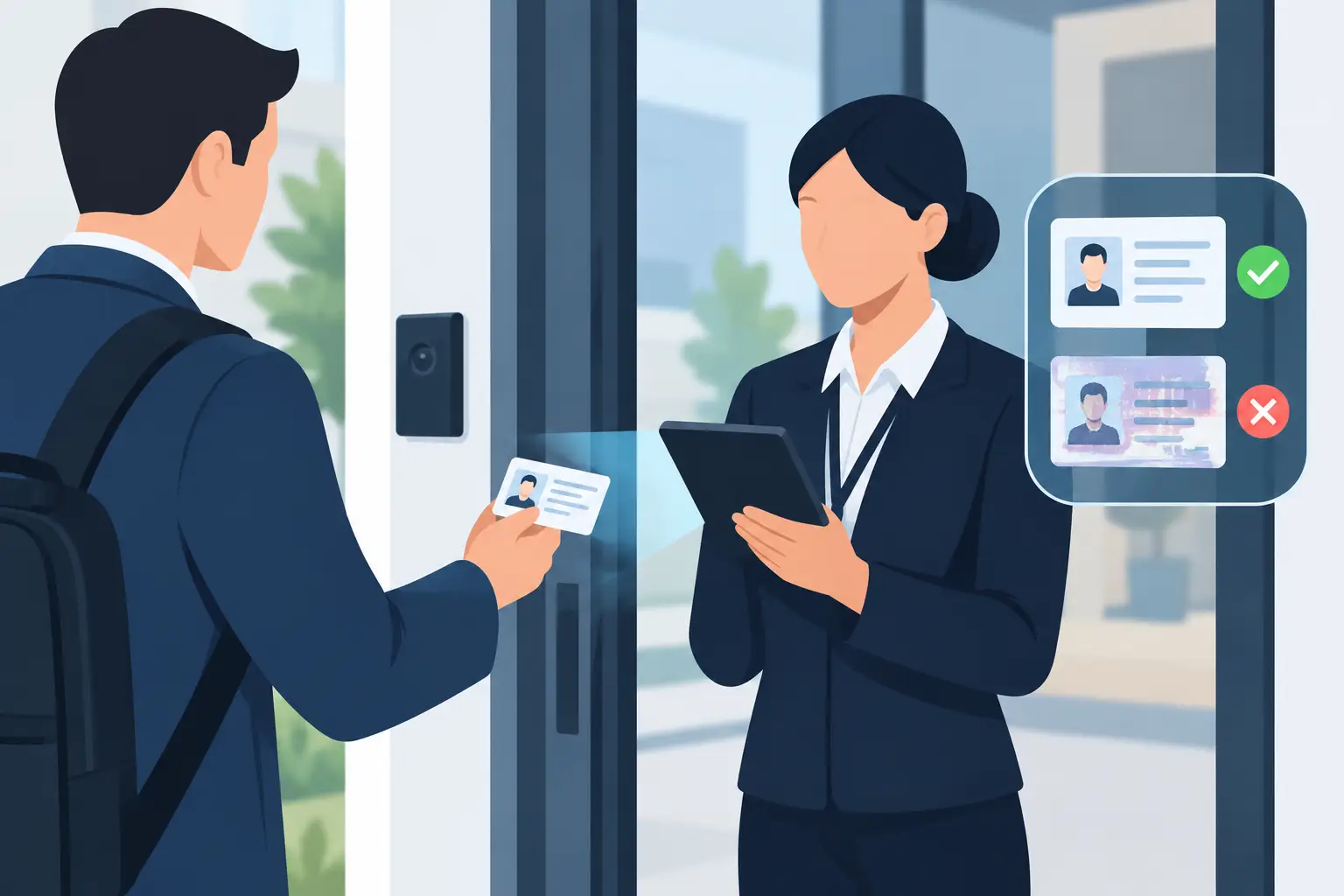
Third, evaluate suspicious-ID detection. Reading a barcode or passport data zone is useful, but it is not the same as evaluating document authenticity. A stronger system analyzes multiple security indicators to identify inconsistencies associated with altered, counterfeit, or suspicious IDs. Kred scanners, for example, analyze more than 60 security indicators to help staff identify documents that deserve a closer look.
The scanner should support a clear escalation workflow. A suspicious result should prompt staff to pause entry, inspect the physical document, follow venue policy, and involve a manager or security lead when necessary. Technology improves the decision, but it does not replace trained staff or a documented refusal process.
Offline Operation Is a Door Requirement
Internet-dependent tools can create a costly weak point. Wi-Fi drops, cellular coverage is inconsistent, routers fail, and large crowds can strain venue connectivity. If age verification stops when the connection does, staff return to manual checks at the worst possible moment.
An offline-first passport scanner continues core verification at the door without an active internet connection. This is particularly valuable for pop-up events, patios, basements, festival entrances, and venues with unreliable building infrastructure. It also reduces operational disruption when an outage occurs during peak service.
Cloud connectivity still has a place for multi-device and multi-location operators. It can synchronize patron records, banned-patron alerts, and VIP recognition across approved devices and sites. The key distinction is that cloud synchronization should add management capability, not become a requirement for basic age verification.
For independent venues, a direct-purchase scanner with no mandatory subscription can be the more predictable choice. For groups with several doors or locations, optional cloud services may justify the added cost by keeping risk information aligned across the operation. The right model depends on the size of the venue, the number of devices, and how often patron intelligence needs to travel between sites.
Protect Privacy Without Weakening Security
Passport data is sensitive. A nightclub does not need to collect every available data point simply because a scanner can read it. Smart privacy controls protect guests and reduce the amount of data the venue must manage.
Verification-only mode is often the right default for straightforward age checks. Staff can confirm that a guest is old enough without retaining a full record of the document. Where retention is necessary for incident management, banned-patron enforcement, or compliance procedures, operators should set defined retention periods and limit access to authorized personnel.
Encryption also matters. Any retained information should be protected in storage and during synchronization, with controls that prevent casual access by staff who do not need it. AES-256 encryption and role-based operational access are practical safeguards, not marketing extras.
Your privacy settings should match your written policy. Decide what is stored, why it is stored, who can view it, how long it remains available, and how it is removed. Train staff to explain the process briefly and calmly if guests ask. A clear answer at the door builds more trust than vague assurances.
Fit the Scanner to Your Entry Setup
The best device format depends on how your venue controls the line. A compact handheld scanner works well for mobile checks, secondary entrances, VIP lines, outdoor queues, and operators who need to move between doors. A larger professional device may be better suited to high-volume venues where staff scan continuously for long periods.
Before buying, test the workflow against a real Friday-night scenario. Consider scan speed, screen visibility, battery life, how easily staff can operate the device with one hand, and whether the device can handle fast transitions between driver's licenses and passports. Small points of friction become major delays when hundreds of guests arrive within an hour.
Also consider how results appear to staff. A clear pass, fail, expiration warning, or suspicious-ID alert reduces hesitation. The screen should communicate the action needed without forcing door staff to navigate menus or interpret technical language in front of a waiting crowd.
Make the Scanner Part of a Stronger Door Policy
A scanner is most effective when it supports a consistent operating standard. Train every door employee on accepted identification, passport handling, refusal procedures, escalation rules, and how to respond when the scanner flags a document. The goal is not to create confrontation. It is to give staff a controlled, repeatable process.
Managers should also review patterns. Are certain nights producing more suspicious documents? Is one entrance seeing higher refusal rates? Are banned patrons attempting entry at multiple locations? Scanner data, when retained appropriately, can turn isolated door decisions into useful operational intelligence.
VIP recognition can provide the other side of patron management. A well-run venue should be able to identify guests who create value while also preventing known risks from reaching the door team. That balance helps security support hospitality rather than becoming a bottleneck.
A passport scanner for nightclubs should do more than read a document. It should help your team verify age quickly, identify suspicious IDs, stay operational during outages, and apply privacy controls that fit your business. Choose the system your staff can rely on when the line is longest, the room is fullest, and there is no time for guesswork.