Manual Checks Versus ID Readers for Venues
A packed line at 10:45 p.m. is a poor place to discover that a door process depends on one guard making perfect judgment calls all night. The choice between manual checks versus ID readers affects more than entry speed. It shapes underage risk, fake ID exposure, staff consistency, patron records, and the ability to keep control when the door gets busy.
For some low-volume businesses, visual ID checks may be enough. For high-traffic bars, clubs, dispensaries, gun shops, and other verified-ID operations, an ID reader can turn a subjective process into a repeatable one. The right answer depends on your traffic, risk level, local rules, and the operational controls you need after the scan.
Manual Checks Versus ID Readers: The Operational Difference
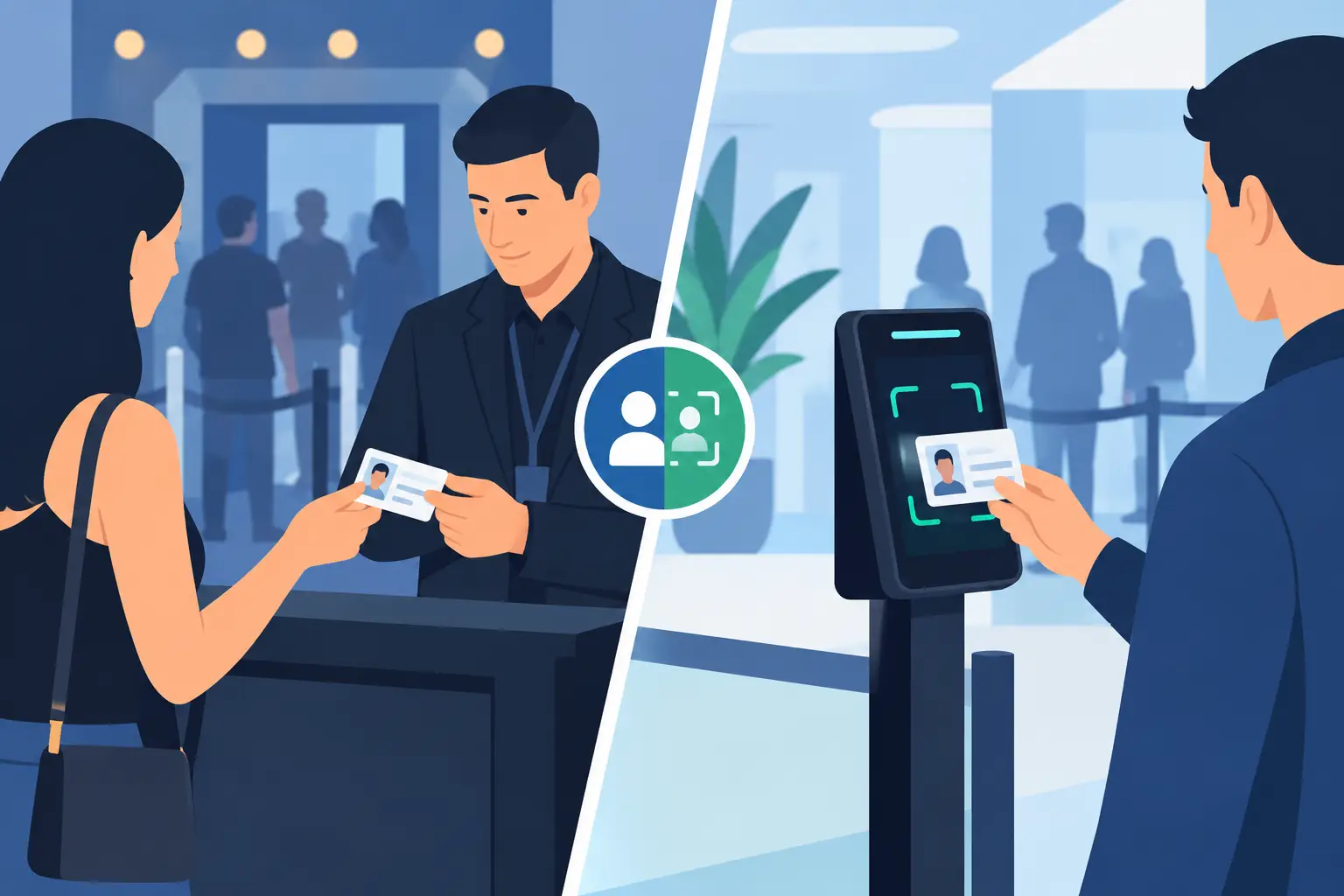
A manual check asks staff to inspect an ID, compare the photo to the person standing in front of them, calculate or confirm age, and look for visible signs of tampering. A well-trained employee can catch obvious problems: an expired credential, a mismatched face, a damaged laminate, or an ID presented by someone who is clearly underage.
The limitation is not that door staff are incapable. It is that the process relies on sustained attention under pressure. Lighting changes, loud music, long lines, shift changes, confrontational guests, and fatigue all make visual inspection less consistent. A skilled fake can be difficult to assess in a few seconds, especially when the person presenting it has practiced the interaction.
An ID reader captures the credential data and evaluates it against the document format. Purpose-built systems can provide instant age verification and analyze security indicators associated with suspicious or fake IDs. The staff member still plays a critical role. They must compare the patron to the ID photo, respond to alerts, and follow venue policy. The scanner does not replace judgment. It gives that judgment a faster, more reliable starting point.
Speed Matters, but Accuracy Matters More
Manual checks appear quick when a line is short. An experienced guard can glance at an ID and make a decision in seconds. The problem emerges when the volume rises. Staff often begin to shorten the inspection, skip age math, or focus only on date of birth. That is when altered IDs, borrowed IDs, and convincing counterfeits find their opening.
A quality reader reduces repetitive work. Instead of calculating age or interpreting small print, staff receive a clear verification result. This keeps the line moving while giving operators a more consistent standard at every entry point.
Speed should not be measured only by scans per minute. Consider the cost of a delay caused by a disputed entry, a manager being called to the door, or a security incident involving someone who should have been refused. A faster decision with documented reasoning is usually better for the guest experience and for the business.
For a quiet tasting room that checks a few IDs an hour, manual review may remain practical. For a nightclub processing several hundred guests in a narrow arrival window, the economics change quickly. One missed fake ID or one underage sale can cost far more than the equipment intended to prevent it.
Fake ID Detection Is Where Visual Checks Reach Their Limit
Most staff members know the common warning signs: incorrect font, uneven laminate, blurry text, poor photo quality, or a birth date that does not match the cardholder's apparent age. These are useful checks, but modern counterfeit IDs are designed to pass a quick visual review.
A reader can inspect information that is difficult to evaluate by eye. Depending on the document and device, that includes barcode data, document formatting, and multiple security characteristics. Kred scanners analyze more than 60 security indicators to flag suspicious IDs, giving door teams more information before they decide whether to admit a patron.
No technology should be marketed as a guarantee that every fraudulent credential will be caught. A scan is strongest when paired with a clear human process: scan the ID, review any alert, compare the person to the photo, and escalate questionable documents to a supervisor. If a patron cannot explain a mismatch or the document fails checks, staff should follow the venue's refusal policy rather than negotiate at the door.
This combination is particularly valuable for businesses exposed to high consequences. Alcohol license holders face underage-service risk. Dispensaries need dependable age controls. Gun shops and identity-critical businesses need confidence that the person and credential belong together. In each case, the goal is not merely to process IDs faster. It is to make a defensible access decision.
Consistency Across Staff and Shifts
Manual processes vary with the person working the door. One guard may be highly experienced with out-of-state licenses. Another may not recognize a newer document design or may be hesitant to challenge a guest. This creates uneven enforcement, which can frustrate staff and patrons alike.
ID readers create a common verification workflow. Every operator sees the same age result and the same warning logic. That supports better training because staff can focus on what to do with the result rather than trying to memorize every license design and security feature.
Consistency also matters when multiple entrances are open. A venue can have strong screening at the front door and a weaker process at a side entrance simply because the teams use different methods. Using the same device and policy at each access point makes the operation easier to manage.
For multi-location businesses, cloud synchronization can extend that consistency across sites. A banned-patron alert entered at one location can be available to authorized teams elsewhere, while VIP recognition can help teams deliver a more informed arrival experience. Not every operator needs cloud services. A single venue may be well served by a standalone device. The key is choosing controls that match the scale of the operation rather than paying for features that will not be used.
Privacy and Recordkeeping Require a Deliberate Policy
Manual checks can feel more private because staff simply look at an ID and hand it back. But they can also lead to informal practices: handwritten notes, photos on personal phones, or inconsistent incident records. Those workarounds create their own privacy and security concerns.
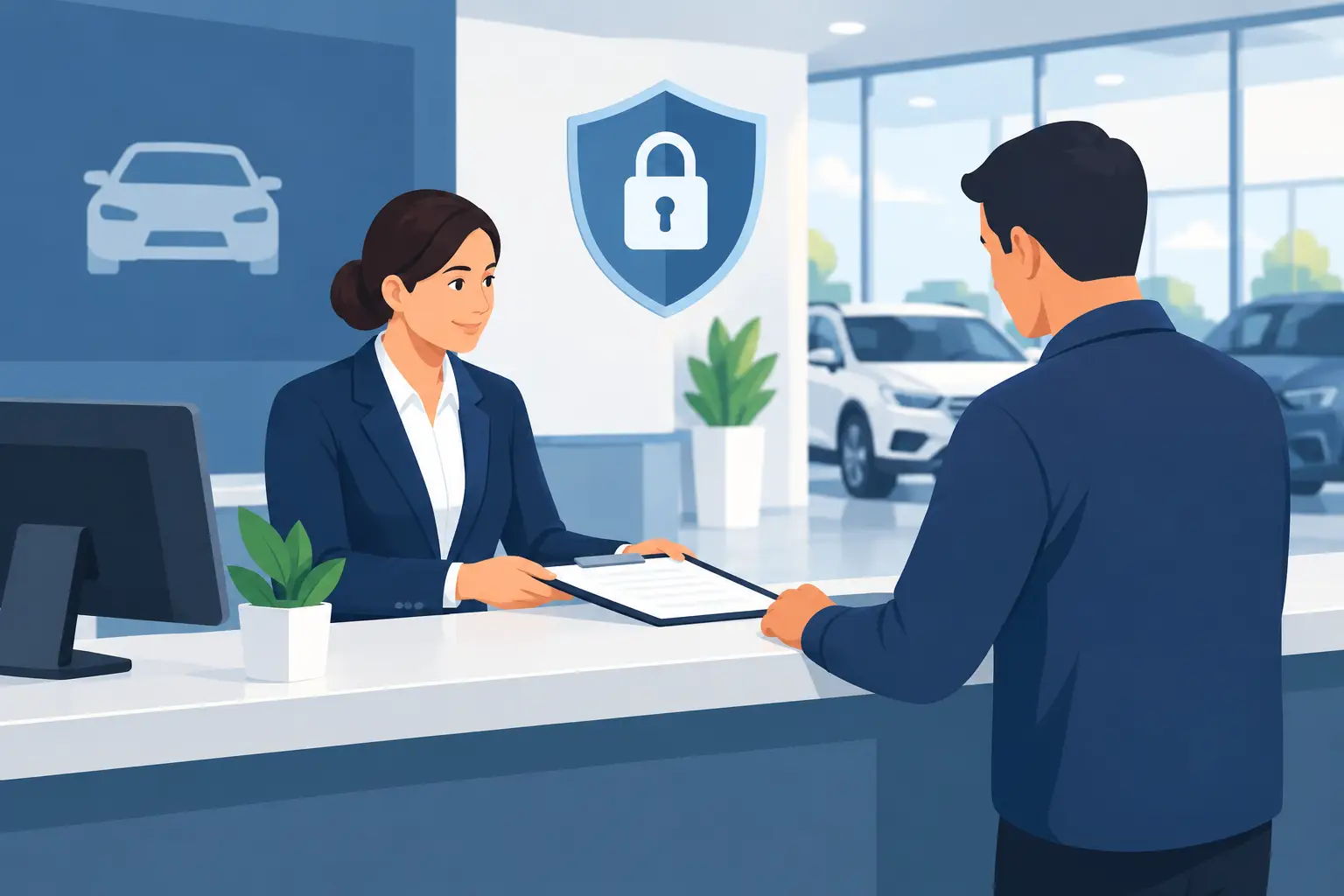
An ID reader lets operators define a controlled process. Some businesses need verification only - confirm the credential and age without retaining personal information. Others need limited records for incident response, banned-patron management, or compliance documentation. The correct approach depends on the business purpose, applicable law, and internal policy.
The important question is not whether data can be collected. It is whether it should be collected, for how long, who can access it, and how it is protected. Look for configurable retention settings, data-minimization options, access controls, and encryption such as AES-256 for stored information. Train staff not to use scanned information for unrelated purposes.
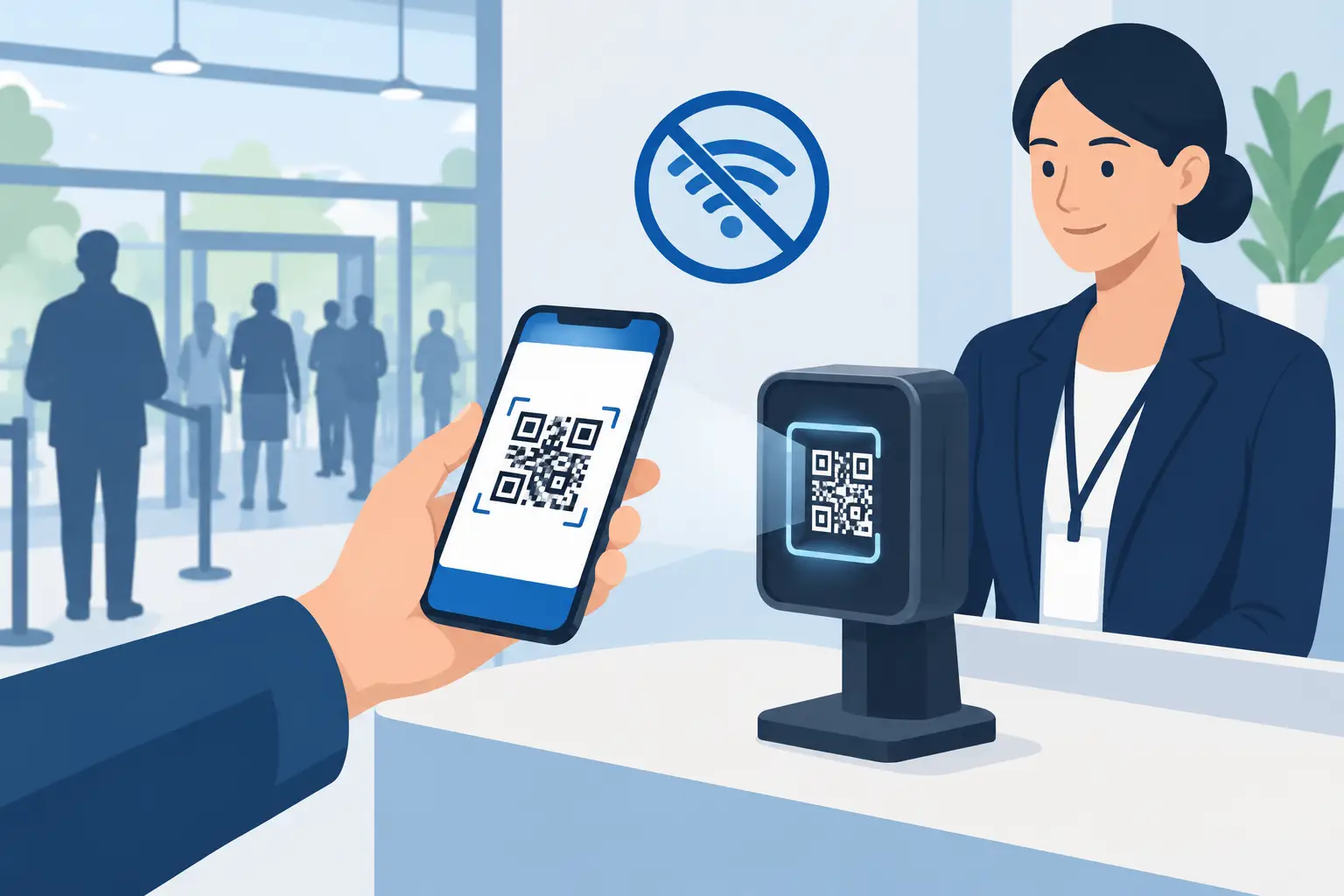
This is also where offline capability matters. Internet-dependent workflows can leave a door team exposed during an outage. An offline-first reader keeps core verification available when connectivity drops, while cloud features can resume when the connection returns. That protects operations without forcing staff back to rushed visual checks.
Cost: Compare the Full Operating Cost, Not the Device Price
Manual checks look inexpensive because there is no hardware purchase. Yet labor time, training, inconsistency, fraud losses, incident handling, and potential compliance consequences all carry costs. The real comparison is between the total cost of a manual process and the total cost of a more controlled verification system.
When evaluating readers, ask whether core scanning requires a recurring subscription, whether the device works offline, and what happens if you add another entrance or location. A direct-purchase hardware model can make budgeting more predictable, especially for independent operators who need dependable scanning without a mandatory monthly software bill.
Hardware should also fit the door. Portable scanners work well for mobile lines, events, secondary entrances, and staff who need to move through a crowd. Larger operations may need multiple units, charging procedures, assigned accountability, and a clear plan for device handoff between shifts. These details determine whether a system actually improves the door or becomes equipment that stays in a drawer.
Choose the Process That Matches Your Exposure
Manual checking can be appropriate when traffic is low, the credential risk is limited, and trained staff have enough time to inspect every ID carefully. It is a people-dependent process, so operators should still maintain documented training and a clear refusal procedure.
An ID reader is a stronger fit when your business has high volume, recurring fake ID attempts, multiple entry points, underage-service exposure, or a need to identify repeat problem patrons. It is also the practical choice when you need consistency across staff without relying on every employee to be an expert in document security.
Before purchasing, test the workflow against a real Friday night. Ask how long each check takes, what staff see when an ID is suspicious, how a banned-patron alert is handled, and whether verification continues during an internet outage. The best system is not the one with the longest feature list. It is the one your team will use correctly at the moment a bad decision could cost the business.
A controlled door is built one repeatable decision at a time. Give staff the tools, policies, and authority to make those decisions with confidence.