Top Dealership Identity Fraud Controls That Work
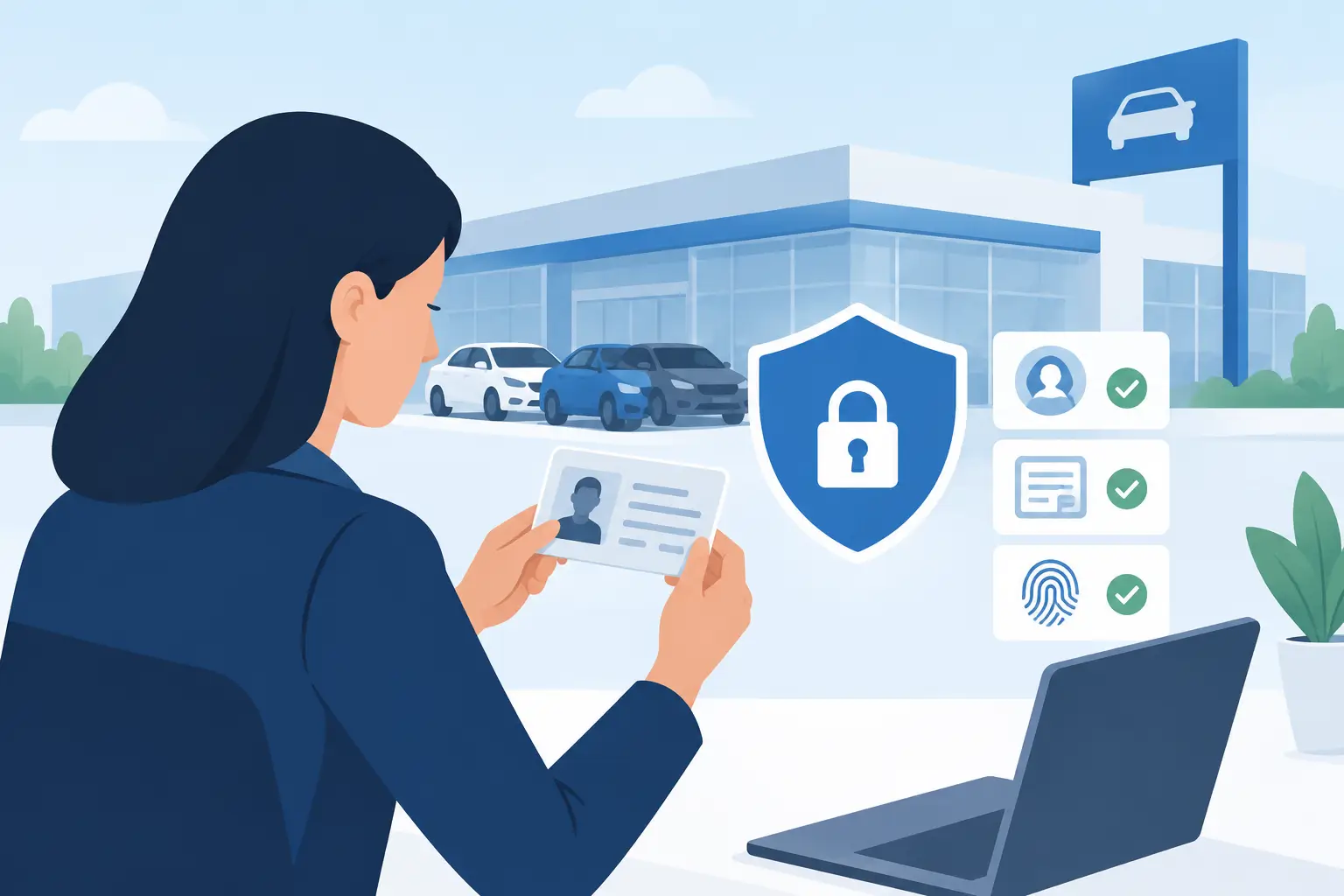
A fraudulent ID can be the first step in a much larger loss. At an auto dealership, it may lead to a stolen test-drive vehicle, a financing application built on synthetic identity data, fraudulent title work, or the release of a vehicle to the wrong person. The top dealership identity fraud controls are not a single software purchase or a policy buried in a training binder. They are a layered process that gives sales, finance, and security teams clear actions at the point of risk.
For dealerships, the goal is simple: verify the customer without slowing down legitimate buyers. That requires controls that work at the showroom desk, during a test drive, in the F&I office, and across every location.
Where identity fraud enters the dealership
Identity fraud does not always look suspicious at first contact. A person may arrive with a convincing driver's license, an established-looking credit profile, and a believable reason to move quickly. The pressure often increases when inventory is limited, a sales associate is trying to close a deal, or the customer asks to take a vehicle off-site.
The highest-risk moments are usually test-drive authorization, credit application intake, delivery, title and registration processing, and any transaction involving remote documents. Each stage may rely on different staff members, which creates gaps when teams assume someone else completed verification.
A practical control plan assigns responsibility at each handoff. Sales verifies that the person presenting the ID is the person requesting the test drive. F&I confirms that the ID, application, credit file, and supporting documents align. Management establishes the escalation process when information does not match. No employee should have to guess whether a concern is serious enough to stop a transaction.
7 top dealership identity fraud controls
1. Scan government-issued IDs at the point of contact
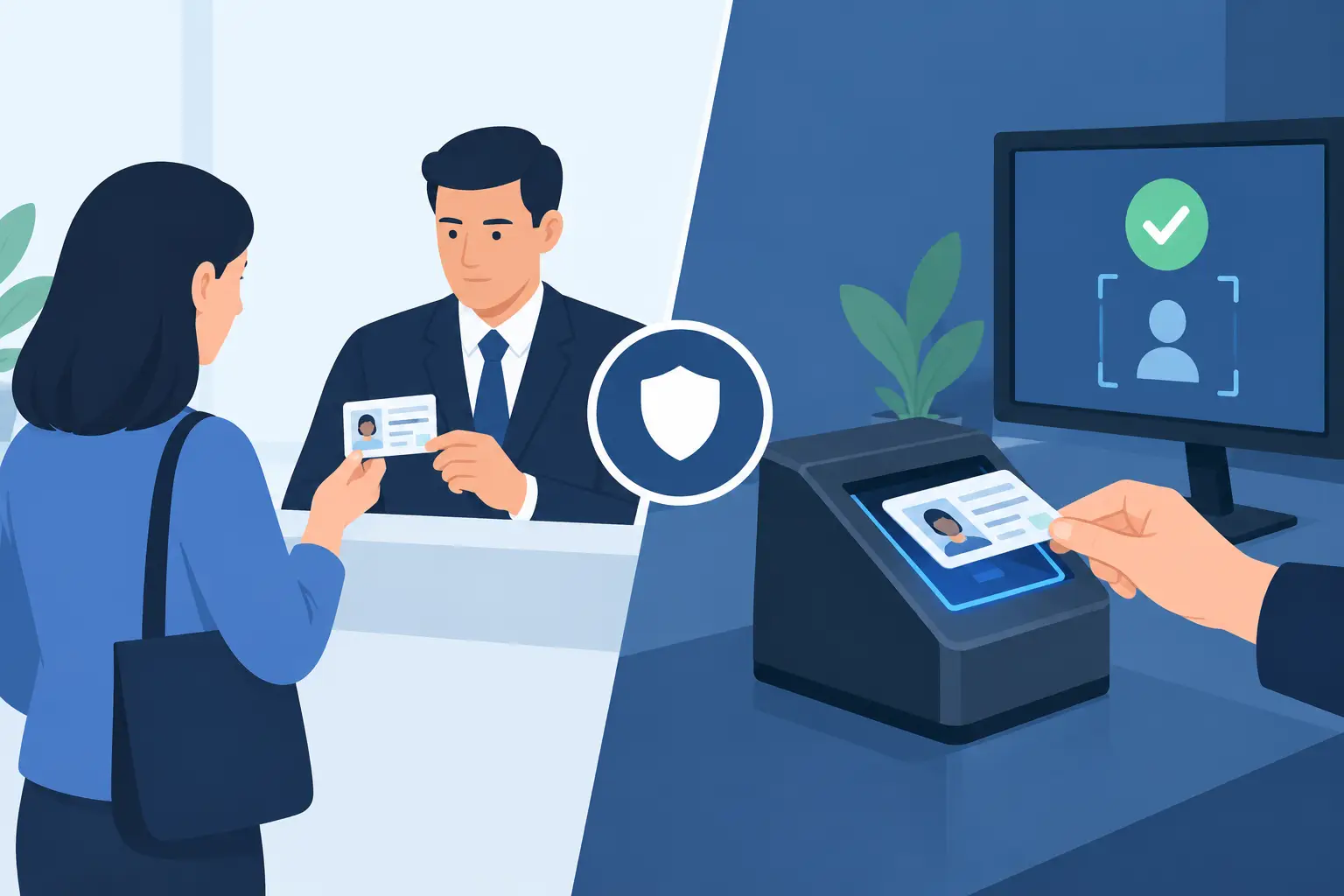
Visual inspection alone is not enough. Modern counterfeit IDs can reproduce familiar colors, layouts, barcodes, and photos well enough to pass a quick glance. A purpose-built ID scanner provides instant age and identity data capture while analyzing document security indicators that are difficult to assess manually.
For a dealership, scanning should happen before a test drive and before a credit application moves forward. The process should confirm that the barcode data matches the printed data, identify expired documents, and flag suspicious IDs for review. A scanner that operates offline is particularly valuable when internet service is interrupted or when staff need to verify a customer in the lot rather than at a fixed desk.
Kred scanners analyze more than 60 ID security indicators and can provide a practical first line of defense for dealerships that need fast document screening without making connectivity a requirement.
2. Match the customer to the document, not just the data
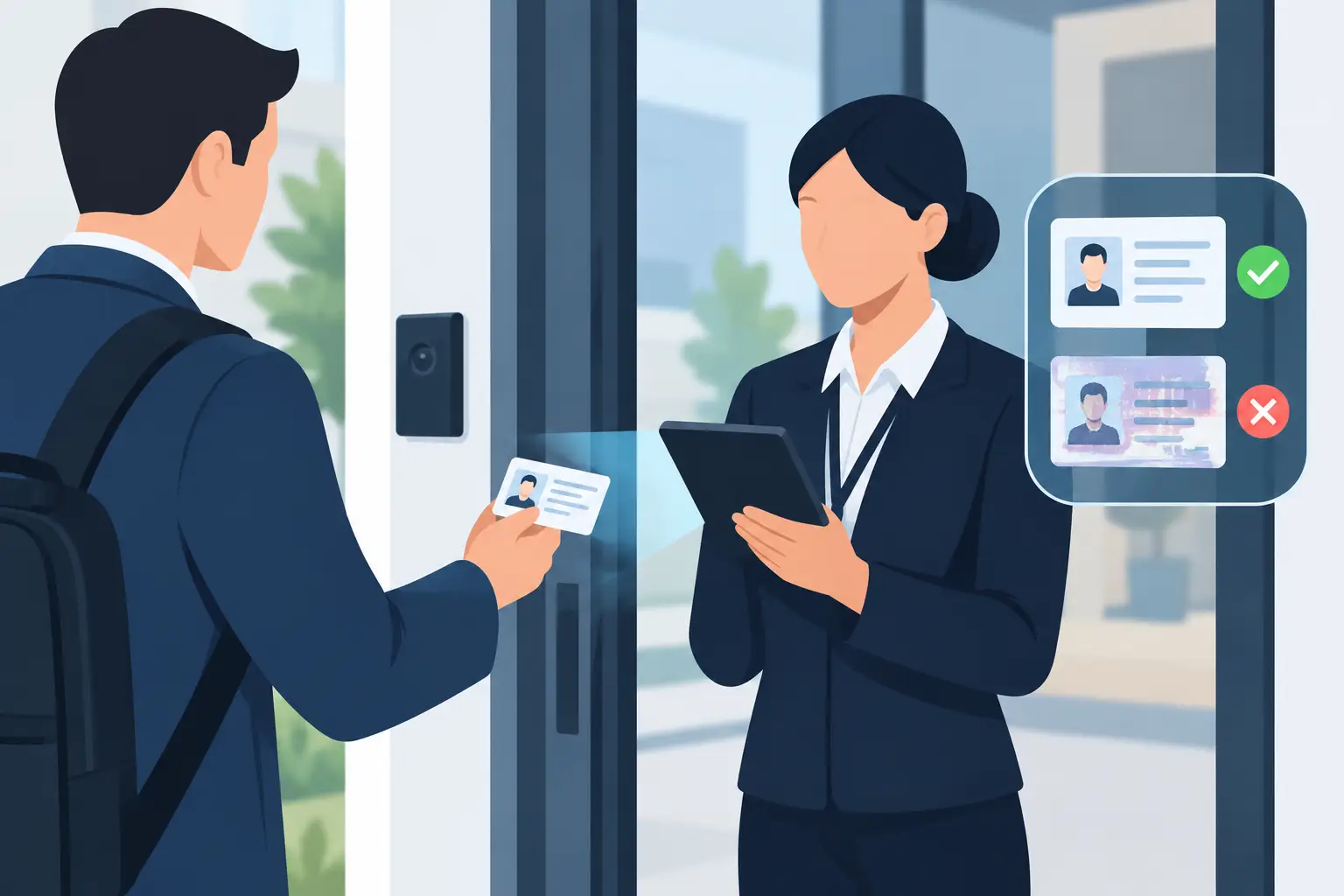
A valid ID does not prove the person holding it is the rightful owner. Staff should compare the customer to the photo and confirm basic biographical details through natural conversation. If the customer cannot accurately state the address, date of birth, or information shown on the presented document, pause the transaction.
This control requires judgment. Appearance can change, and staff should not turn normal differences in hairstyle, weight, or age into an accusation. The standard is not perfection. It is whether the photo, customer, and transaction details reasonably align.
For higher-risk transactions, require a second form of verification or a manager review. This is especially appropriate when a buyer seeks immediate delivery, declines standard financing steps, uses an out-of-state ID, or changes contact information during the deal.
3. Separate test-drive approval from sales urgency
Test drives create an immediate inventory risk. A customer may be legitimate but still present a flight risk, or may use a fraudulent identity specifically to gain access to a high-value vehicle. A consistent test-drive control prevents staff from making exceptions because the showroom is busy or the customer appears well qualified.
Require a scanned, verified driver's license before keys leave the building. Record the vehicle, departure time, staff member, and expected return time. Establish rules for who accompanies a test drive based on vehicle value, customer history, and local risk conditions.
The right procedure depends on the dealership. A small independent lot may use a tighter approval process for every drive. A large franchise store may create tiers based on vehicle class. What matters is that the rule is applied consistently and that employees can quickly escalate an exception.
4. Verify that financing documents tell the same story
Many identity fraud attempts fail when the dealership compares information across documents instead of reviewing each item in isolation. The driver's license, credit application, proof of income, insurance, phone number, email address, and payment source should support one coherent identity.
Look for mismatched addresses, recently created email accounts, phone numbers that do not connect to the customer, altered pay stubs, or insurance documents issued moments before delivery. None of these signals proves fraud alone. Several inconsistencies together justify a deeper review.
F&I teams should be trained to stop treating document review as a paperwork task. It is a loss-prevention control. A rushed deal that closes on fraudulent information can expose the dealership to chargebacks, lender disputes, vehicle loss, and reputational damage.
5. Use manager escalation rules that staff can follow
A fraud policy fails when it only says, “use your judgment.” Employees need specific triggers and a clear next step. Create an escalation checklist for situations such as a failed ID scan, mismatched barcode data, a customer refusing verification, conflicting identity documents, unusual delivery demands, or a request to bypass standard procedures.
The response should be professional and consistent. Staff can explain that the dealership verifies identity for every customer as part of vehicle access and transaction security. Avoid making accusations at the counter. Move the matter to a manager, document what occurred, and decline the transaction when verification cannot be completed.
Managers also need authority to slow down a deal. Sales incentives and month-end pressure can weaken controls unless leadership makes it clear that a prevented loss is more valuable than a questionable sale.
6. Protect customer data with retention and access controls
Dealerships need identity information to complete legitimate transactions, but collecting more data than necessary creates its own risk. Use verification-only workflows when a record does not need to be retained. When records are required, define how long they are stored, who can access them, and when they are deleted.
Encryption, role-based access, and audit logs should be standard for any system handling customer identification data. Avoid storing ID images in shared inboxes, unprotected spreadsheets, or personal devices. Those shortcuts are convenient until a data request, breach, or employee departure exposes the dealership.
Privacy controls also support customer trust. A buyer is more likely to accept verification when staff can explain that the process is limited to transaction security and handled under defined retention rules.
7. Share fraud intelligence across locations without oversharing
Multi-store dealer groups face a common problem: a person declined at one location may simply try another store later that day. Controlled cloud synchronization can help authorized teams recognize prior incidents, suspicious document attempts, or known banned individuals across locations.
This capability should be governed carefully. Record objective operational facts, not vague impressions. Limit access to authorized users, set retention periods, and make sure staff understand the difference between a verified incident and an unconfirmed concern. Shared intelligence is valuable when it is accurate, relevant, and privacy-conscious.
Train for speed, not suspicion
The best fraud controls do not force every employee to become an investigator. They give employees a repeatable workflow: scan the ID, compare the person to the document, confirm key transaction details, and escalate exceptions. Training should use realistic scenarios, including a failed scan, an impatient customer, a remote buyer, and a document mismatch discovered shortly before delivery.
Measure whether the process is being followed. Review exception logs, failed scans, test-drive records, and transactions stopped for verification issues. If staff regularly skip a step, the problem may be the process design, device placement, or lack of management reinforcement.
A dealership earns trust by making verification routine rather than confrontational. When identity checks are fast, consistent, and backed by clear controls, legitimate customers move forward with confidence and fraudsters lose the easy opening they expect.