Underage Entry Prevention at Bars That Works
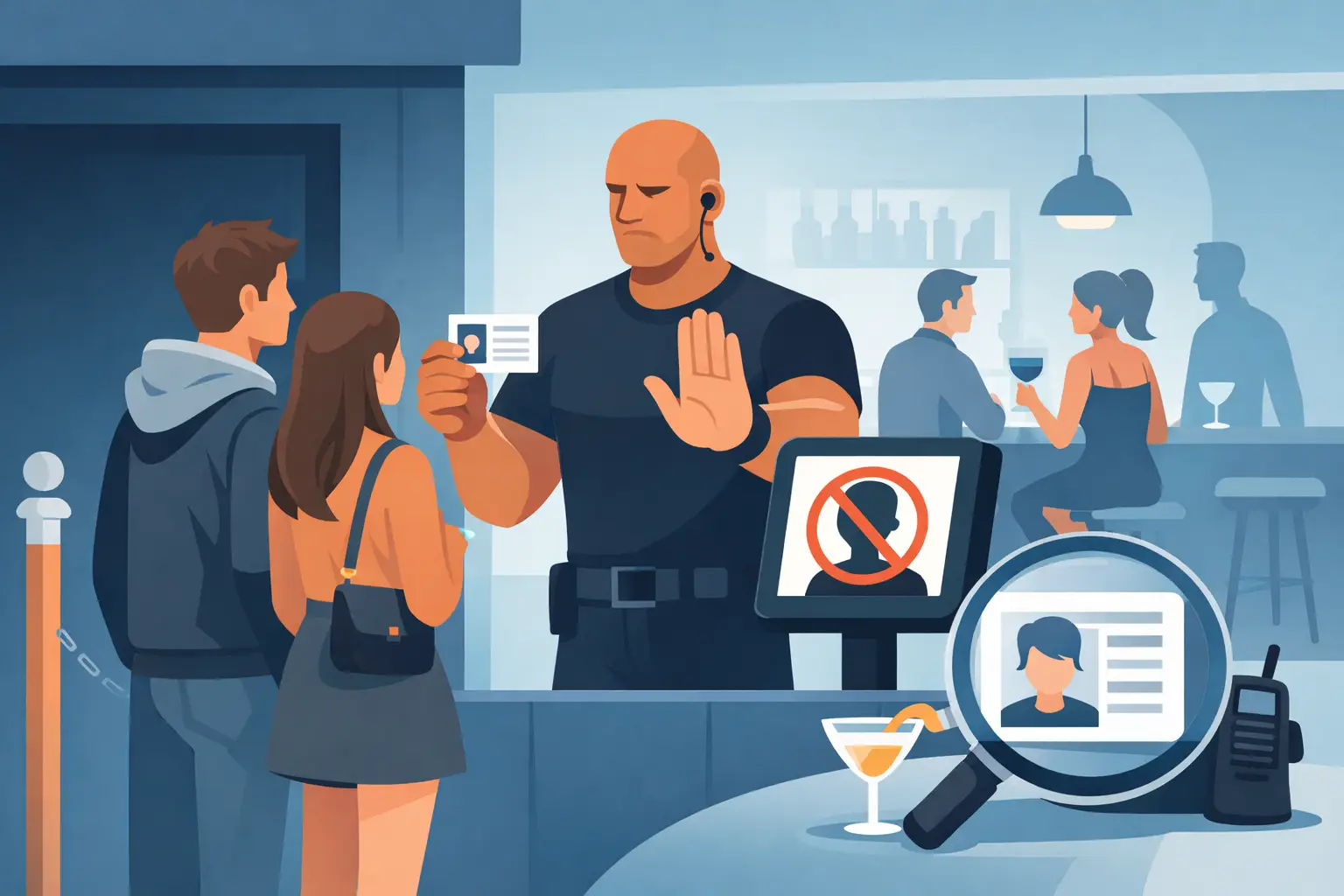
A packed doorway creates pressure that can undo a bar's age-verification policy in seconds. Underage entry prevention at bars has to work when the line is deep, staff are changing shifts, a guest is arguing about an ID, and the internet is down. A policy posted behind the host stand is not a control. A repeatable entry process is.
For operators, the stakes are direct: an underage admission can expose the business to alcohol-service violations, fines, license risk, insurance problems, and damage to the venue's reputation. It can also create a harder-to-manage crowd inside. The strongest programs protect the business without turning the door into an unnecessary bottleneck.
Underage Entry Prevention at Bars Starts at the Door
Age verification should happen before a guest enters the venue, not after a bartender has already served them. That sounds obvious, but many venues weaken their own process by allowing exceptions for guest-list arrivals, friends of staff, VIPs, or guests who appear old enough.
A consistent standard removes guesswork. Every guest who is required to be of age is checked. Every ID is handled using the same process. Every suspicious result gets the same escalation path. This approach protects door staff as much as it protects management, because staff do not have to make a high-pressure judgment based only on appearance or a persuasive story.
The door team also needs clear authority. If a scanner flags an ID as suspicious, the employee should know whether to request a second form of identification, call a manager, refuse entry, or retain the ID when local law and venue policy permit it. Unclear procedures invite inconsistency, and inconsistency is what guests learn to exploit.
Why Visual ID Checks Alone Fall Short
Experienced staff can catch obvious problems: a mismatched photo, altered birth date, damaged laminate, or a guest who cannot answer basic questions about the ID. Those skills remain valuable. But modern fake IDs are designed to pass a quick visual inspection in low light, especially when staff are under pressure to move a line.
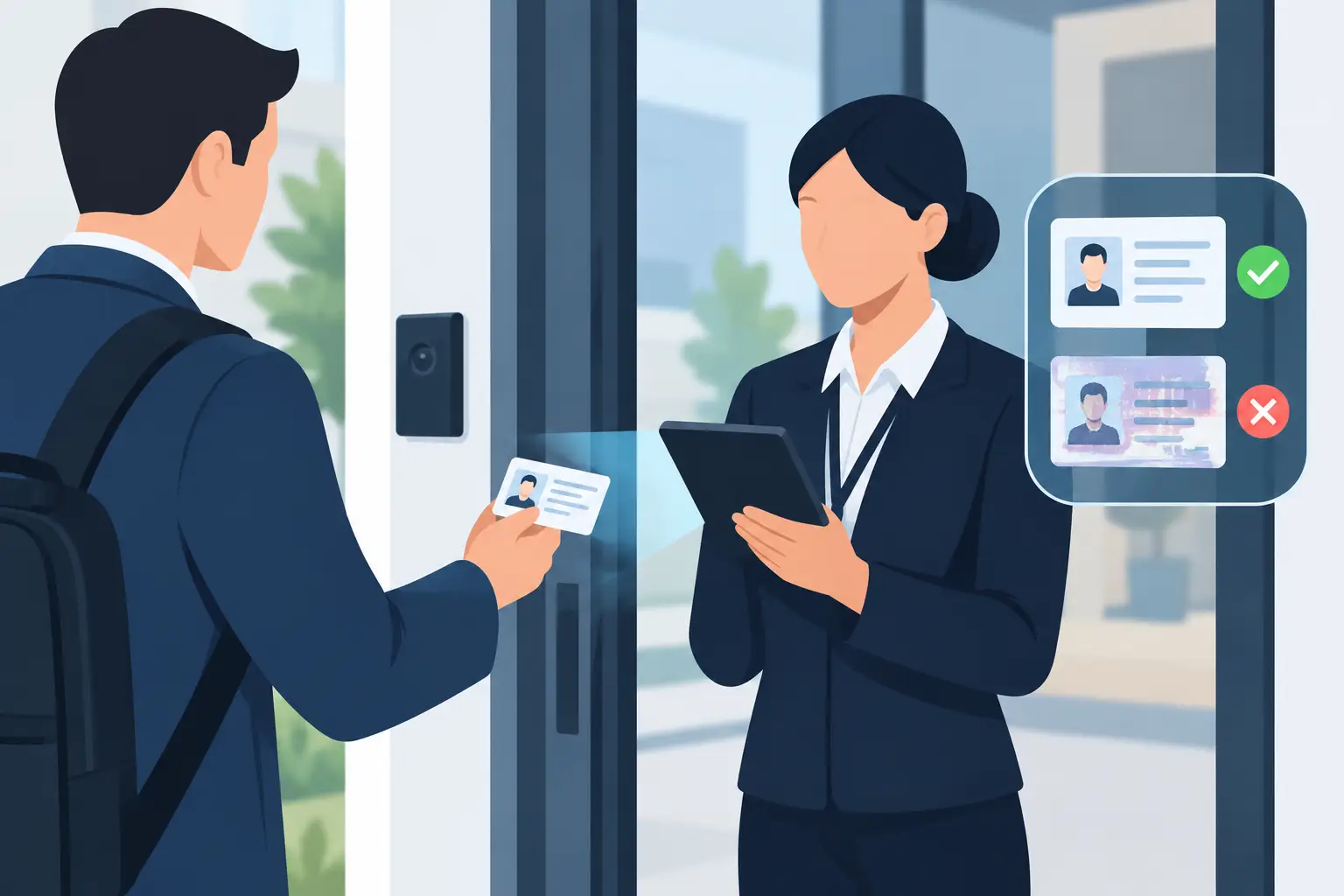
A legitimate-looking card can still contain incorrect barcode data, invalid formatting, missing security elements, or inconsistencies that are difficult to see without purpose-built equipment. Borrowed IDs present another problem. An ID may be authentic while the person holding it is not the person pictured.
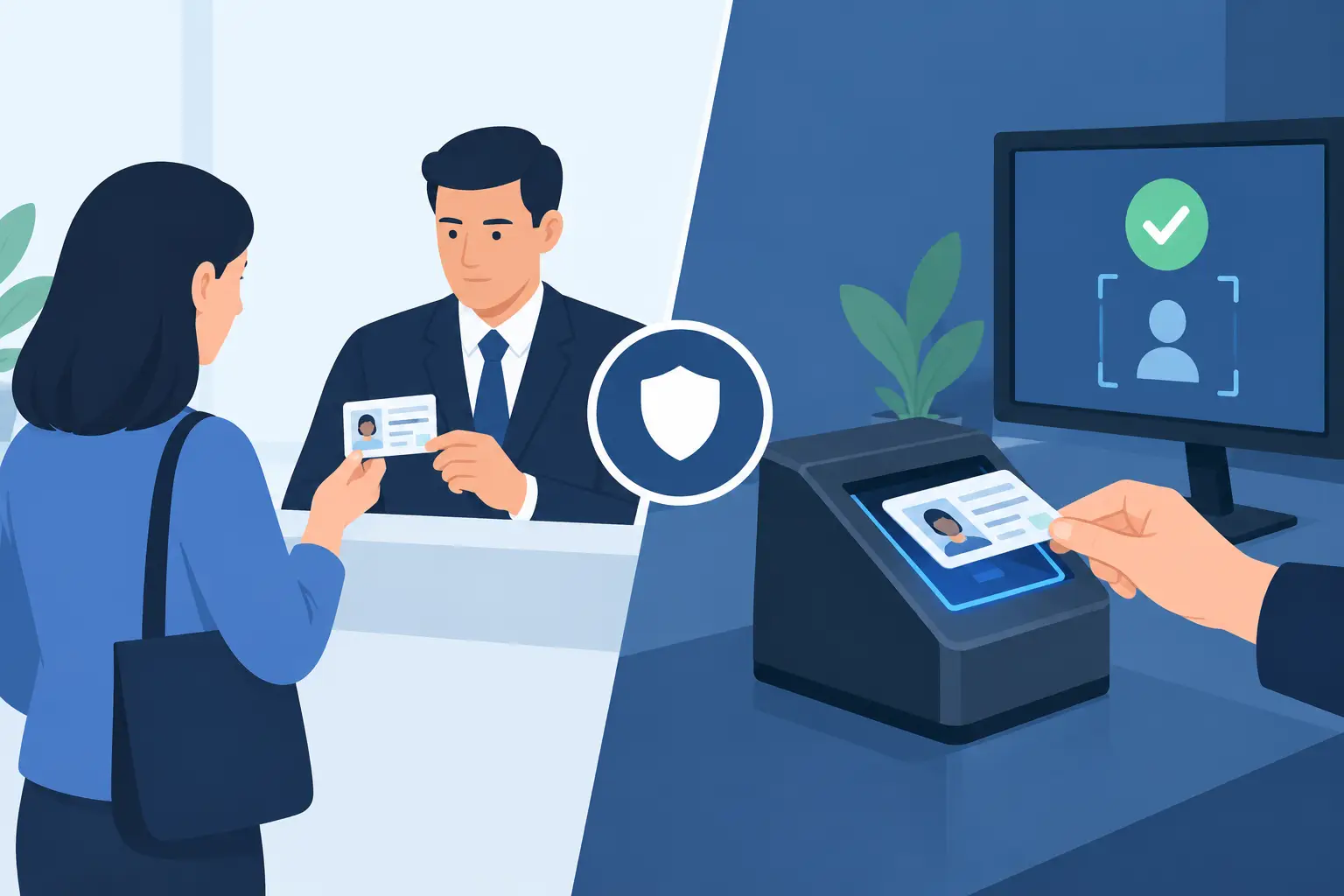
That is why a practical program combines trained human judgment with ID-scanning technology. A scanner can instantly calculate age from a driver's license or passport and analyze security features far faster than a manual check. The staff member remains responsible for comparing the guest to the photo and responding to any alert. Technology strengthens the decision. It does not eliminate the need for a disciplined operator at the door.
Build a Fast, Defensible Entry Workflow
The best workflow is short enough to use every night and specific enough to document when an incident occurs. It should account for standard arrivals, suspicious IDs, repeat patrons, and equipment disruptions.
Start with a consistent greeting and request for identification. Scan the ID before admitting the guest. Confirm that the guest matches the photo, particularly when the scan produces an alert or the person seems noticeably different from the image. If the system confirms legal age and no risk alert appears, admit the guest without making the interaction feel adversarial.
When an ID is questionable, move the guest out of the main flow of traffic. This prevents a debate at the center of the entrance and lets a lead door person or manager make the final call. Staff should avoid accusing guests of possessing a fake ID unless they are trained and authorized to do so. A simple statement such as, “We can’t accept this ID for entry tonight,” is often more effective and less likely to escalate the situation.
Document denied-entry incidents according to your policy. The record should be limited to what the venue legitimately needs for operations, compliance, and safety. A system that supports verification-only mode and configurable retention settings allows venues to verify age without collecting more personal information than necessary.
Choose Technology for Real Door Conditions
A scanner that works well in a quiet office may fail at a nightclub entrance. Bar operators need hardware that is quick to operate, portable when needed, and reliable through peak traffic. They also need to consider what happens when Wi-Fi drops, a router fails, or a patio entrance is outside reliable coverage.
Offline-first verification is a major operational advantage. Core age verification and suspicious-ID screening should remain available without internet access, rather than forcing staff back to visual inspection during an outage. Cloud connectivity can add value for multi-device synchronization, shared banned-patron alerts, reporting, and coordination across locations, but it should not be a dependency for screening guests at the door.
Fraud detection matters as much as age calculation. Look for a platform that analyzes multiple ID security indicators, rather than simply reading a barcode. Barcode-only tools can speed up an entry line, but they may miss IDs with manipulated or mismatched data. A stronger solution evaluates the document itself and gives staff actionable information when something does not add up.
Kred scanners are designed for this operating environment, with instant age verification, analysis of more than 60 ID security indicators, and offline core scanning. For operators who need shared intelligence across multiple devices or sites, Kred Cloud can synchronize patron information, while standalone scanning remains available without a required subscription.
Treat Patron Risk as More Than an Age Check
Stopping underage entry is essential, but the door is also where venues can prevent repeat problems. A guest who was previously removed for violence, harassment, theft, or attempted entry with a suspected fake ID can create risk long before they reach the bar.
A controlled banned-patron alert process gives door staff a timely signal without requiring them to rely on memory, group chats, or a paper list that may be out of date. For multi-location operators, shared records can prevent a person denied at one property from walking into another property later that night. The same system can support VIP recognition, helping staff deliver better service to known guests while maintaining the same age-verification standard.
These tools require restraint. Patron labels should be factual, tied to a defined internal policy, and visible only to authorized staff. Avoid vague notes, personal opinions, or open-ended retention. Risk management works best when it is controlled, relevant, and defensible.
Train for Consistency, Not Just Compliance
Even the best scanner will not fix a team that bypasses it. Training should cover the exact moments where standards tend to slip: a rush at the door, a familiar guest, an employee's friend, a guest-list name, or a manager who wants to reduce the line.
Give staff realistic practice with expired IDs, vertical licenses, damaged cards, foreign passports, suspected borrowed IDs, and scan alerts. They should understand the difference between an expired document, which may or may not be acceptable under local rules and venue policy, and a document that cannot be verified. Managers should define the decision instead of leaving staff to invent it during service.
Short pre-shift reminders are more useful than a one-time annual lecture. Review any recent incidents, reinforce who has final authority on a disputed ID, and verify that devices are charged and ready before doors open. If the venue uses cloud-synchronized alerts, confirm that authorized devices have the current data. If it operates offline, confirm staff know that verification still works and understand any limits on live updates.
Protect Privacy While Protecting the License
Age verification does not require unlimited data collection. Operators should decide in advance whether they need only a pass-or-fail verification result, a temporary record of entry, or longer retention for a specific security purpose. The answer depends on the venue's operating model, local rules, and incident history.
Use data minimization as the default. Restrict access by role, establish retention periods, and protect stored information with strong encryption. Systems using safeguards such as AES-256 encryption can help support secure handling, but technology is only one part of the control. Staff access, retention decisions, and incident-response procedures matter too.
A privacy-conscious approach can improve guest trust and reduce operational exposure. It also keeps the program focused on its actual purpose: determining whether a person may enter, not collecting data simply because the system can.
The door is where a venue makes its first security decision of the night. Give that decision the same attention you give cash controls, alcohol-service training, and closing procedures. A fast, consistent verification process lets legitimate guests get inside quickly while giving your staff the tools and authority to stop the entry risks that should never make it past the rope.