Best Altered ID Security Checks for Venue Doors
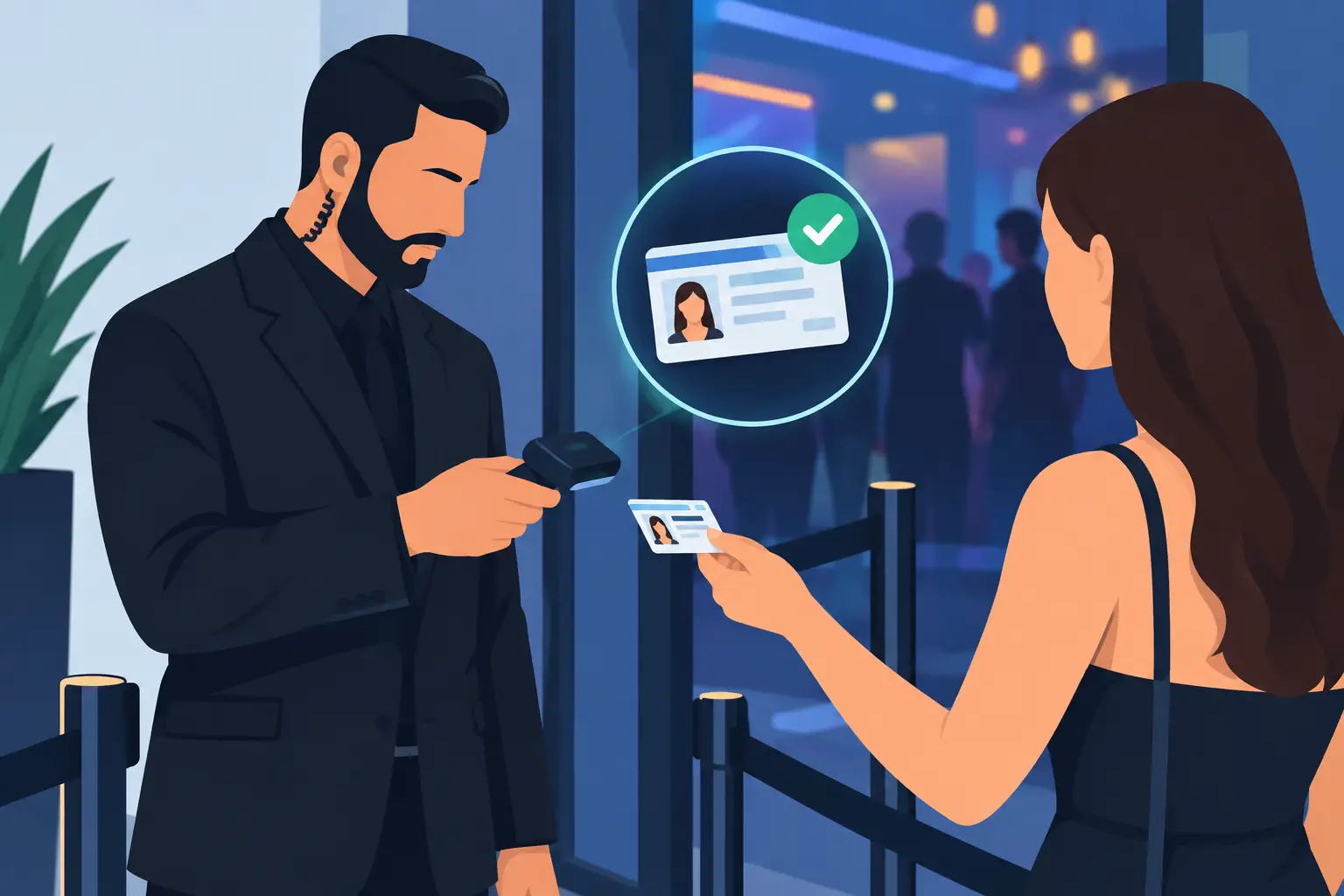
A busy door does not give staff five minutes to inspect every license. It gives them seconds, often in low light, with a line forming behind the next patron. The best altered ID security checks are the ones that combine fast machine analysis with a clear human decision process - helping your team identify suspicious credentials without slowing legitimate guests down.
For bars, nightclubs, dispensaries, gun shops, and other identity-critical businesses, an altered ID is not a minor inconvenience. It can expose the operation to underage sales, regulatory action, chargebacks, theft, or avoidable safety incidents. A security check needs to be accurate, repeatable, and available at the moment of entry, even when the internet is not.
What the Best Altered ID Security Checks Actually Test
An altered ID is different from a completely fabricated credential. The document may have started as a legitimate driver’s license or passport, then been changed to alter the date of birth, portrait, name, address, or other details. A convincing alteration can pass a quick visual glance because it uses a real card format, real materials, and often real data from another person.
That is why a single check is rarely enough. Effective screening compares multiple parts of the credential at once: the encoded data, printed data, document layout, expected security features, and the person presenting it. When those elements do not align, staff have a reason to pause, refuse entry, or escalate the review under venue policy.
Data consistency is the first line of defense
A barcode or machine-readable zone can reveal information that is difficult to judge from the card face alone. A scanner should read the credential data quickly and calculate age from the date of birth. More importantly, it should compare data from the barcode with visible document fields where the document type supports that comparison.
A mismatch does not automatically prove fraud. Labels can be damaged, barcodes can be worn, and jurisdictions update document designs. But a mismatch between encoded data and printed information is a meaningful risk signal. It gives door staff an objective reason to stop treating the ID as routine.
Document security features matter
Modern government IDs contain design and security elements intended to make alteration difficult. Depending on the document, those may include ultraviolet markings, holographic elements, microprint, ghost images, tactile features, laser engraving, and layout-specific patterns.
The practical goal is not to turn every bouncer into a forensic document examiner. It is to use technology that recognizes expected document characteristics and flags suspicious exceptions. A purpose-built ID scanner can analyze dozens of indicators in seconds, which is far more consistent than relying on memory during a rush.
The portrait and the patron still need review
Technology should support staff judgment, not replace it. If the scan result is suspicious, the final check is whether the portrait, age, physical characteristics, and behavior reasonably match the person at the door.
Train staff to stay neutral and procedural. They should not accuse a guest of a crime based on one alert or an unfamiliar document. The operational response is simple: follow the venue’s established refusal, supervisor review, or secondary-ID policy. Consistency protects both the business and the staff member making the decision.
Why a Dedicated Scanner Beats Visual Inspection Alone
Visual inspection still has a place, particularly when a card is visibly damaged or a guest does not match the photograph. But visual-only checks depend heavily on experience, lighting, and staff confidence. They are also difficult to standardize across shifts and locations.
A dedicated scanner gives every trained employee the same starting point: instant age verification, a readable record of the credential data, and automatic analysis of suspicious patterns. It reduces the temptation to rush a decision because the line is long or a familiar face is asking for an exception.
For high-volume venues, speed is part of security. A system that requires staff to enter data manually or wait on a weak connection creates friction at the door. That friction can lead employees to bypass the process altogether. Offline-first scanning is a meaningful advantage because verification can continue during Wi-Fi failures, cellular dead zones, or temporary service outages.
Kred scanners, for example, analyze more than 60 security indicators while supporting offline operation. That matters because a venue should not have to choose between keeping the line moving and maintaining a consistent screening standard.
Build an Altered-ID Check Into the Door Workflow
The strongest hardware will underperform if the workflow is unclear. Door teams need to know what happens after a standard pass, a suspicious alert, an unreadable barcode, or a match to a banned-patron record.
Start with a simple default: scan every eligible ID at entry. Selective scanning invites inconsistency and can make staff reluctant to screen regulars, VIPs, or guests who appear older. A universal process also makes the interaction easier to explain: every guest is checked the same way.
When the system flags an issue, staff should move the patron out of the active entry lane if possible. This keeps the line moving and lowers the chance of a public confrontation. A supervisor can conduct the secondary review using the venue’s written procedures, which may include asking for another form of ID or refusing service.
Avoid building a workflow around confiscation unless local law, legal counsel, and company policy clearly support it. In many cases, the safer operational choice is to decline entry or sale, document the incident according to policy, and avoid escalating a routine refusal into a conflict.
Features to Evaluate Before You Buy
Not every ID reader is an altered-ID security tool. Some devices only capture a barcode and display the age. That may be useful for basic age confirmation, but it does not provide the same level of document analysis or fraud screening.
Look first at the depth of credential checks. Ask what the system verifies beyond date of birth, how it handles mismatched data, and whether it identifies suspicious or counterfeit indicators rather than simply reading a barcode. A vendor should be able to explain these capabilities in operational terms, not vague claims about “AI” or fraud prevention.
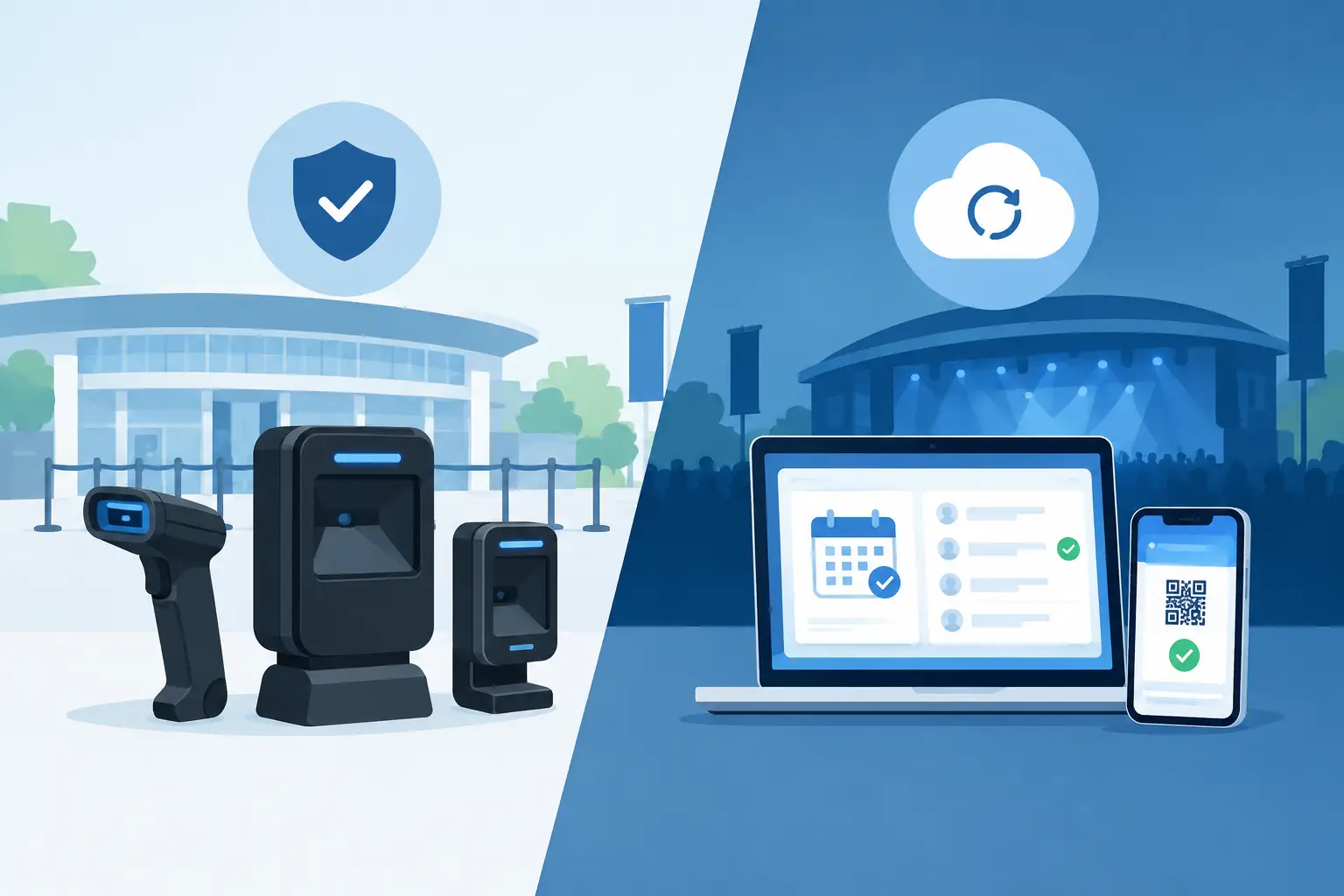
Next, consider connectivity. Cloud synchronization can be valuable for multi-location operators that need shared VIP recognition, banned-patron alerts, reporting, or centralized settings. But core door verification should not disappear when connectivity does. A scanner that works offline gives operators control during real-world outages.
Device format also affects adoption. A portable unit can work well for a host stand, a temporary event entrance, or a door team moving between lanes. Larger operations may need multiple devices and cloud synchronization so a patron risk decision made at one site is visible at another. The right setup depends on traffic volume, entry points, staffing, and the cost of a missed fraudulent credential.
Finally, examine the commercial model. Subscription services can make sense when they provide ongoing multi-site coordination, but a venue should understand what functions require recurring payment. Direct-purchase hardware with core scanning available without a mandatory subscription can be a better fit for independent operators that need predictable costs.
Privacy Controls Are Part of Security
Collecting more data than necessary creates its own risk. ID screening should support age verification and venue safety without turning a simple entry process into uncontrolled data collection.
Choose a system that allows verification-only workflows when you do not need to retain patron information. When retention is necessary for banned-patron management, incident response, or multi-site operations, set clear retention periods and limit access to authorized staff. Encryption, including AES-256 protections for stored data where applicable, should be part of the vendor’s security posture.
Your internal policy matters as much as the technology. Define who can view records, who can add or remove a banned-patron alert, and when information must be deleted. These controls reduce exposure while keeping the system useful for the operational reasons it was purchased.
Match the Check to Your Actual Risk
A neighborhood bar with one entrance may need a portable scanner, reliable age verification, and a simple exception process. A nightclub with multiple doors and recurring incidents may need stronger document analysis, coordinated banned-patron alerts, and synchronized devices. A dispensary or gun shop may prioritize documented compliance workflows and tighter retention controls.
There is no credible system that can promise to catch every altered ID. Fraud techniques change, IDs are damaged, and staff still make judgment calls. The goal is to reduce avoidable mistakes by layering document analysis, age verification, human review, and a consistent response policy.
The best door process is the one your team will use on every shift: fast enough for a crowded entrance, strong enough to flag suspicious credentials, and disciplined enough to protect the business when a scan calls for a second look.