How Dealership Identity Fraud Starts at the Door
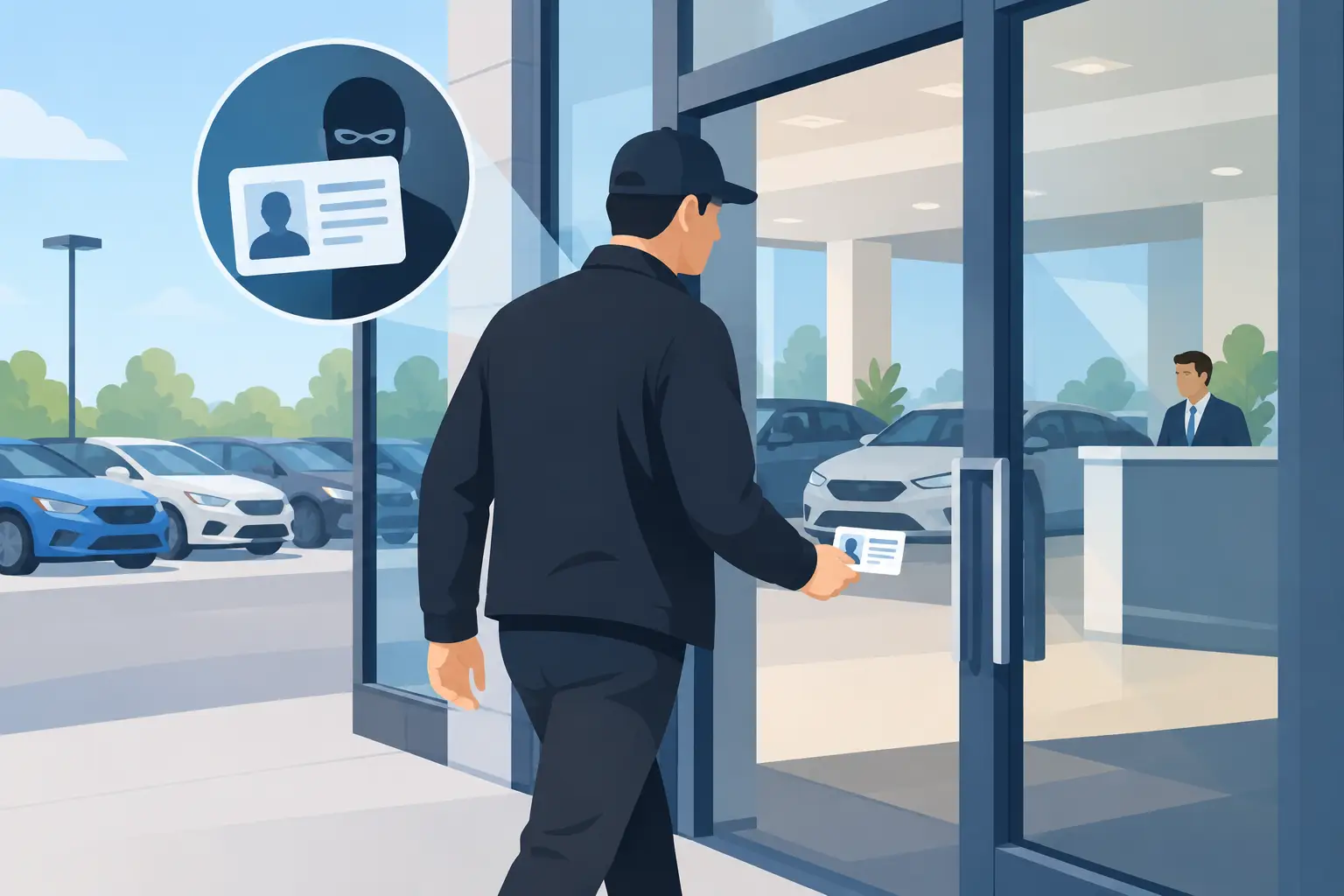
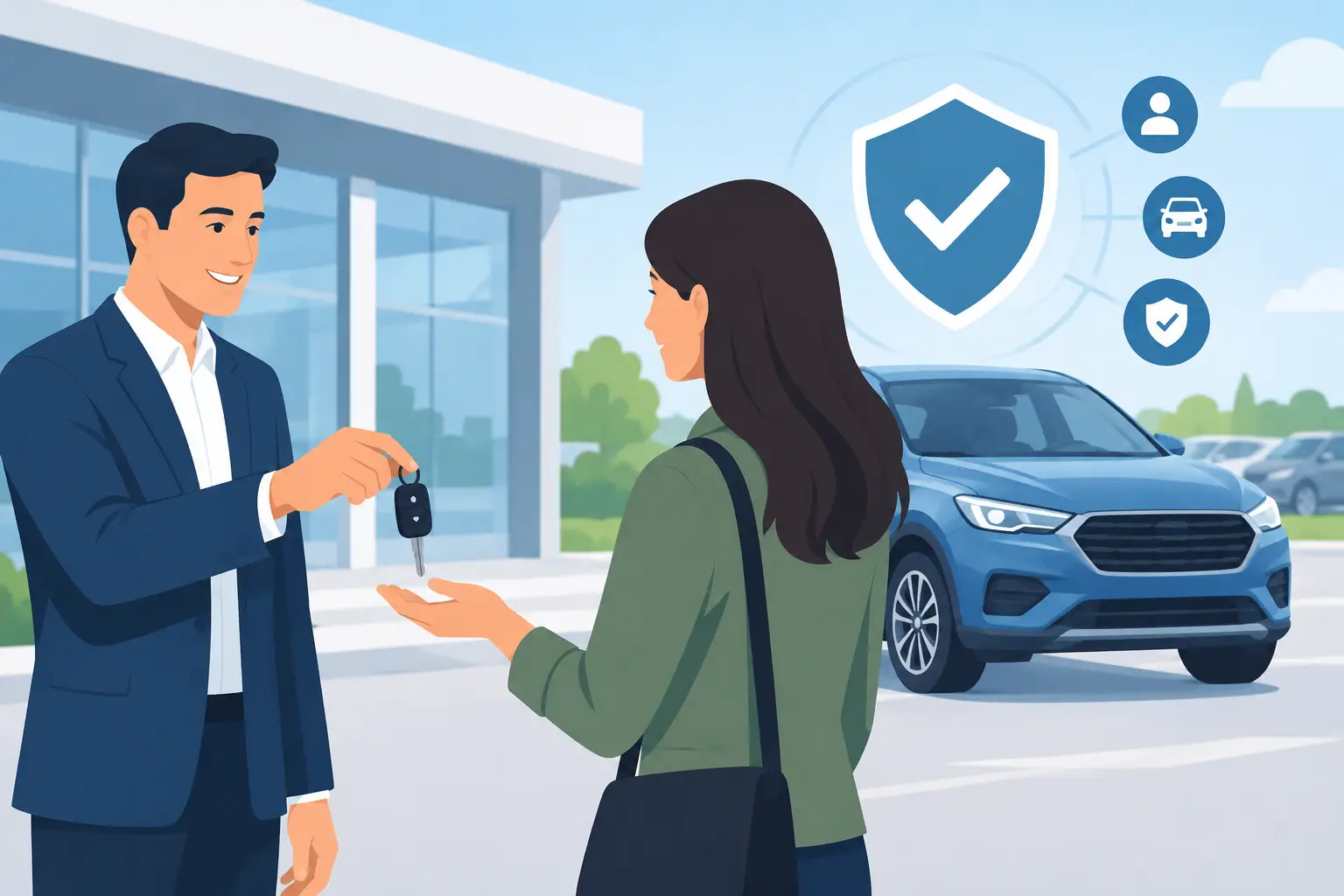
A test drive should begin with a customer conversation, not a preventable risk decision. Yet dealership identity fraud often starts at the front desk when staff accept a license at face value, make a quick photocopy, and hand over keys. A fraudulent or stolen ID can be used to obtain vehicle access, begin a financing application, target employee accounts, or create a paper trail that is difficult to unwind later.
For dealerships, identity verification is not a back-office task. It is an access-control decision that affects vehicles, inventory, customer data, employee safety, and the store’s reputation. The strongest process is fast enough for legitimate buyers and consistent enough that staff do not have to guess when an ID deserves a closer look.
What dealership identity fraud looks like
Dealership fraud is rarely limited to one scenario. A person may present a counterfeit driver’s license to take a test drive, use another person’s identity to apply for financing, or combine real information with altered credentials to bypass basic screening. In some cases, the goal is immediate vehicle theft. In others, the fraud surfaces days or weeks later, after a lender, insurer, or true identity holder challenges the transaction.
The most dangerous cases are not always obvious. A clean-looking card, a confident customer, and a busy sales floor can create false confidence. Modern counterfeit IDs can reproduce names, photos, barcodes, and layout details that pass a visual glance. A staff member who is trained only to compare a face to a photo has limited tools against a document designed to look legitimate.
There is also a process problem. When every salesperson handles IDs differently, the dealership cannot reliably show what was checked, when it was checked, or whether the same person returned after a prior incident. Fraudsters notice inconsistent procedures. They often choose the moment when the showroom is busy, a new employee is alone, or the normal manager approval step has been skipped.
Why a copied license is not a verification process
A photocopy or phone photo can document that an ID was presented. It does not establish that the document was authentic, unaltered, or being used by its rightful holder. It can also create a privacy burden if sensitive customer information is retained without a clear operational reason, defined retention period, or adequate protection.
Dealers need a distinction between collecting identity information and verifying identity. Collection produces a record. Verification evaluates the credential itself and supports a decision before keys, vehicles, or sensitive systems change hands.
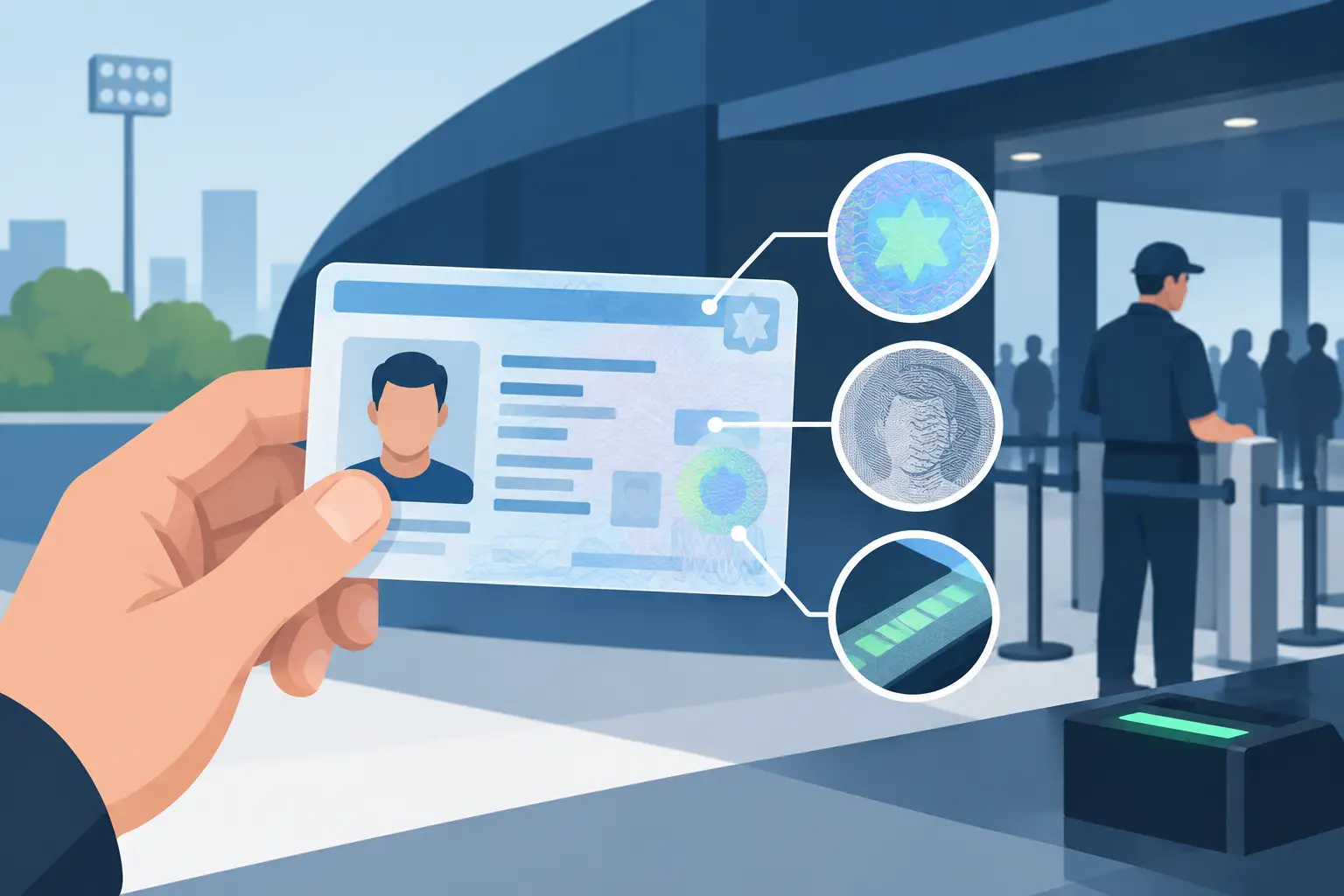
A purpose-built ID scanner can read the encoded data on a driver’s license or passport and analyze security features that are difficult to assess manually. That does not replace sound judgment, financing controls, or a properly supervised test-drive policy. It gives staff a more reliable first checkpoint and a documented, repeatable workflow.
The operational goal is straightforward: scan the ID, confirm the result, compare the customer to the credential, and follow an escalation path when the scan identifies a concern. That approach is more defensible than asking employees to make a high-stakes call from a quick visual inspection.
Build a dealership identity fraud control point
The best place to stop fraud is before access is granted. For many dealerships, that means establishing an ID verification point before a test drive, before a loaner vehicle leaves the lot, and before any transaction that exposes the business to financial or inventory loss.
The process should be clear enough that every employee can follow it during a rush. A customer provides an acceptable government-issued ID. Staff scan it and review the verification result. They compare the person standing in front of them with the photo and basic details on the credential. If the result is suspicious, incomplete, expired, or inconsistent with the interaction, the employee pauses the transaction and involves a manager or designated security lead.
That pause matters. Staff should not be expected to accuse a customer or diagnose every type of fraud. Their job is to follow the procedure, protect the vehicle and customer data, and escalate exceptions. Calm, consistent language helps: “We need a manager to complete the verification before we can release the vehicle.”
The policy should also cover what happens after a failed or suspicious scan. Some dealerships may ask for a second acceptable credential. Others may decline the test drive or require a manager-approved alternative. The correct response depends on the risk, local requirements, insurance rules, and the facts of the interaction. What should not vary is whether a flagged ID receives additional review.
Test drives require the same discipline every time
Test-drive theft often exploits ordinary operational shortcuts. Keys are released quickly. A salesperson assumes another employee checked the license. A customer asks to drive alone or requests a last-minute vehicle swap. None of these behaviors proves fraud, but they are reasons to tighten the process rather than relax it.
Set a standard verification point before keys are released. Keep key control separate from casual sales-floor access. Confirm who is authorized to approve exceptions, including solo test drives, high-value vehicles, or customers who cannot provide a scannable ID. When staff know the rule is universal, they can enforce it without turning the interaction into a personal judgment.
Financing fraud needs layered checks
ID scanning is valuable at the front end, but it is one layer in a larger financing-control program. A valid-looking credential does not guarantee that an applicant owns the information on a credit application, has authority to use the account presented, or intends to complete a legitimate purchase.
Finance teams should compare the scanned ID data with application information and watch for discrepancies in name spelling, address history, phone ownership, email patterns, and supporting documents. Sudden pressure to rush funding, remote changes to delivery instructions, or requests involving third-party payments may warrant additional review.
The right controls vary by dealership size and transaction volume. A high-volume auto group may have a dedicated fraud-review workflow, while an independent dealer may rely on a manager escalation process. Both benefit from a consistent ID-verification record at the start of the customer journey.
Choose technology that works where the risk occurs
A dealership tool must work at the desk, on the lot, and during real operating conditions. Internet-dependent verification can create a gap when connectivity drops or when staff need to process an ID away from a fixed workstation. Offline-first scanning keeps the initial verification workflow available when the connection is unreliable.
Look for devices that can instantly read driver’s licenses and passports, detect suspicious IDs through multiple security indicators, and give staff a clear result without forcing them through a complicated interface. For multi-location dealer groups, optional cloud synchronization can help share alerts and operational intelligence across approved devices. For a single rooftop, standalone hardware may be the better fit.
Kred scanners are designed for this kind of practical access control, with portable hardware, offline operation, suspicious ID detection, and configurable data handling. The key consideration is not simply whether a scanner reads a barcode. It is whether the system supports the decision your team needs to make before releasing an asset or proceeding with a transaction.
Protect privacy while protecting the dealership
Identity verification should be proportional to the risk. Dealers have legitimate reasons to verify a customer before a test drive or financial transaction, but unnecessary collection creates its own exposure. Retaining every image, record, or data field indefinitely is not a security strategy.
Use verification-only workflows where they fit the use case. Configure retention periods based on business needs, legal obligations, and internal policy. Limit access to ID records, encrypt stored information, and train staff not to create uncontrolled copies on personal phones, desktops, or paper files.
Privacy controls also improve the customer experience. A legitimate customer is more likely to accept a quick, standard verification step when the dealership can explain that it protects vehicles, employees, and customer information, and that data is handled according to defined controls.
Make fraud prevention part of daily operations
Technology only works when the team uses it consistently. Train sales, service, reception, finance, and security staff on when verification is required, what a suspicious result means, and who has authority to make the next decision. Keep the training practical. Use examples from test drives, loaner vehicles, remote buyers, and rushed end-of-month transactions.
Review incidents and near misses without blaming the employee who followed the process. If a customer leaves after being asked for additional verification, that may be evidence the control worked. If staff repeatedly bypass a step because it slows the line, fix the workflow, staffing, or device placement instead of accepting the gap.
A dealership does not need to treat every customer as a suspect. It needs a reliable way to verify identity before trust turns into access. Put that control at the point where keys, vehicles, financing, and customer data are on the line, and let your team operate with a clear standard behind them.