Driver License Security Features Guide for Venues
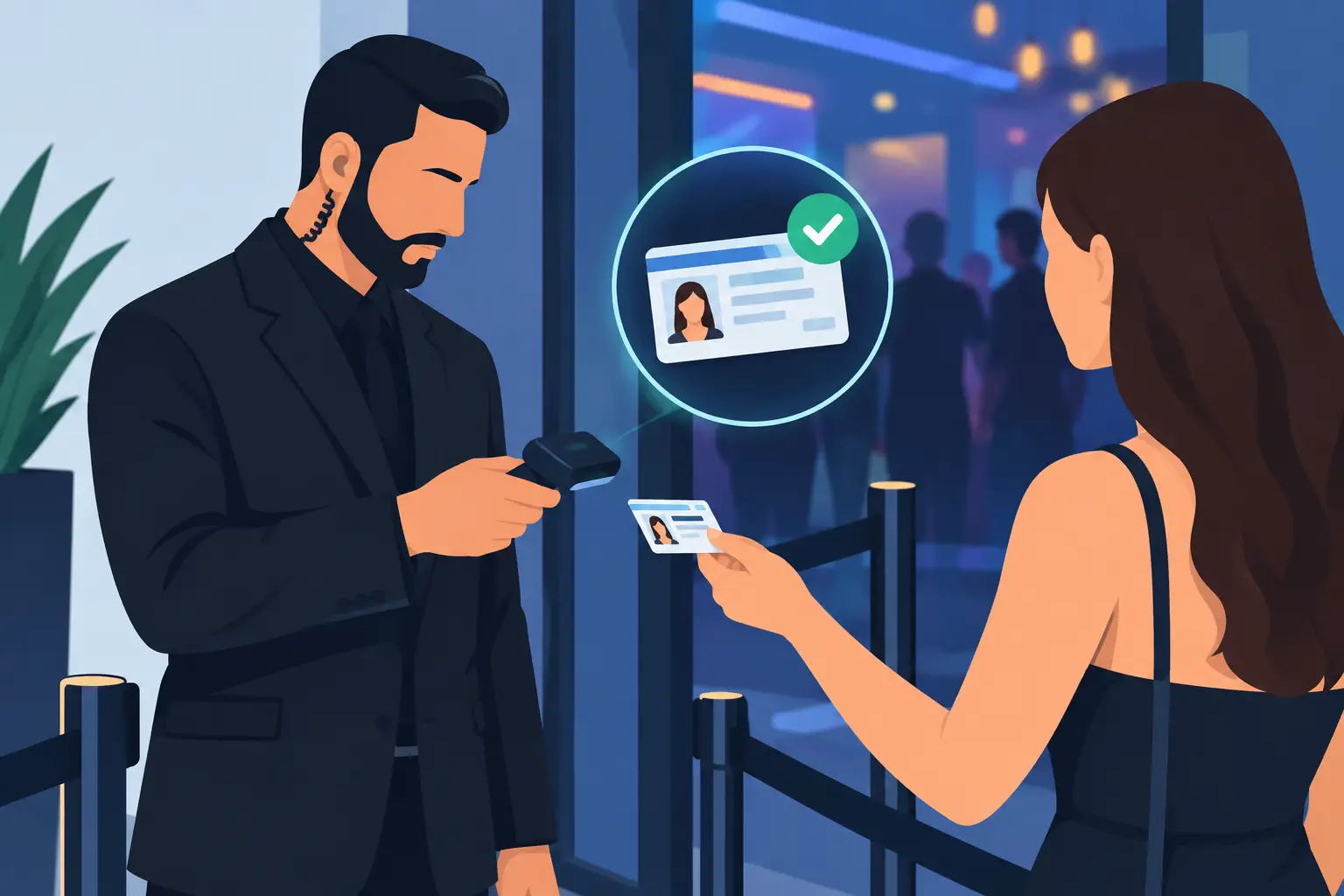
A busy door is where weak ID procedures get exposed. Low light, loud music, long lines, and a confident guest can push staff toward quick visual judgments. This driver license security features guide is built for venue operators who need faster decisions without lowering the standard for age verification, fraud prevention, or privacy.
A driver license is not just a card with a date of birth. It is a controlled identity document designed with layers of physical, printed, and digital protections. The challenge is that those layers vary by state, province, issuance year, and card type. A reliable door operation combines trained human review with technology that can inspect more indicators than a staff member can reasonably evaluate in a few seconds.
Why Driver License Security Features Matter at the Door
A fake ID can create more than an awkward interaction. For bars, clubs, dispensaries, and other age-restricted businesses, one bad decision can contribute to underage service, regulatory exposure, license risk, chargebacks, theft, or an incident that damages the venue's reputation.
The threat is not limited to obviously poor counterfeits. Many difficult cases involve altered real IDs, borrowed IDs, or high-quality replicas made to pass a casual glance. A card may scan a barcode but still be suspicious. It may have a believable birth date but show signs of tampering. It may be a valid document presented by the wrong person.
That is why security features should be treated as a layered control. Staff need to know what looks wrong. An ID scanner adds consistency by reading encoded data, checking document patterns, and flagging suspicious conditions. Neither approach replaces the other. Together, they reduce the chance that a rushed decision becomes a costly one.
Driver License Security Features Guide: What to Check
Card construction and surface quality
Start with the physical card. Legitimate driver licenses are produced on durable materials and generally feel uniform, not flimsy, overly glossy, or uneven. Watch for peeling laminate, rough edges, bubbles, unusual thickness, exposed seams, or a surface that looks as if it has been relaminated.
These signs do not automatically prove fraud. Normal wear can affect a genuine card, especially one carried daily. But a damaged surface around the photo, date of birth, expiration date, or signature area deserves closer inspection because those are common targets for alteration.
Photo, portrait, and personal details
Staff should compare the guest to the portrait, not just the date of birth. Look at facial structure, eyes, nose, and overall proportions rather than relying on hairstyle, makeup, facial hair, or clothing. Ask the guest to briefly remove a hat or lower a mask when necessary and permitted by your operating policy.
Review whether the printed details make sense together. The photo quality, font spacing, alignment, and information fields should look consistent across the card. Crooked text, mismatched typefaces, uneven colors, or a photo that appears pasted into the document are clear reasons to pause the transaction.
A legitimate-looking license can still be borrowed. If the portrait does not reasonably match the person presenting it, the card should not be accepted simply because its printed security elements look authentic.
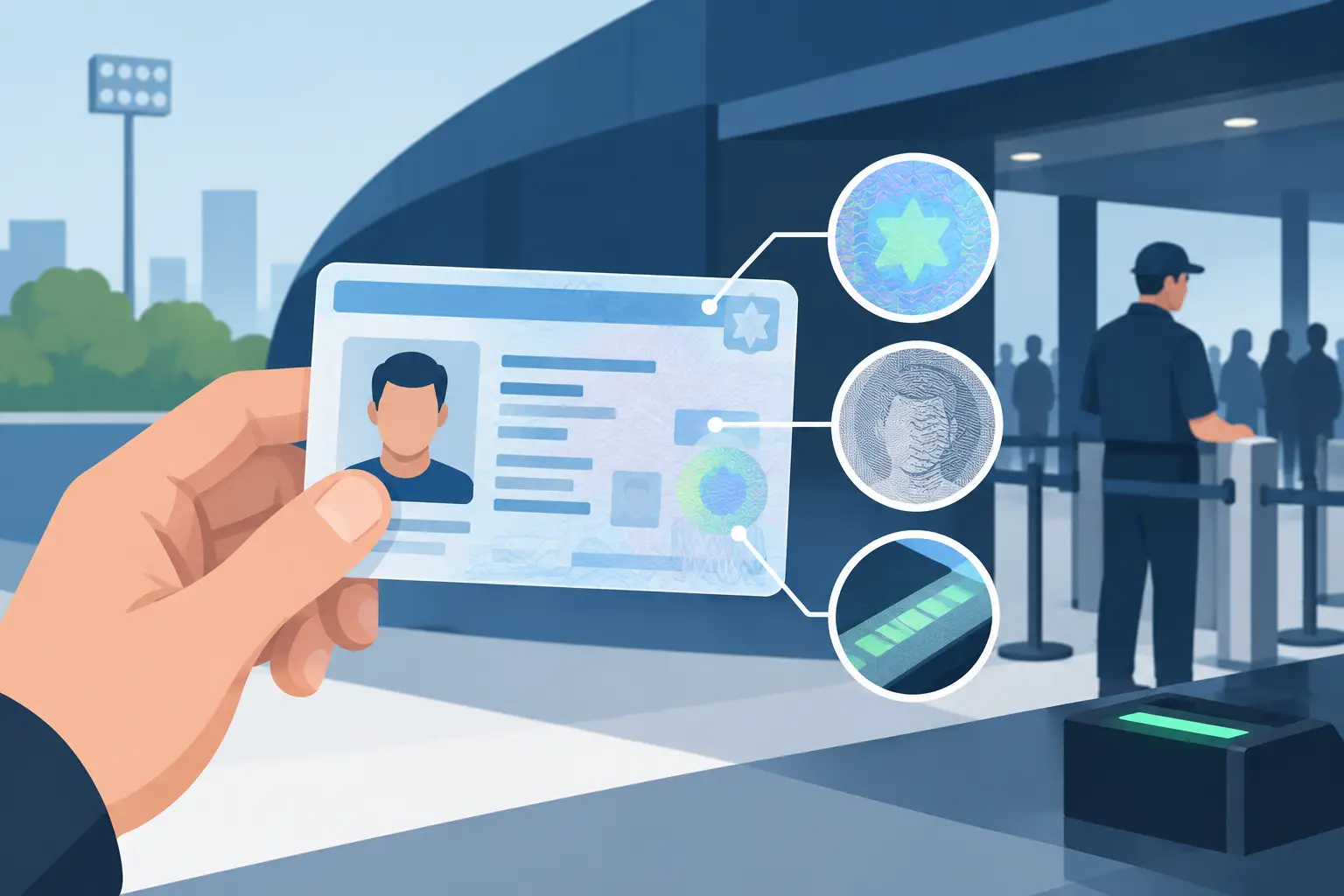
Holograms, color-shifting images, and microprinting
Many licenses include visual elements that change when tilted, such as holographic images, ghost portraits, or color-shifting features. Some use very small printed text, fine-line patterns, or complex background artwork that is difficult to reproduce with consumer printing equipment.
These features can be useful, but they are not identical from one jurisdiction to another. Door staff should avoid relying on a vague rule such as "all real IDs have a hologram." The better standard is familiarity with the common documents your venue sees, supported by a current reference process and scanner-based analysis.
Do not let one visible feature settle the question. A counterfeit may imitate a hologram or use a reflective overlay that looks convincing in a dark doorway. Check the entire document, including how the feature integrates with the card rather than sitting on top of it.
Barcodes and encoded data
The barcode on the back of a driver license carries data that can be read quickly by a compatible scanner. This supports instant age verification and can reveal whether the encoded information matches the details printed on the face of the card.
But barcode reading is not authentication by itself. Fraudsters can copy data from a legitimate card onto a counterfeit or altered document. A strong screening workflow compares barcode data with visible data, evaluates the document's security characteristics, and gives staff a clear exception path when the card or presenter raises concerns.
For venues that need dependable entry screening, choose equipment designed to analyze multiple document indicators rather than simply reading a barcode. Kred scanners, for example, analyze more than 60 security indicators while keeping core verification available offline.
Expiration dates and card status
An expired license may still establish identity in some contexts, but it does not meet every venue's acceptance policy. Age-restricted businesses should set a documented rule for expired, damaged, temporary, vertical, and out-of-state IDs, then train every shift to apply it consistently.
Also distinguish between an expired document and a person who is underage. An expired ID does not change a guest's date of birth, but accepting it may create uncertainty about whether the document remains valid or has been replaced. Your policy should be based on local requirements, risk tolerance, and the type of transaction being approved.
Build a Faster, More Defensible ID Check Process
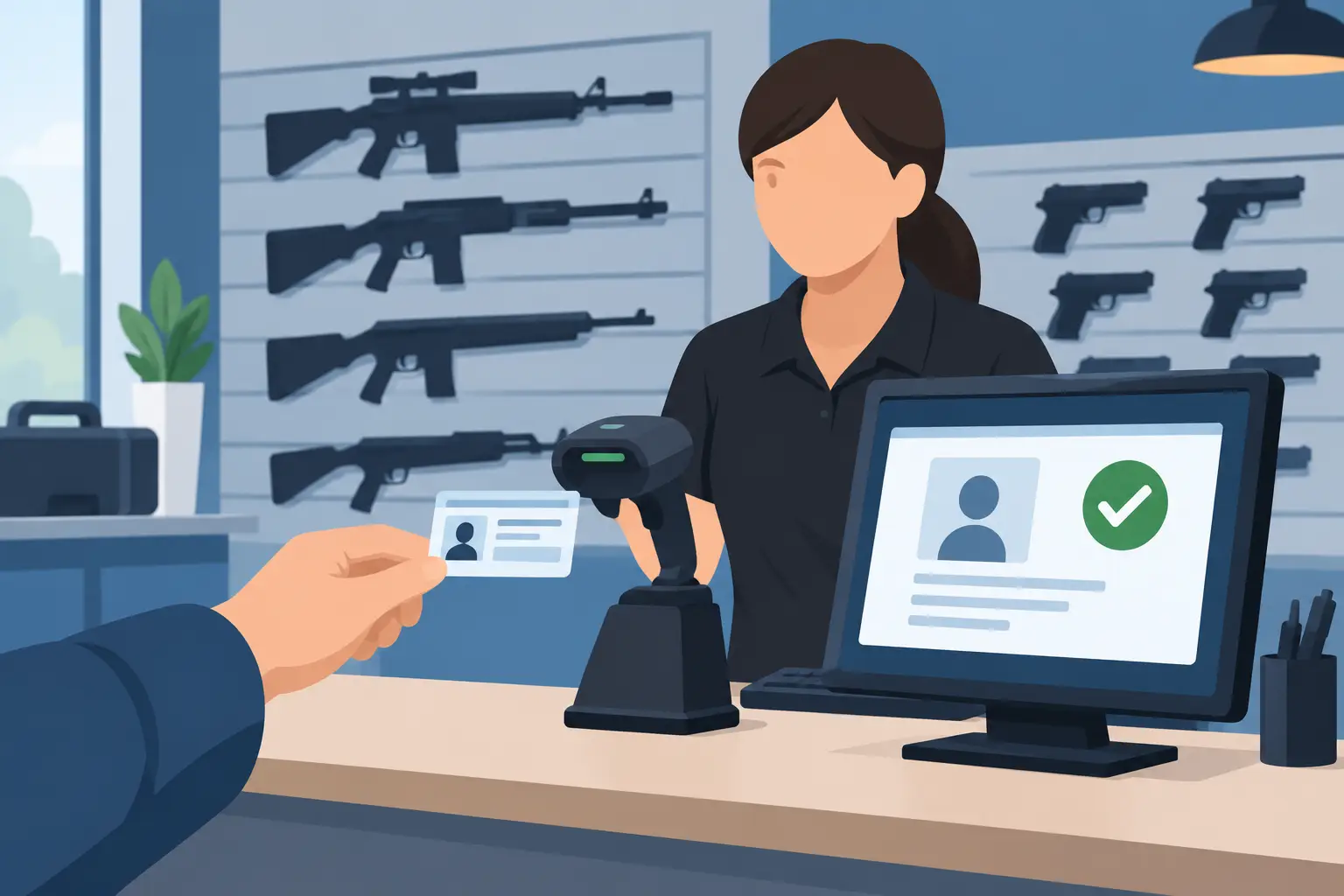
The best ID process is not the slowest one. It is the one staff can repeat correctly at peak volume. Create a simple sequence: receive the ID, inspect the presenter and card face, scan the document, review any alert, and make a clear accept, decline, or supervisor-escalation decision.
A scanner should support the process, not create a bottleneck. Offline-first tools are particularly practical at doors because internet outages should not stop age verification. Cloud synchronization can add value for multi-device or multi-location operations, especially when teams need to share banned-patron alerts or recognize VIPs. However, core screening should remain available even when connectivity drops.
Clear escalation rules protect staff. If a document is suspicious, employees should not debate it at length, accuse the guest of a crime, or take unnecessary risks. They can politely decline entry or service under venue policy, call a supervisor, and document the result according to the business's retention settings.
Avoid the Most Common Operational Mistakes
The first mistake is treating a quick glance as an ID check. Staff often focus on the birth date and miss an altered photo, a mismatch between the guest and portrait, or an invalid card format.
The second is trusting a successful barcode read too much. Scanning is a powerful control, but a read result should be evaluated alongside document analysis and the physical comparison. A scanner that flags suspicious conditions gives staff a better basis for stopping the interaction before service occurs.
The third is collecting more patron information than the operation needs. Data retention should support a defined security purpose, such as managing repeat problem patrons or maintaining an incident record, not create an unnecessary privacy burden. Verification-only workflows, configurable retention periods, access controls, and encryption help venues protect both their business and their guests.
Finally, do not leave judgment entirely to new staff. Door teams need hands-on training with common license formats, realistic suspicious-ID scenarios, and a written policy that tells them when to escalate. Consistency matters more than a dramatic confrontation.
Set a Standard Your Staff Can Execute
Driver license security is an operational discipline, not a one-time equipment purchase. Review your procedures when laws change, new card designs appear, or an incident reveals a gap. Track the reasons IDs are declined so management can identify patterns, retrain staff, and improve screening at the right point in the workflow.
The goal is straightforward: let legitimate patrons move through quickly while making suspicious IDs, underage entry, and repeat-risk patrons harder to get past the door. A clear process, trained staff, and purpose-built verification technology give your venue a standard that holds up when the line is long and the stakes are high.