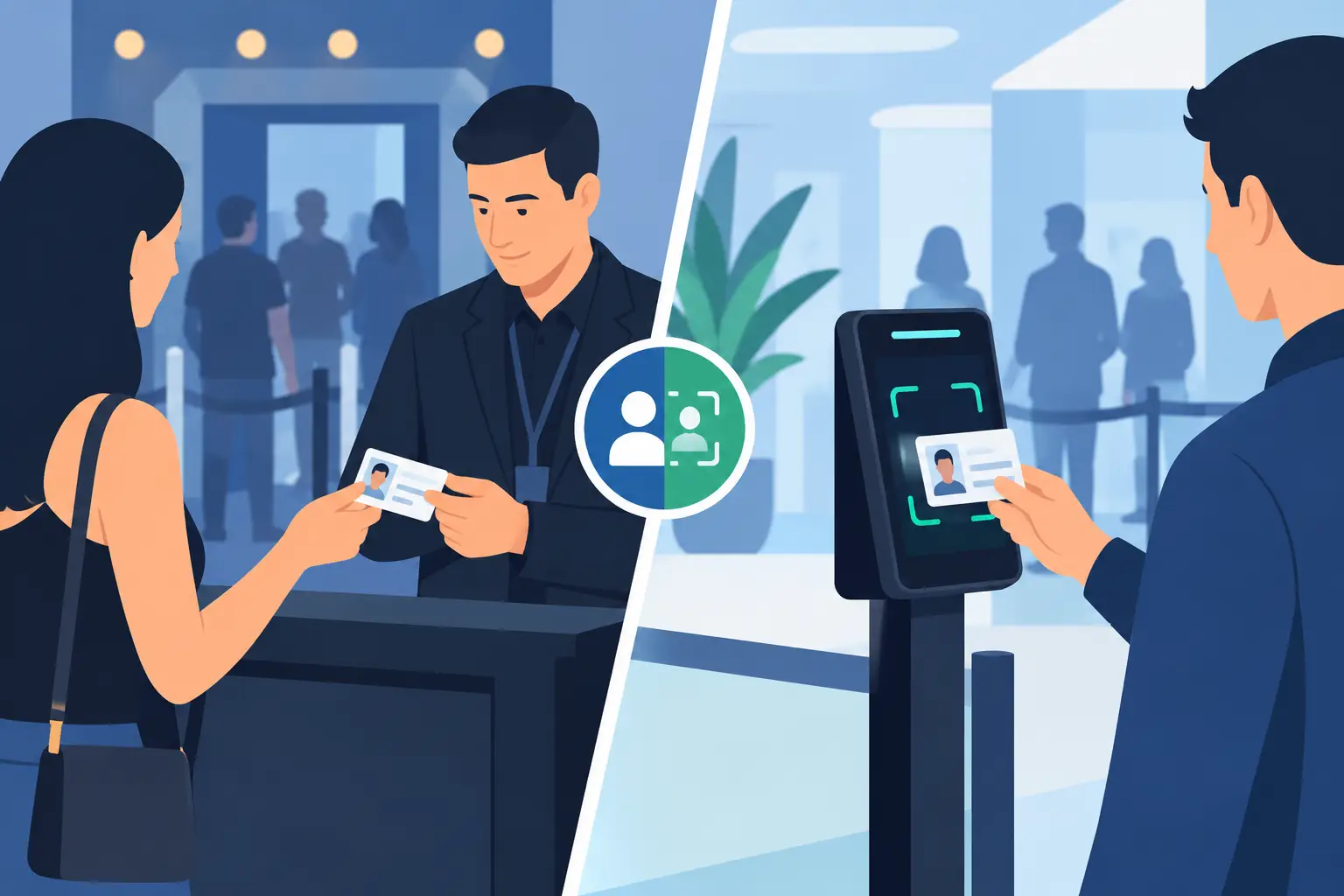
Ownership Model Versus Subscriptions for Venues
A scanner at the door is not a streaming service. It is part of the equipment your staff relies on when the line is building, a regulator is watching, or a fake ID reaches the front of the queue. That distinction matters when evaluating the ownership model versus subscriptions. The right purchasing structure should support reliable verification, predictable costs, and the way your operation actually runs.
For many venues, the question is not whether technology has value. Instant age verification, suspicious ID detection, and patron alerts can protect the license, reduce chargebacks and fraud exposure, and give door staff a clearer decision in seconds. The question is whether those core capabilities should depend on a recurring payment.
Why the Ownership Model Versus Subscriptions Decision Matters
Subscriptions can make sense when a business needs centrally managed software, frequent feature releases, or synchronized data across several locations. But a subscription should pay for an ongoing operational service, not act as a toll gate for equipment a venue already bought.
A direct-purchase ownership model treats the scanner as essential security infrastructure. The venue purchases the hardware, trains its staff, and retains access to core scanning functions without a mandatory monthly charge. This approach is particularly practical for independent bars, nightclubs, dispensaries, gun shops, and other ID-critical businesses that need dependable screening but do not need a cloud platform every day.
The budget impact is straightforward. A low upfront price can look attractive until recurring fees accumulate across devices, doors, and locations. Subscription costs also tend to rise when an operation expands, adds staff accounts, or needs data retention beyond a basic tier. A hardware ownership model moves more of the cost to the initial purchase, making the long-term operating expense easier to forecast.
That does not automatically make ownership the correct answer for every organization. A multi-location operator may gain meaningful value from cloud synchronization. The key is separating what the venue must have at the door from what it may choose to add for management and intelligence.
Core Verification Should Not Depend on Connectivity
Door operations do not pause because Wi-Fi drops. Cell service can be inconsistent near concrete walls, packed rooms, event spaces, and parking areas. A scanner that requires a live connection to perform basic age verification creates a weak point at exactly the moment staff need a fast, confident answer.
An offline-first scanner can read a driver's license or passport, confirm age, and examine document security features without relying on an active internet connection. That protects throughput and supports consistent screening during connectivity outages. It also gives managers a more practical contingency plan than telling staff to switch back to visual inspection when the network fails.
For age-restricted venues, visual inspection alone is a poor fallback. Door staff may be dealing with poor lighting, loud music, pressure from a growing line, and IDs designed to look convincing at a glance. Technology that analyzes multiple security indicators gives staff a stronger basis for escalating a questionable document or refusing entry.
The ownership model supports this operational reality when core verification remains available on the device. The venue can keep screening patrons, even if cloud features are temporarily unavailable or the operator chooses not to subscribe to them.
Where Subscriptions Deliver Real Value
Cloud services are not inherently a bad deal. They are valuable when they solve a specific management problem that standalone hardware cannot solve as efficiently.
For example, a regional nightclub group may want banned-patron records, VIP notes, and relevant operational data synchronized across several devices or properties. A security director may need centralized oversight rather than separate device-by-device administration. A business with rotating managers may also benefit from a controlled way to maintain consistent records and settings across locations.
In these cases, the subscription should be optional and clearly defined. Operators should know what the cloud layer adds: multi-device synchronization, centralized patron intelligence, or expanded administrative controls. They should also know what continues to work without it.
This is the practical middle ground. Buy the scanning hardware for the protection required at entry. Add cloud capabilities when the business case supports them. That gives a single-location venue room to stay lean while allowing a growing operator to adopt centralized tools later.
Cost Transparency Is a Security Decision
Security purchases are often evaluated only on price per unit. That misses the more useful question: what will the system cost over the period you expect to use it?
A venue should compare the full cost of ownership, including hardware, required software fees, device minimums, support expectations, replacement cycles, and any additional charges for records, users, or locations. If a product is advertised at a low entry price but cannot perform its intended core function without a recurring plan, the subscription belongs in the purchase decision from the start.
Cost transparency also affects deployment. When every additional scanner adds another recurring fee, managers may limit devices to reduce cost. That can leave secondary entrances, VIP access points, or high-volume nights under-equipped. A direct-purchase model can make it easier to place the right tool where risk actually exists.
There is also an accountability benefit. When management knows the cost structure, it can decide whether an added cloud service is producing measurable value. If centralized banned-patron alerts prevent repeat incidents across locations, the investment may be justified. If a standalone device handles the operation well, there is no reason to pay for features that staff will not use.
Privacy Controls Need the Same Flexibility
ID scanning raises legitimate privacy considerations. The right approach is not to avoid verification technology. It is to configure the tool around the minimum data needed for the purpose at hand.
For a venue that only needs to confirm age and screen for suspicious documents, verification-only mode can reduce unnecessary data collection. Configurable retention periods allow management to align storage practices with operational needs and applicable legal requirements. Encryption, including AES-256 protections for stored data where used, helps safeguard information that the business has chosen to retain.
Subscriptions can complicate this conversation when data storage is bundled into a default cloud workflow. Operators should ask whether data must be uploaded, where it is retained, who can access it, and how long it remains available. They should also understand whether the scanner can be used for verification without creating a permanent patron record.
A flexible system gives the operator a choice. Retain records when they support a defined security or compliance objective. Minimize data when retention is not necessary. That is better for patron trust and easier for staff to explain.
Questions to Ask Before You Buy
Before selecting an ID-scanning system, operators should get direct answers to a few operational questions:
- Can the device perform age verification and suspicious ID detection without an internet connection?
- Are core scanning functions available without a mandatory subscription?
- What features require a cloud plan, and what happens if the plan is not renewed?
- Can the system synchronize VIP and banned-patron information across devices when that capability is needed?
- Does it support verification-only workflows, configurable retention, and clear access controls?
- What will the total cost be after one, three, and five years of use?
These questions cut through feature lists. They reveal whether the system is designed to protect the door or primarily to create recurring billing.
Match the Model to the Operation
A single-location bar with one busy entrance may need a portable scanner that delivers fast, reliable age checks and fake-ID screening without adding a monthly expense. A dispensary may prioritize consistent verification, privacy controls, and a device that continues to operate when connectivity is unstable. A multi-site operator may need all of that, plus synchronized alerts and shared patron intelligence.
Kred is built around that distinction: portable ID-scanning hardware can provide the essential protection at the door, while optional cloud synchronization supports organizations that need connected operations. The model lets venues choose the level of service that fits their current risk, scale, and budget.
The best buying decision is not the one with the lowest first-month price. It is the one that keeps staff effective on a crowded Friday night, gives management control over long-term costs, and leaves room to add connected tools when the operation has a real reason to use them.