Gun Shop Identity Screening Checklist for Safer Sales
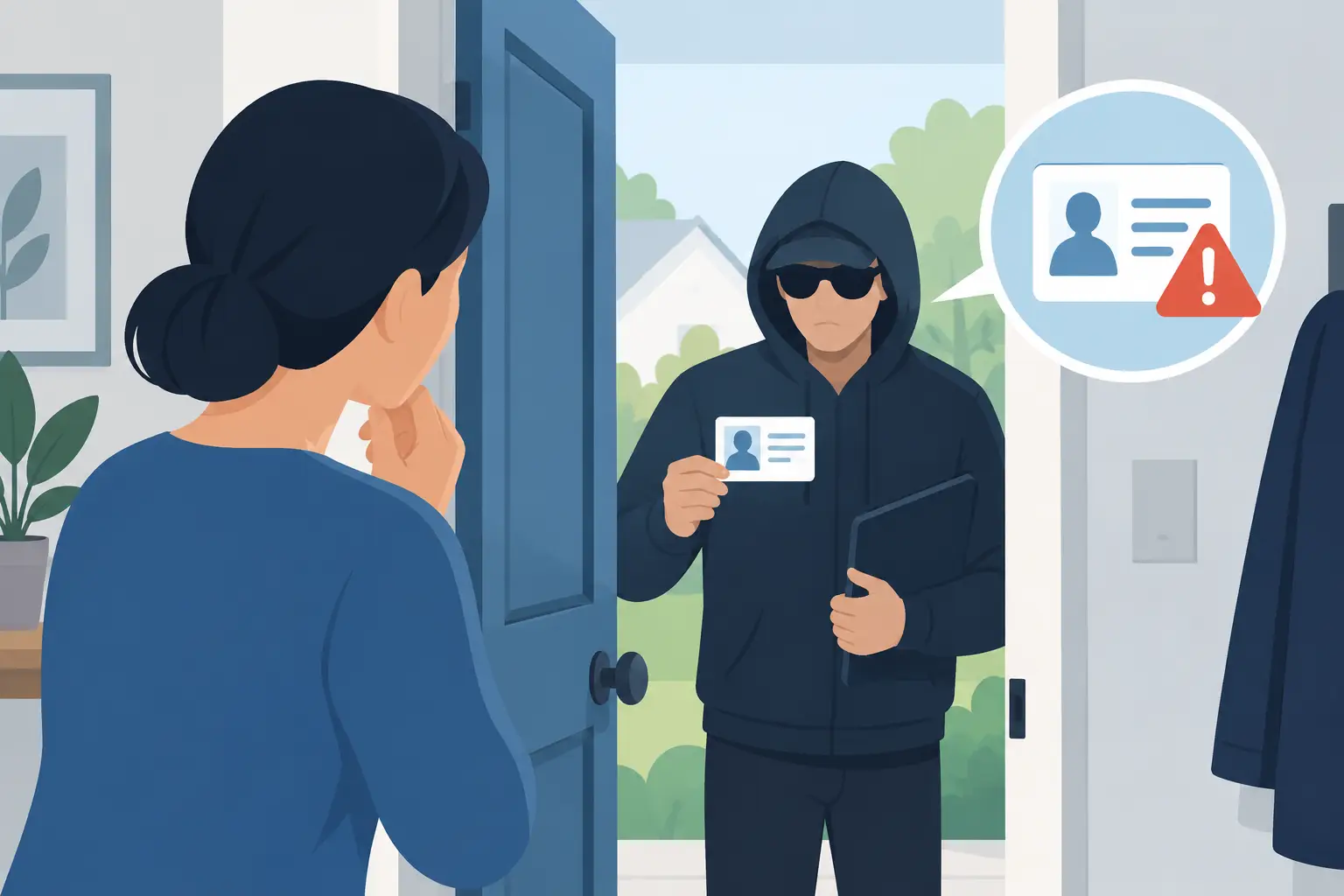
A rushed counter interaction is where a questionable ID can become a costly mistake. This gun shop identity screening checklist gives owners and staff a consistent way to review identification, document concerns, and protect lawful transactions without turning every customer interaction into an interrogation.
Identity screening is only one part of a compliant firearm-sale process. It does not replace Form 4473, required background checks, state or local requirements, employee judgment, or guidance from qualified legal counsel. It does give your team a faster, more defensible front-end process for confirming that the person presenting an ID is the person standing at the counter.
Why gun shop ID screening needs a written process
A forged, altered, borrowed, or expired credential can create exposure well before a background check begins. Staff may be handling age-restricted ammunition, controlled inventory, financing paperwork, range access, transfers, or pickup orders. A consistent ID process helps prevent staff from making different calls based on who is working, how busy the store is, or how persuasive a customer sounds.
The objective is not to make assumptions about customers. It is to identify document and identity discrepancies using the same standards for everyone. That protects the customer, the employee, and the business.
A practical process also gives employees a clear escalation path. If an ID cannot be verified, staff should know when to pause the transaction, call a manager, request another acceptable document where permitted, or decline to proceed. Uncertainty should never be resolved by rushing.
Gun shop identity screening checklist
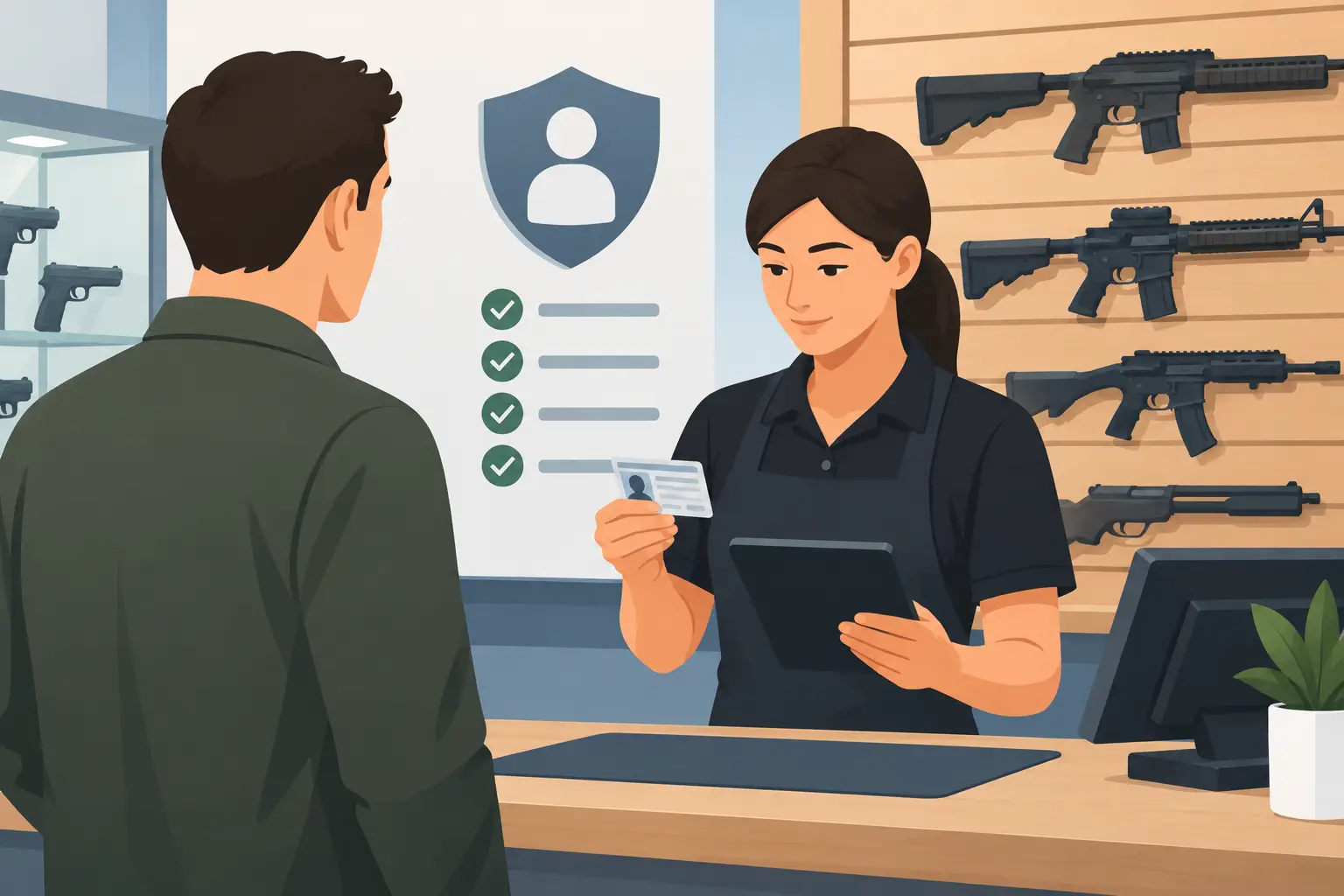
Use the following checklist at the point where identification is required. Adapt it to your store's policies, state rules, and the type of transaction being completed.
- Confirm the document is physically present and acceptable. Review the original document rather than a photo, screenshot, or photocopy unless your applicable rules specifically permit another format. Confirm the credential type meets the requirements for the transaction.
- Check expiration and visible damage. Look for an expired card, broken laminate, uneven edges, altered printing, or a photo layer that appears tampered with. Wear alone does not prove fraud, but it may justify closer review.
- Match the photo to the person presenting the ID. Compare key facial features, not just hairstyle or clothing. Ask the customer to remove sunglasses, hats, or face coverings when appropriate and permitted by your policy.
- Review the date of birth and age requirement. Staff should calculate age from the date of birth, not rely on a customer statement or a quick glance at the birth year. Establish a clear policy for which products, services, or areas require age verification.
- Compare the ID data to transaction documents. Names, addresses, and other required details should align with the paperwork used for the sale or transfer. A mismatch is not automatically disqualifying, but it requires resolution before proceeding.
- Inspect document security features. Review the card stock, laminate, typography, barcode or PDF417 data, holograms, ghost image, UV elements where available, and layout expected for that issuing jurisdiction. Counterfeit IDs often look convincing from a distance but fail under closer inspection.
- Scan the ID when your policy calls for it. An ID scanner can read encoded data, confirm age instantly, and analyze document security indicators that are difficult to inspect manually. Scan results should support trained staff judgment, not replace it.
- Watch for behavior that pressures the process. Customers may become impatient for legitimate reasons, especially during a busy day. The concern is not impatience itself. The concern is an attempt to stop normal review, prevent a staff member from comparing details, or push another person to complete the transaction on their behalf.
- Pause and escalate discrepancies. If the document appears suspicious, data does not match, or the person cannot reasonably explain a discrepancy, stop the process and involve the designated manager. Record only the information your policy and applicable law allow you to retain.
Build the workflow around the actual transaction
Not every interaction needs the same level of screening. A customer entering a retail floor may require a different process than a buyer completing a regulated sale, a customer collecting a special order, or a member checking into a range. Define the point at which staff must request ID and make the sequence clear.
For a firearm sale or transfer, the ID review should happen before staff invest significant time in paperwork or inventory handling. The employee verifies the required identification, confirms the customer is present, and proceeds with the required transaction steps. If information changes during the process, such as a customer presenting a different document later, restart the review rather than treating the first check as sufficient.
For age-restricted ammunition or other products, use the same standard every time. A policy that is enforced only when an employee feels uncertain is difficult to defend and easy to bypass. The strongest procedures are fast enough for normal traffic and consistent enough to apply during a Saturday rush.
What to do when an ID does not pass review
Staff need language that is firm, neutral, and repeatable. They do not need to accuse a customer of fraud. A simple response can be: “I’m unable to verify this identification under our store policy, so I can’t continue this transaction today.” If a manager review is available, explain that the transaction is paused while the document is reviewed.
Avoid debating the details at the counter. An employee who announces that an ID is fake can create unnecessary conflict and may be wrong. The operational decision is simpler: the store cannot verify the document to its required standard. If the situation becomes disruptive or staff feel unsafe, follow your security and incident-response procedures.
Document internal incidents consistently. Record the date, transaction context, observed discrepancy, employee involved, and action taken. Do not collect excessive personal information simply because a document raised concern. Data minimization reduces privacy exposure and keeps incident records useful.
Use ID scanning without creating a privacy problem
ID scanning can improve speed and fraud detection, but the configuration matters. Gun shops should decide what information is necessary for each workflow, who can access it, how long it is retained, and when it is deleted. A scanner should support your operating policy, not quietly create a database no one owns or reviews.
For many front-counter checks, verification-only mode is the practical choice. Staff receive an age or authenticity result without retaining a full copy of every customer’s personal data. Where records are required or operationally useful, set retention periods in writing and restrict access to trained employees.
Kred scanners support instant age verification and analyze more than 60 ID security indicators, while allowing operators to use offline verification and configure privacy-conscious retention settings. That offline-first approach matters when internet service is unreliable, because ID review should not stop when connectivity does.
If your operation uses a banned-patron list or internal alert process, keep it narrow, current, and access-controlled. Define who may add an alert, what evidence is required, who reviews it, and when it expires. A stale or loosely managed list creates operational risk of its own.
Train for consistency, not suspicion
A good checklist is only effective when staff can use it under pressure. Train new employees on real document features, common red flags, scanner prompts, escalation procedures, and the store’s privacy rules. Refresh that training when states redesign credentials, your equipment changes, or you identify a recurring mistake.
Role-play the difficult moments: a customer who refuses to remove sunglasses, a card that scans but looks altered, an address mismatch, or a friend attempting to speak for the buyer. Employees should practice calm, short responses and know exactly when a manager takes over.
Managers should also review outcomes. If staff are escalating too many legitimate IDs, the process may be unclear or overly rigid. If questionable IDs are being accepted during peak periods, the store may need another trained employee, a dedicated scanning station, or a better counter layout. The right standard depends on your transaction volume and risk profile, but the process should never depend on luck.
A well-run ID check is quiet security infrastructure: fast for legitimate customers, difficult for fraudsters to exploit, and dependable when your team needs a clear answer at the counter.